
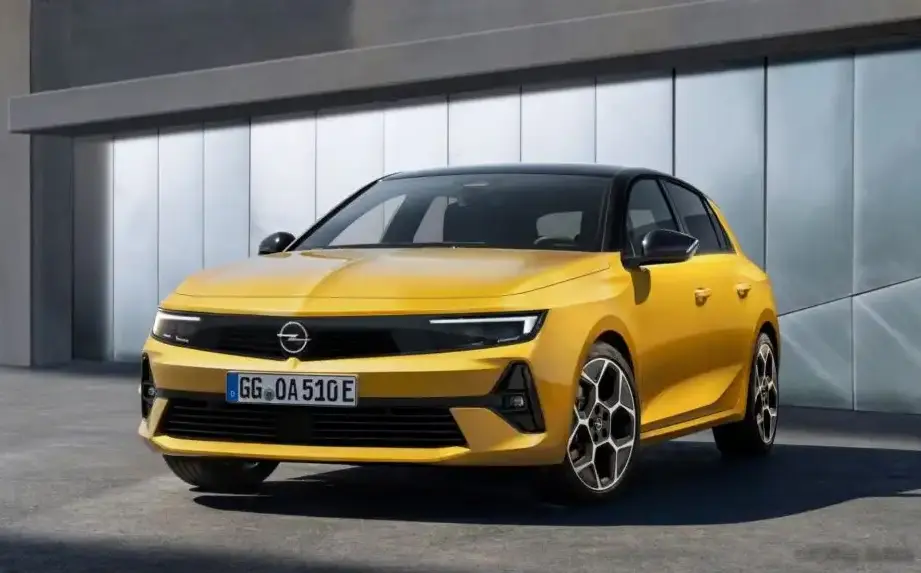
The Opel Astra L 1.2 Turbo (136 hp) Mild Hybrid e-DCT represents a key offering in the sixth generation of Opel’s globally recognized Astra compact hatchback. Introduced in March 2024, this variant is positioned as a fuel-efficient and technologically advanced option within the Astra L lineup, which is built on the Stellantis EMP2 platform. Production is expected to continue through March 2025. The Astra L represents a significant step forward for Opel, incorporating a modern design language and a focus on electrified powertrains to meet increasingly stringent emissions standards, primarily targeting the European market.
Technical Specifications
| Brand | Opel |
| Model | Astra |
| Generation | Astra L |
| Type (Engine) | 1.2 Turbo (136 Hp) Mild Hybrid e-DCT |
| Start of production | March, 2024 |
| End of production | March, 2025 |
| Powertrain Architecture | MHEV (Mild Hybrid Electric Vehicle) |
| Body type | Hatchback |
| Seats | 5 |
| Doors | 5 |
| Fuel consumption at Low speed (WLTP) | 4.7 l/100 km (50 US mpg, 60.1 UK mpg, 21.3 km/l) |
| Fuel consumption at Medium speed (WLTP) | 5 l/100 km (47 US mpg, 56.5 UK mpg, 20 km/l) |
| Fuel consumption at high speed (WLTP) | 4.4 l/100 km (53.5 US mpg, 64.2 UK mpg, 22.7 km/l) |
| Fuel consumption at very high speed (WLTP) | 5.7 l/100 km (41.3 US mpg, 49.6 UK mpg, 17.5 km/l) |
| Combined fuel consumption (WLTP) | 5 l/100 km (47 US mpg, 56.5 UK mpg, 20 km/l) |
| CO2 emissions (WLTP) | 113 g/km |
| Fuel Type | Petrol (Gasoline) |
| Acceleration 0 – 100 km/h | 9 sec |
| Acceleration 0 – 62 mph | 9 sec |
| Acceleration 0 – 60 mph | 8.6 sec |
| Maximum speed | 210 km/h (130.49 mph) |
| Emission standard | Euro 6e |
| Weight-to-power ratio | 10.1 kg/Hp |
| Weight-to-torque ratio | 6 kg/Nm |
| Gross battery capacity | 0.89 kWh |
| Net (usable) battery capacity | 0.432 kWh |
| Battery voltage | 48 V |
| Battery technology | Lithium-ion (Li-Ion) |
| Battery location | Under the front seats |
| All-electric range | 1 km (0.62 mi) |
| Electric motor power | 28 Hp |
| Electric motor Torque | 55 Nm (40.57 lb.-ft.) |
| Electric motor location | Integrated into the transmission |
| Electric motor type | Synchronous |
| Power | 136 Hp @ 5500 rpm |
| Torque | 230 Nm @ 1750 rpm (169.64 lb.-ft. @ 1750 rpm) |
| Engine layout | Front, Transverse |
| Engine Model/Code | EB2LTDH2 |
| Engine displacement | 1199 cm3 (73.17 cu. in.) |
| Number of cylinders | 3 |
| Engine configuration | Inline |
| Cylinder Bore | 75 mm (2.95 in.) |
| Piston Stroke | 90.5 mm (3.56 in.) |
| Number of valves per cylinder | 4 |
| Fuel injection system | Direct injection |
| Engine aspiration | Turbocharger, Intercooler |
| Valvetrain | DOHC, VVT |
| Engine oil capacity | 3.5 l (3.7 US qt | 3.08 UK qt) |
| Kerb Weight | 1379 kg (3040.17 lbs.) |
| Max. weight | 1950 kg (4299.01 lbs.) |
| Max load | 571 kg (1258.84 lbs.) |
| Trunk (boot) space – minimum | 422 l (14.9 cu. ft.) |
| Trunk (boot) space – maximum | 1339 l (47.29 cu. ft.) |
| Fuel tank capacity | 52 l (13.74 US gal | 11.44 UK gal) |
| Max. roof load | 75 kg (165.35 lbs.) |
| Permitted trailer load with brakes (12%) | 1150 kg (2535.32 lbs.) |
| Permitted trailer load without brakes | 600 kg (1322.77 lbs.) |
| Permitted towbar download | 70 kg (154.32 lbs.) |
| Length | 4374 mm (172.2 in.) |
| Width with mirrors folded | 1860 mm (73.23 in.) |
| Width including mirrors | 2062 mm (81.18 in.) |
| Height | 1441-1470 mm (56.73 – 57.87 in.) |
| Wheelbase | 2675 mm (105.31 in.) |
| Front track | 1551-1559 mm (61.06 – 61.38 in.) |
| Rear (Back) track | 1546-1554 mm (60.87 – 61.18 in.) |
| Front overhang | 906 mm (35.67 in.) |
| Rear overhang | 793 mm (31.22 in.) |
| Minimum turning circle | 10.51 m (34.48 ft.) |
| Drive wheel | Front wheel drive |
| Number of gears and type of gearbox | 6 gears, automatic transmission e-DCT |
| Front suspension | Independent, type McPherson with coil spring and anti-roll bar |
| Rear suspension | Coil spring, Torsion |
| Front brakes | Ventilated discs |
| Rear brakes | Disc |
| Tires size | 225/45 R17; 225/40 R18 |
| Wheel rims size | 7.5J x 17; 7.5J x 18; 8J x 18 |
INTRODUCTION
The Opel Astra L 1.2 Turbo (136 hp) Mild Hybrid e-DCT is a five-door hatchback designed to appeal to buyers seeking a balance between fuel efficiency, modern technology, and reasonable performance. Launched in 2024, it slots into the middle of the Astra L range, offering a more affordable and economical alternative to the more powerful engine options. This variant utilizes a 1.2-liter turbocharged three-cylinder engine coupled with a 48-volt mild hybrid system and a six-speed e-DCT (efficient Dual Clutch Transmission). It’s a key component of Opel’s strategy to offer a diverse range of electrified vehicles, catering to the growing demand for lower-emission cars in Europe.
Powertrain & Engine Architecture
At the heart of the Astra L 1.2 Turbo is the EB2LTDH2 engine, a 1.2-liter turbocharged inline-three cylinder gasoline engine. This engine is part of the PureTech family developed by the PSA Group (now part of Stellantis). It features direct fuel injection, a variable valve timing system (VVT), and an intercooled turbocharger. The engine produces 136 horsepower at 5500 rpm and 230 Nm (169.64 lb-ft) of torque at 1750 rpm. The mild hybrid system consists of a 48-volt battery and an integrated electric motor. This system provides a power boost during acceleration and allows for regenerative braking, capturing energy that would otherwise be lost during deceleration. The e-DCT transmission offers quick and smooth gear changes, contributing to both fuel efficiency and driving enjoyment. The transmission’s programming is tuned to prioritize fuel economy in normal driving conditions, while still providing responsive performance when needed.
Driving Characteristics
The 1.2 Turbo (136 hp) e-DCT powertrain delivers a comfortable and refined driving experience. While not as overtly sporty as some of the higher-powered Astra L variants, it provides adequate performance for everyday driving situations. Acceleration from 0 to 100 km/h (0-62 mph) takes approximately 9 seconds. The e-DCT transmission contributes to smooth gear changes, and the mild hybrid system provides a noticeable boost during acceleration. The gear ratios are optimized for fuel efficiency, meaning the engine operates at lower revs during cruising. Compared to a manual transmission version, the e-DCT offers greater convenience, particularly in urban traffic. However, some drivers may prefer the more direct feel of a manual gearbox. The mild hybrid system is largely seamless in operation, providing a subtle assist to the engine when needed.
Equipment & Trim Levels
The Astra L 1.2 Turbo (136 hp) Mild Hybrid e-DCT typically comes well-equipped, even in base trim levels. Standard features often include a touchscreen infotainment system with Apple CarPlay and Android Auto compatibility, a digital instrument cluster, automatic climate control, and a suite of safety features such as lane departure warning, automatic emergency braking, and traffic sign recognition. Higher trim levels add features like adaptive cruise control, a premium sound system, leather upholstery, and heated seats. Interior upholstery is typically cloth in lower trims, with leather options available on higher-spec models. The dashboard layout is modern and minimalist, with a focus on ease of use. Optional extras can include a panoramic sunroof, a head-up display, and a 360-degree parking camera.
Chassis & Braking
The Astra L utilizes a McPherson strut front suspension and a torsion beam rear suspension. This setup provides a good balance between ride comfort and handling. The chassis is relatively lightweight, contributing to the car’s agility. The front brakes are ventilated discs, while the rear brakes are solid discs. Anti-lock braking system (ABS) and electronic stability control (ESC) are standard features. The steering is electric power-assisted, providing a light and precise feel. Stabilizer bars are fitted to both the front and rear axles to reduce body roll during cornering.
Market Reception & Comparison
The Opel Astra L 1.2 Turbo (136 hp) Mild Hybrid e-DCT has been generally well-received by automotive critics. It’s praised for its fuel efficiency, comfortable ride, and modern technology. Compared to the more powerful Astra L variants, such as the 1.6-liter diesel, this version offers lower running costs but slightly less performance. The mild hybrid system helps to improve fuel economy, making it an attractive option for drivers who prioritize efficiency. Against competitors like the Volkswagen Golf, Ford Focus, and Peugeot 308, the Astra L 1.2 Turbo offers a competitive package in terms of price, features, and fuel economy.
Legacy
The EB2LTDH2 engine, combined with the e-DCT transmission, is proving to be a reliable powertrain. Early reports suggest good long-term durability, although it’s still relatively early in the model’s lifecycle. The mild hybrid system adds a layer of complexity, but it’s generally considered to be a robust and well-engineered system. On the used car market, the Astra L 1.2 Turbo (136 hp) Mild Hybrid e-DCT is expected to hold its value well, thanks to its fuel efficiency and modern features. Its appeal will likely be strongest among buyers seeking a practical, economical, and well-equipped compact hatchback.

