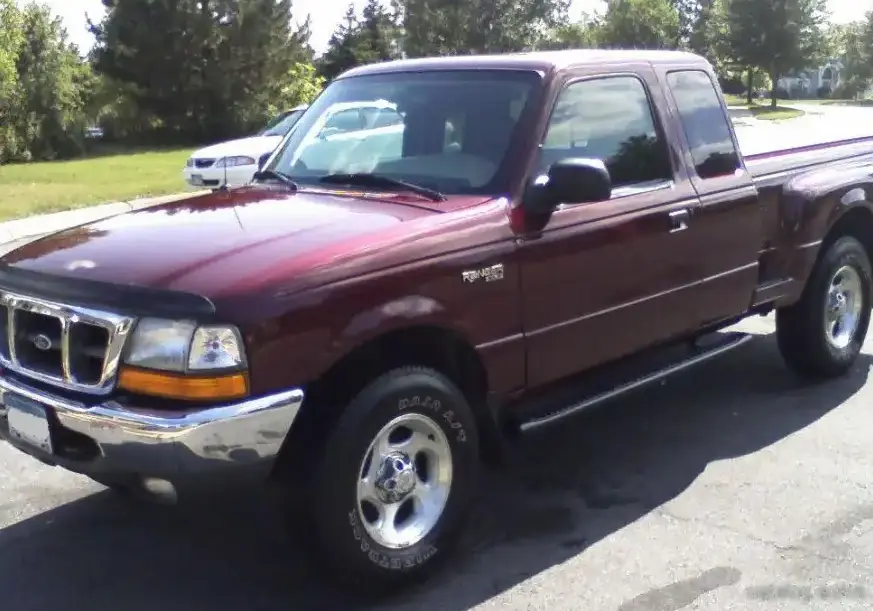
The Ford Ranger I Double Cab 2.5 TDCi, producing 109 horsepower, was a significant offering in the European and global pickup truck market from 1998 to 2006. Positioned as a versatile workhorse and family vehicle, this variant of the first-generation Ranger (produced globally from 1993-2012, but with regional variations) aimed to bridge the gap between basic commercial pickups and more luxurious, passenger-focused options. It represented Ford’s attempt to capitalize on the growing demand for double-cab pickups, offering both cargo capacity and seating for five passengers. This model was particularly popular in Europe, Australia, and South America, where the demand for practical and affordable pickups was high.
Technical Specifications
| Brand | Ford |
| Model | Ranger |
| Generation | Ranger I Double Cab |
| Type (Engine) | 2.5 TDCi (109 Hp) |
| Start of production | 1998 |
| End of production | 2006 |
| Powertrain Architecture | Internal Combustion engine |
| Body type | Pick-up |
| Seats | 5 |
| Doors | 4 |
| Fuel Type | Diesel |
| Weight-to-power ratio | 12.8 kg/Hp, 77.9 Hp/tonne |
| Weight-to-torque ratio | 5.3 kg/Nm, 190.1 Nm/tonne |
| Power | 109 Hp @ 3500 rpm |
| Power per litre | 43.6 Hp/l |
| Torque | 266 Nm @ 2000 rpm (196.19 lb.-ft. @ 2000 rpm) |
| Engine layout | Front, Longitudinal |
| Engine Model/Code | WL-T |
| Engine displacement | 2499 cm3 (152.5 cu. in.) |
| Number of cylinders | 4 |
| Engine configuration | Inline |
| Cylinder Bore | 93 mm (3.66 in.) |
| Piston Stroke | 92 mm (3.62 in.) |
| Number of valves per cylinder | 3 |
| Fuel injection system | Diesel Commonrail |
| Engine aspiration | Turbocharger, Intercooler |
| Engine oil capacity | 6.3 l (6.66 US qt | 5.54 UK qt) |
| Coolant | 9.4 l (9.93 US qt | 8.27 UK qt) |
| Kerb Weight | 1399 kg (3084.27 lbs.) |
| Max. weight | 2087 kg (4601.05 lbs.) |
| Max load | 688 kg (1516.78 lbs.) |
| Fuel tank capacity | 70 l (18.49 US gal | 15.4 UK gal) |
| Length | 5020 mm (197.64 in.) |
| Width | 1695 mm (66.73 in.) |
| Height | 1750 mm (68.9 in.) |
| Wheelbase | 3000 mm (118.11 in.) |
| Front track | 1430 mm (56.3 in.) |
| Rear (Back) track | 1420 mm (55.91 in.) |
| Ride height (ground clearance) | 200 mm (7.87 in.) |
| Drivetrain Architecture | The Internal combustion engine (ICE) drives the rear wheels of the vehicle. |
| Drive wheel | Rear wheel drive |
| Number of gears and type of gearbox | 5 gears, manual transmission |
| Front suspension | Independent torsion bar, double wishbone |
| Rear suspension | Dependent suspension of two longitudinal semi-elliptic leaf springs |
| Front brakes | Ventilated discs |
| Rear brakes | Drum |
| Assisting systems | ABS (Anti-lock braking system) |
| Steering type | Steering rack and pinion |
| Tires size | 235/75 R15 |
| Wheel rims size | 15 |
Powertrain & Engine Architecture
The heart of the Ranger I Double Cab 2.5 TDCi was the WL-T 2.5-liter inline-four diesel engine. This engine utilized a direct injection common rail system, a relatively modern technology for the time, which improved fuel efficiency and reduced emissions compared to older diesel injection systems. The turbocharger with intercooler further enhanced performance, providing a noticeable boost in power and torque. The engine featured three valves per cylinder, contributing to improved combustion efficiency. The 109 horsepower output was achieved at 3500 rpm, while peak torque of 266 Nm (196 lb-ft) was delivered at a more accessible 2000 rpm. This torque curve made the truck well-suited for hauling and towing, even with a moderate power output. The engine was mounted longitudinally in the chassis, driving the rear wheels through a five-speed manual transmission. While an automatic transmission was offered in some markets with other engine options, the 2.5 TDCi was primarily paired with the manual gearbox.
Driving Characteristics
The 109 hp 2.5 TDCi engine, coupled with the five-speed manual transmission, provided adequate, but not exhilarating, performance. Acceleration was modest, and overtaking required careful planning. However, the engine’s strong low-end torque made it capable of handling moderate loads and navigating challenging terrain. The gear ratios were well-suited for everyday driving and hauling, with a focus on maximizing fuel efficiency. Compared to the higher-output 2.5 TDCi variants (available in some markets), or potential gasoline engine options, this version prioritized fuel economy and durability over outright speed. The manual transmission offered a more engaging driving experience than an automatic would have, allowing the driver to maintain better control over the engine’s power band. The rear-wheel-drive configuration provided a traditional pickup truck feel, but could also lead to reduced traction in slippery conditions.
Equipment & Trim Levels
The Ranger I Double Cab 2.5 TDCi typically came with a relatively basic level of equipment, reflecting its positioning as a work-oriented vehicle. Standard features generally included power steering, central locking, and a basic audio system. Interior upholstery was typically vinyl or a durable cloth material. Higher trim levels, if available, might have added features such as air conditioning, electric windows, and upgraded audio systems. The dashboard layout was functional and straightforward, prioritizing practicality over aesthetics. Optional extras could include alloy wheels, a tow hitch, and various accessories for the cargo bed.
Chassis & Braking
The Ranger I Double Cab featured a robust chassis designed to withstand the rigors of pickup truck use. The front suspension utilized an independent torsion bar and double wishbone setup, providing a comfortable ride and good handling characteristics. The rear suspension employed a traditional dependent leaf spring design, which was well-suited for carrying heavy loads. Braking duties were handled by ventilated discs at the front and drum brakes at the rear. An Anti-lock Braking System (ABS) was often included as standard equipment, enhancing safety by preventing wheel lockup during hard braking. The tires were typically 235/75 R15, providing a good balance of on-road comfort and off-road capability.
Market Reception & Comparison
The Ford Ranger I Double Cab 2.5 TDCi was generally well-received in the markets where it was sold. Critics praised its versatility, affordability, and fuel efficiency. However, some reviewers noted its modest power output and relatively basic interior. Compared to other double-cab pickups available at the time, such as the Toyota Hilux or Nissan Navara, the Ranger offered a competitive price point and a strong reputation for reliability. The 2.5 TDCi engine was considered to be durable and relatively easy to maintain, making it a popular choice for fleet operators and individual owners alike. Fuel economy was a key selling point, particularly in Europe where diesel fuel was often cheaper than gasoline.
Legacy
The Ford Ranger I Double Cab 2.5 TDCi has proven to be a durable and reliable vehicle, and many examples are still in use today. The WL-T engine, while not particularly powerful, is known for its longevity and relatively low maintenance costs. In the used car market, these Rangers are often sought after by those looking for a practical and affordable pickup truck. The availability of spare parts is generally good, and the relatively simple mechanical design makes them relatively easy to repair. The Ranger I Double Cab 2.5 TDCi represents a significant chapter in Ford’s pickup truck history, and its legacy continues to endure.