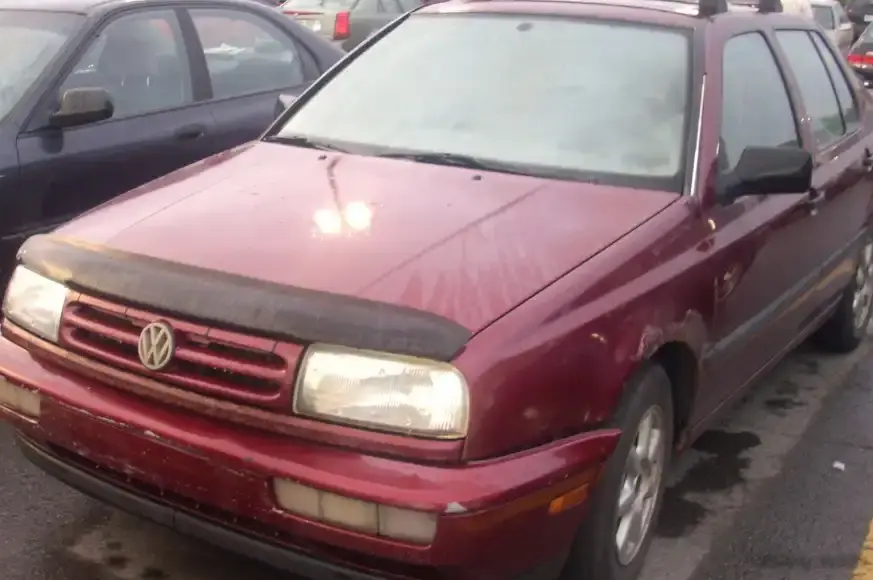
The Volkswagen Jetta III 2.8 VR6 Automatic, produced between 1992 and 1998, represented a significant step up in performance and refinement for the Jetta model line. Part of the Mk3 Jetta generation (1HX0/A3 chassis), this variant occupied the premium position within the range, offering a more powerful engine and a comfortable automatic transmission. It was primarily marketed in Europe and North America as a sporty yet practical sedan, appealing to drivers seeking a blend of performance and everyday usability. This model aimed to bridge the gap between more economical Jetta trims and the higher-performance GTI.
Technical Specifications
| Brand | Volkswagen |
| Model | Jetta |
| Generation | Jetta III |
| Type (Engine) | 2.8 VR6 (172 Hp) Automatic |
| Start of production | 1992 |
| End of production | 1998 |
| Powertrain Architecture | Internal Combustion engine |
| Body type | Sedan |
| Seats | 5 |
| Doors | 4 |
| Fuel consumption (urban) | 14.3 l/100 km (16.4 US mpg, 19.8 UK mpg, 7 km/l) |
| Fuel consumption (extra urban) | 7.9 l/100 km (29.8 US mpg, 35.8 UK mpg, 12.7 km/l) |
| Fuel consumption (combined) | 9.5 l/100 km (24.8 US mpg, 29.7 UK mpg, 10.5 km/l) |
| Fuel Type | Petrol (Gasoline) |
| Acceleration 0 – 100 km/h | 8.7 sec |
| Acceleration 0 – 62 mph | 8.7 sec |
| Acceleration 0 – 60 mph | 8.3 sec |
| Maximum speed | 221 km/h (137.32 mph) |
| Weight-to-power ratio | 7.8 kg/Hp, 128.4 Hp/tonne |
| Weight-to-torque ratio | 7.7 kg/Nm, 130.6 Nm/tonne |
| Power | 172 Hp @ 5800 rpm |
| Power per litre | 61.6 Hp/l |
| Torque | 175 Nm @ 4200 rpm (129.07 lb.-ft. @ 4200 rpm) |
| Engine layout | Front, Transverse |
| Engine Model/Code | AAA |
| Engine displacement | 2792 cm3 (170.38 cu. in.) |
| Number of cylinders | 6 |
| Engine configuration | VR-engine |
| Cylinder Bore | 81 mm (3.19 in.) |
| Piston Stroke | 90.3 mm (3.56 in.) |
| Compression ratio | 10:1 |
| Number of valves per cylinder | 2 |
| Fuel injection system | Multi-port manifold injection |
| Engine aspiration | Naturally aspirated engine |
| Valvetrain | OHC |
| Engine oil capacity | 5.5 l (5.81 US qt | 4.84 UK qt) |
| Coolant | 10.4 l (10.99 US qt | 9.15 UK qt) |
| Kerb Weight | 1340 kg (2954.19 lbs.) |
| Max. weight | 1725 kg (3802.97 lbs.) |
| Max load | 385 kg (848.78 lbs.) |
| Trunk (boot) space – minimum | 425 l (15.01 cu. ft.) |
| Trunk (boot) space – maximum | 885 l (31.25 cu. ft.) |
| Fuel tank capacity | 55 l (14.53 US gal | 12.1 UK gal) |
| Length | 4380 mm (172.44 in.) |
| Width | 1710 mm (67.32 in.) |
| Height | 1405 mm (55.31 in.) |
| Wheelbase | 2475 mm (97.44 in.) |
| Front track | 1450 mm (57.09 in.) |
| Rear (Back) track | 1434 mm (56.46 in.) |
| Drivetrain Architecture | The Internal combustion engine (ICE) drives the front wheels of the vehicle. |
| Drive wheel | Front wheel drive |
| Number of gears and type of gearbox | 4 gears, automatic transmission |
| Front suspension | Wishbone |
| Rear suspension | Suspension with traction connecting levers |
| Front brakes | Ventilated discs |
| Rear brakes | Drum |
| Assisting systems | ABS (Anti-lock braking system) |
| Steering type | Steering rack and pinion |
| Power steering | Hydraulic Steering |
| Tires size | 205/50 R15 |
| Wheel rims size | 6.5J x 15 |
INTRODUCTION
The Jetta III 2.8 VR6 Automatic was introduced as the top-tier engine option for the Mk3 Jetta, building upon the success of the earlier Mk2 generation. The Mk3 Jetta, launched in 1992, represented a significant modernization of the compact sedan, sharing its platform (A3) with the Volkswagen Golf III. The 2.8 VR6 Automatic trim aimed to provide a more luxurious and powerful driving experience compared to the base models, which typically featured smaller, four-cylinder engines. It was positioned as a competitor to other mid-size sedans offering a blend of performance and practicality.
Powertrain & Engine Architecture
At the heart of the Jetta III 2.8 VR6 Automatic lies the AAA engine code, a 2.8-liter naturally aspirated VR6 engine. This engine is notable for its compact V6 configuration, achieved by arranging the cylinders in a narrow V-angle (15 degrees). This design allowed Volkswagen to fit a V6 engine into the engine bay of a relatively small car without significant modifications. The engine utilizes multi-port fuel injection and a single overhead camshaft (OHC) valvetrain. The VR6 engine was known for its smooth power delivery and distinctive exhaust note. Paired with this engine was a four-speed automatic transmission, designed to provide comfortable and convenient shifting. This transmission, while not known for its sportiness, offered smooth operation and reliability. The automatic transmission was a popular choice for buyers prioritizing ease of use over outright performance.
Driving Characteristics
The Jetta III 2.8 VR6 Automatic offered a noticeable performance upgrade over the lower-trim Jettas. The 172 horsepower and 175 lb-ft of torque provided brisk acceleration, with a 0-60 mph time of around 8.3 seconds. While not a sports car, the VR6 engine delivered ample power for highway cruising and overtaking. The four-speed automatic transmission, however, did impact the overall driving experience. Gear ratios were spaced to prioritize fuel economy and comfort, rather than aggressive acceleration. Compared to the five-speed manual transmission available with the VR6 engine, the automatic version felt slightly less responsive. The automatic transmission also contributed to slightly lower fuel economy figures.
Equipment & Trim Levels
The 2.8 VR6 Automatic trim typically came well-equipped, reflecting its position as the premium offering. Standard features often included power windows, power locks, air conditioning, and an upgraded sound system. Interior upholstery was typically cloth, although leather options were available. Dashboard configuration was consistent with other Mk3 Jettas, featuring a functional and straightforward design. Optional extras included a sunroof, alloy wheels, and upgraded audio systems. The level of equipment varied slightly depending on the specific market and year of production.
Chassis & Braking
The Jetta III utilized a front-wheel-drive layout with independent front suspension (wishbone) and a semi-independent rear suspension (traction connecting levers). The braking system featured ventilated discs on the front wheels and drum brakes on the rear. ABS (Anti-lock Braking System) was standard equipment, enhancing safety. The suspension was tuned to provide a comfortable ride, prioritizing everyday usability over sporty handling. Stabilizer bars were fitted to both the front and rear axles to reduce body roll during cornering. The chassis was designed to handle the increased power of the VR6 engine without compromising ride quality.
Market Reception & Comparison
The Jetta III 2.8 VR6 Automatic received generally positive reviews from automotive critics. The engine was praised for its smooth power delivery and distinctive sound. However, the automatic transmission was sometimes criticized for being less engaging than the manual option. Compared to other trims, the VR6 Automatic offered a significant performance advantage but came at a higher price point. Fuel economy was also lower than the four-cylinder models. Against competitors like the Honda Accord and Toyota Camry, the Jetta VR6 offered a more European driving experience, with a focus on handling and engine refinement.
Legacy
The Jetta III 2.8 VR6 Automatic has developed a loyal following among enthusiasts. The VR6 engine is known for its durability and relatively simple maintenance requirements. While not immune to age-related issues, the engine is generally considered reliable if properly maintained. Today, well-maintained examples are sought after by collectors and enthusiasts who appreciate the unique combination of performance, practicality, and European styling. The automatic transmission, while not as desirable as the manual, remains a viable option for those seeking a comfortable and convenient driving experience. The Jetta III 2.8 VR6 Automatic represents a significant chapter in Volkswagen’s history, showcasing the brand’s commitment to innovation and driving enjoyment.