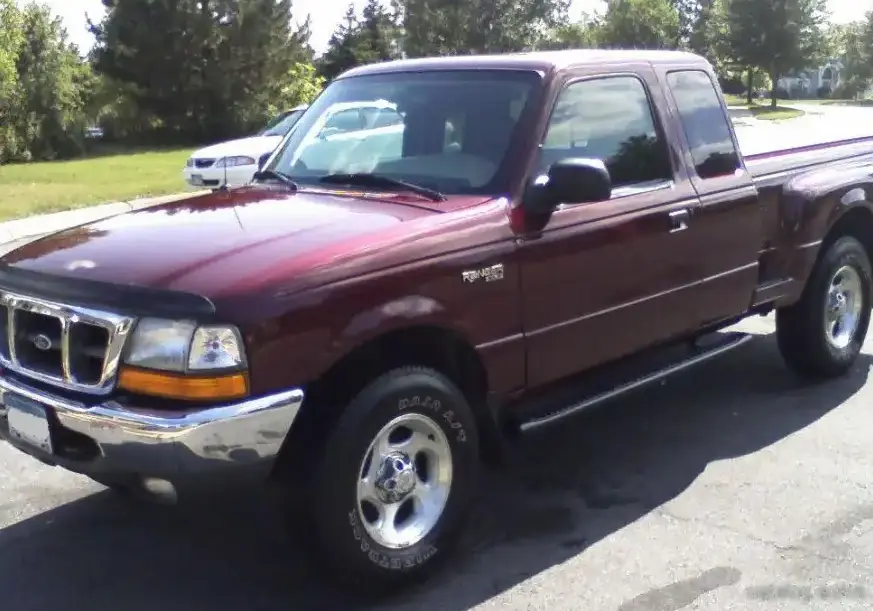
The Ford Ranger I Double Cab 2.5 TDCi 4×4, produced from 1998 to 2006, represents a significant entry in Ford’s global pickup truck strategy. This variant, powered by the 2.5-liter TDCi diesel engine producing 109 horsepower, was primarily aimed at markets outside of North America, where smaller, more fuel-efficient pickups were in higher demand. It served as a versatile workhorse and family vehicle, offering a blend of practicality and affordability. The Double Cab configuration expanded the Ranger’s appeal by providing seating for five passengers, making it suitable for both commercial and personal use. This model falls within the first generation (1993-2006) of the Ranger, which was a globally-sold platform based on a ladder frame chassis.
Technical Specifications
| Brand | Ford |
| Model | Ranger |
| Generation | Ranger I Double Cab |
| Type (Engine) | 2.5 TDCi (109 Hp) 4×4 |
| Start of production | 1998 |
| End of production | 2006 |
| Powertrain Architecture | Internal Combustion engine |
| Body type | Pick-up |
| Seats | 5 |
| Doors | 4 |
| Fuel Type | Diesel |
| Acceleration 0 – 100 km/h | 15 sec |
| Acceleration 0 – 62 mph | 15 sec |
| Acceleration 0 – 60 mph | 14.3 sec |
| Maximum speed | 145 km/h (90.1 mph) |
| Weight-to-power ratio | 16.4 kg/Hp, 61.1 Hp/tonne |
| Weight-to-torque ratio | 6.7 kg/Nm, 149 Nm/tonne |
| Power | 109 Hp @ 3500 rpm |
| Power per litre | 43.6 Hp/l |
| Torque | 266 Nm @ 2000 rpm (196.19 lb.-ft. @ 2000 rpm) |
| Engine layout | Front, Longitudinal |
| Engine Model/Code | WL-T |
| Engine displacement | 2499 cm3 (152.5 cu. in.) |
| Number of cylinders | 4 |
| Engine configuration | Inline |
| Cylinder Bore | 93 mm (3.66 in.) |
| Piston Stroke | 92 mm (3.62 in.) |
| Number of valves per cylinder | 3 |
| Fuel injection system | Diesel Commonrail |
| Engine aspiration | Turbocharger, Intercooler |
| Engine oil capacity | 6.3 l (6.66 US qt | 5.54 UK qt) |
| Coolant | 9.4 l (9.93 US qt | 8.27 UK qt) |
| Kerb Weight | 1785 kg (3935.25 lbs.) |
| Max. weight | 2825 kg (6228.06 lbs.) |
| Max load | 1040 kg (2292.81 lbs.) |
| Fuel tank capacity | 70 l (18.49 US gal | 15.4 UK gal) |
| Length | 5020 mm (197.64 in.) |
| Width | 1695 mm (66.73 in.) |
| Height | 1750 mm (68.9 in.) |
| Wheelbase | 3000 mm (118.11 in.) |
| Front track | 1430 mm (56.3 in.) |
| Rear (Back) track | 1420 mm (55.91 in.) |
| Ride height (ground clearance) | 200 mm (7.87 in.) |
| Drive wheel | All wheel drive (4×4) |
| Number of gears and type of gearbox | 5 gears, manual transmission |
| Front suspension | Independent torsion bar, double wishbone |
| Rear suspension | Dependent suspension of two longitudinal semi-elliptic leaf springs |
| Front brakes | Ventilated discs |
| Rear brakes | Drum |
| Assisting systems | ABS (Anti-lock braking system) |
| Steering type | Steering rack and pinion |
| Tires size | 235/75 R15 |
| Wheel rims size | 15 |
Powertrain & Engine Architecture
The heart of the Ranger I Double Cab 2.5 TDCi is the WL-T engine, a 2.5-liter inline-four cylinder diesel. This engine utilizes a common rail direct injection system, a technology that significantly improved fuel efficiency and reduced noise compared to older diesel injection methods. The turbocharger with intercooler further enhances performance by forcing more air into the cylinders, boosting power output. The engine features three valves per cylinder (two intake, one exhaust), contributing to improved breathing and combustion efficiency. The 5-speed manual transmission was the standard offering for this variant, providing a balance between fuel economy and usability. The longitudinal engine layout was typical for four-wheel-drive vehicles, allowing for a more efficient drivetrain configuration.
Driving Characteristics
The 109 horsepower and 266 Nm (196 lb-ft) of torque delivered by the 2.5 TDCi engine provided adequate, though not exhilarating, performance. Acceleration from 0-60 mph took around 14.3 seconds, and top speed was limited to approximately 90 mph. The engine’s torque curve was relatively flat, offering good pulling power at lower engine speeds, which was beneficial for towing and off-road driving. Compared to higher-output Ranger variants, such as those equipped with larger engines, the 2.5 TDCi felt less responsive, particularly when fully loaded. The manual transmission offered precise gear changes, but the gear ratios were geared towards fuel economy rather than outright performance. The 4×4 system provided enhanced traction on loose surfaces, making it a capable off-road vehicle.
Equipment & Trim Levels
The Ranger I Double Cab 2.5 TDCi 4×4 typically came with a relatively basic level of equipment, reflecting its positioning as a work-oriented vehicle. Standard features generally included power steering, central locking, and an AM/FM radio. The interior was functional and durable, with vinyl or cloth upholstery. Higher trim levels, if available in specific markets, might have added features such as air conditioning, power windows, and upgraded audio systems. The Double Cab configuration offered a practical interior layout with seating for five, although rear passenger space was somewhat limited. Options often included alloy wheels, a limited-slip differential, and various accessories for the cargo bed.
Chassis & Braking
The Ranger I Double Cab utilized a traditional body-on-frame construction, providing a robust and durable chassis. The front suspension consisted of independent torsion bars and double wishbones, offering a reasonable level of ride comfort and handling. The rear suspension employed a more traditional setup with two longitudinal semi-elliptic leaf springs, which were well-suited for carrying heavy loads. The braking system featured ventilated discs on the front wheels and drum brakes on the rear. Anti-lock Braking System (ABS) was often included as standard equipment, enhancing safety. The vehicle’s relatively high ground clearance of 200mm (7.87 inches) contributed to its off-road capability.
Market Reception & Comparison
The Ford Ranger I Double Cab 2.5 TDCi 4×4 was generally well-received in markets where smaller, more affordable pickups were popular. Critics praised its versatility, fuel efficiency, and ruggedness. However, some reviewers noted its relatively modest performance and basic interior. Compared to other Ranger variants, the 2.5 TDCi offered a more economical option, but at the expense of power and refinement. The 2.5 TDCi was often positioned as an entry-level or mid-range trim, appealing to buyers who prioritized practicality and affordability over performance. Its fuel economy was generally competitive with other diesel-powered pickups in its class.
Legacy
The Ford Ranger I Double Cab 2.5 TDCi 4×4 has proven to be a relatively reliable and durable vehicle, with many examples still in use today. The WL-T engine, while not known for being particularly powerful, is generally considered to be robust and long-lasting, provided it receives regular maintenance. Common issues include wear and tear on suspension components and potential problems with the fuel injection system. In the used car market, these Rangers are often sought after by buyers looking for an affordable and capable workhorse. Their simplicity and relatively low running costs make them an attractive option for those who need a practical pickup truck without the expense of a newer model. The Ranger I series, as a whole, laid the groundwork for Ford’s continued success in the global pickup truck market.