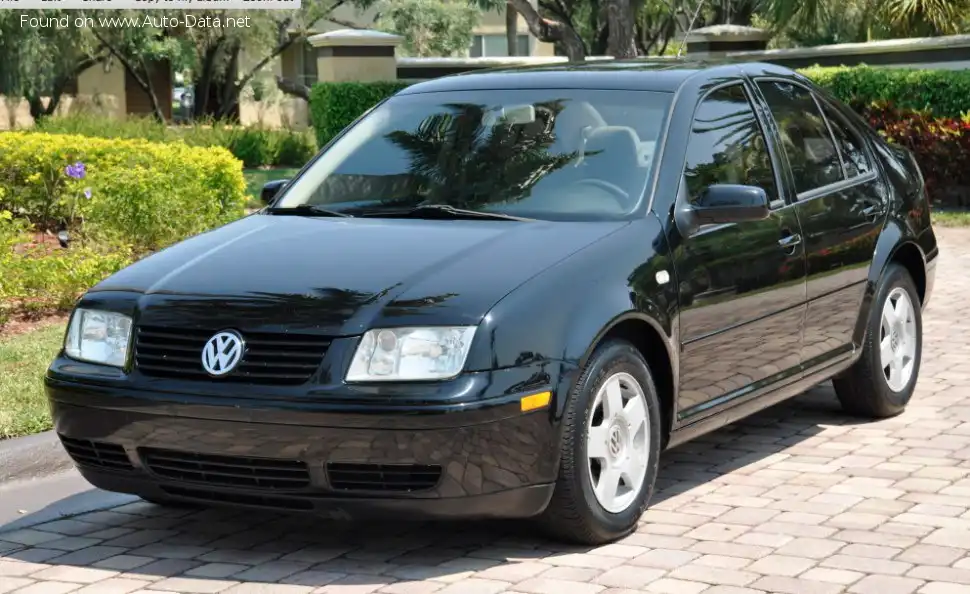
The Volkswagen Jetta IV 1.4 16V, produced between 2000 and 2005, represented the entry point into the fourth-generation Jetta (Mk4) lineup. Based on the Volkswagen Group’s A4 platform (internally designated 1HX0), the Jetta IV aimed to provide affordable and practical transportation within the compact sedan segment. This particular variant, equipped with the 1.4-liter 16-valve engine producing 75 horsepower, was primarily targeted at budget-conscious buyers and those prioritizing fuel efficiency over outright performance. It served as a stepping stone to the more powerful 1.8L and diesel options available in the Jetta IV range.
Technical Specifications
| Brand | Volkswagen |
| Model | Jetta |
| Generation | Jetta IV |
| Type (Engine) | 1.4 16V (75 Hp) |
| Start of production | 2000 |
| End of production | 2005 |
| Powertrain Architecture | Internal Combustion engine |
| Body type | Sedan |
| Seats | 5 |
| Doors | 4 |
| Fuel consumption (urban) | 8.6 l/100 km (27.4 US mpg) |
| Fuel consumption (extra urban) | 5.4 l/100 km (43.6 US mpg) |
| Fuel consumption (combined) | 6.6 l/100 km (35.6 US mpg) |
| Fuel Type | Petrol (Gasoline) |
| Acceleration 0 – 100 km/h | 14.9 sec |
| Acceleration 0 – 62 mph | 14.9 sec |
| Acceleration 0 – 60 mph | 14.2 sec |
| Maximum speed | 171 km/h (106.25 mph) |
| Weight-to-power ratio | 15.5 kg/Hp |
| Weight-to-torque ratio | 9.2 kg/Nm |
| Power | 75 Hp @ 5000 rpm |
| Torque | 126 Nm @ 3800 rpm (92.93 lb.-ft. @ 3800 rpm) |
| Engine layout | Front, Transverse |
| Engine Model/Code | AHW, AKQ, APE, AXP, BCA |
| Engine displacement | 1390 cm3 (84.82 cu. in.) |
| Number of cylinders | 4 |
| Engine configuration | Inline |
| Cylinder Bore | 76.5 mm (3.01 in.) |
| Piston Stroke | 75.6 mm (2.98 in.) |
| Compression ratio | 10:1 |
| Number of valves per cylinder | 4 |
| Fuel injection system | Multi-port manifold injection |
| Engine aspiration | Naturally aspirated |
| Valvetrain | OHC |
| Engine oil capacity | 3.5 l (3.7 US qt | 3.08 UK qt) |
| Coolant capacity | 6 l (6.34 US qt | 5.28 UK qt) |
| Kerb Weight | 1165 kg (2568.39 lbs.) |
| Max. weight | 1710 kg (3769.9 lbs.) |
| Max load | 545 kg (1201.52 lbs.) |
| Trunk (boot) space – minimum | 455 l (16.07 cu. ft.) |
| Trunk (boot) space – maximum | 785 l (27.72 cu. ft.) |
| Fuel tank capacity | 55 l (14.53 US gal | 12.1 UK gal) |
| Length | 4376 mm (172.28 in.) |
| Width | 1735 mm (68.31 in.) |
| Height | 1446 mm (56.93 in.) |
| Wheelbase | 2513 mm (98.94 in.) |
| Front track | 1513 mm (59.57 in.) |
| Rear track | 1494 mm (58.82 in.) |
| Drivetrain Architecture | Front wheel drive |
| Number of gears | 5 |
| Gearbox type | Manual transmission |
| Front suspension | Coil spring |
| Rear suspension | Coil spring |
| Front brakes | Ventilated discs |
| Rear brakes | Disc |
| Assisting systems | ABS (Anti-lock braking system) |
| Steering type | Steering rack and pinion |
| Power steering | Hydraulic |
| Tires size | 195/65 R15 |
| Wheel rims size | 6J x 15 |
Powertrain & Engine Architecture
The heart of the Jetta IV 1.4 16V is the EA888 engine family, specifically the 1.4-liter (1390cc) inline-four cylinder engine. Engine codes varied depending on the year and market, with common designations including AHW, AKQ, APE, AXP, and BCA. This engine featured a single overhead camshaft (SOHC) operating four valves per cylinder, hence the “16V” designation. Fuel delivery was handled by a multi-port fuel injection system, providing adequate, though not exceptional, combustion control. The engine’s relatively low compression ratio of 10:1 contributed to its ability to run on regular unleaded gasoline. The 5-speed manual transmission was the standard offering, providing a reasonably efficient power transfer to the front wheels. The engine’s transverse mounting configuration maximized interior space within the compact Jetta chassis.
Driving Characteristics
The 75 horsepower and 93 lb-ft of torque produced by the 1.4-liter engine translated to modest performance. Acceleration from 0-60 mph took approximately 14.2 seconds, and top speed was limited to around 106 mph. The engine felt strained when pushed hard, particularly when fully loaded or climbing hills. The 5-speed manual transmission helped to keep the engine within its optimal power band, but frequent downshifting was often necessary. Compared to the more powerful 1.8L 20V and TDI diesel variants, the 1.4 felt noticeably slower and less refined. However, its lighter weight and less stressed engine contributed to a more forgiving driving experience in city traffic.
Equipment & Trim Levels
The 1.4 16V Jetta IV typically came with a fairly basic level of equipment. Standard features generally included power steering, air conditioning (often optional), power windows, and a basic audio system. Interior upholstery was typically cloth, and the dashboard featured a functional, if somewhat spartan, design. Optional extras included alloy wheels, a sunroof, upgraded audio systems, and side airbags. Trim levels were often market-specific, but generally followed a progression from base models to slightly more equipped versions with cosmetic enhancements.
Chassis & Braking
The Jetta IV utilized a MacPherson strut front suspension and a multi-link rear suspension, providing a comfortable and controlled ride. Front brakes were ventilated discs, while rear brakes were solid discs. Anti-lock Braking System (ABS) was standard, enhancing safety. The suspension tuning was geared towards comfort rather than sporty handling, and the relatively narrow 195/65 R15 tires contributed to a predictable, but not particularly engaging, driving experience. Stabilizer bars were fitted front and rear to reduce body roll during cornering.
Market Reception & Comparison
The Jetta IV 1.4 16V was generally well-received as an affordable and economical compact sedan. Critics praised its fuel efficiency and comfortable ride, but noted its lack of power and refinement compared to its more expensive siblings. The 1.8L Jetta offered significantly more performance, while the TDI diesel provided superior fuel economy and torque. The 1.4L model was often seen as a sensible choice for first-time car buyers or those prioritizing practicality over driving excitement. Fuel economy figures of around 35.6 US mpg combined made it an attractive option for commuters.
Legacy
The Jetta IV 1.4 16V, while not the most powerful or desirable variant in the lineup, proved to be a reliable and durable vehicle. The EA888 engine, in its various iterations, has a generally good reputation for longevity, provided it receives regular maintenance. On the used car market, these models are often available at very affordable prices. Common issues include wear and tear on suspension components, occasional oil leaks, and potential problems with the cooling system. However, the relatively simple engine design and readily available parts make it a relatively easy vehicle to maintain and repair, ensuring its continued presence on roads today.