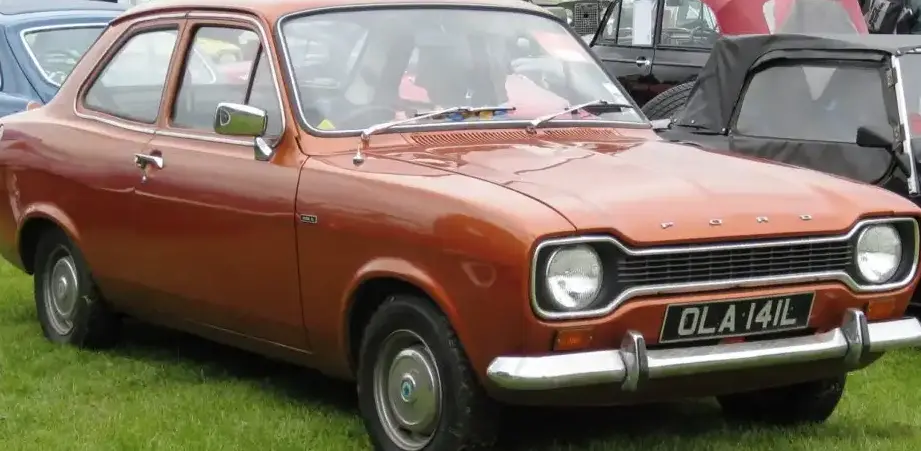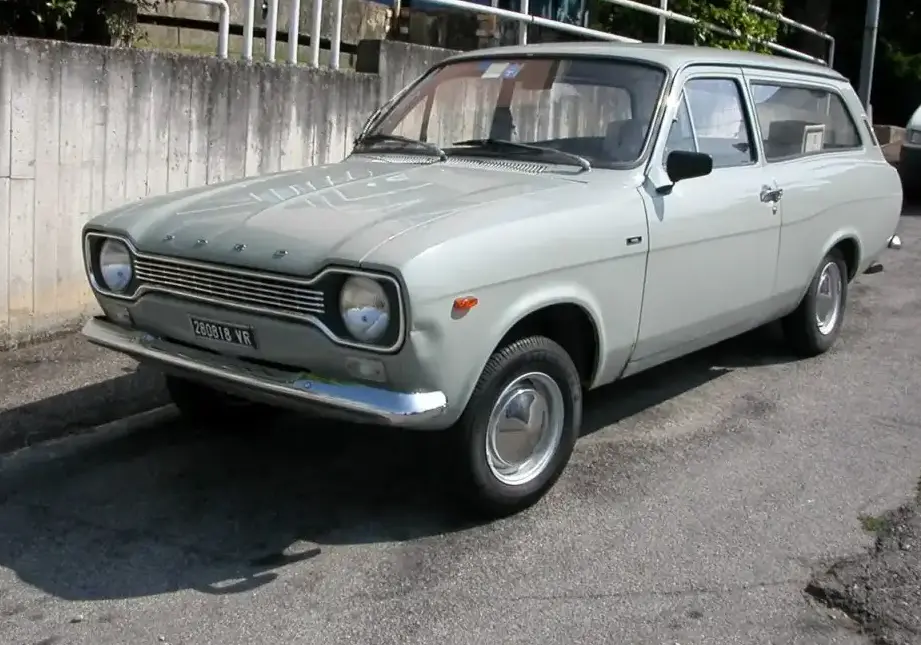
The Ford Escort II 1.1, produced between 1975 and 1980, represented the entry point into the second generation of Ford’s immensely popular Escort range. Positioned as the most economical and accessible version of the ATH platform Escort, it served as a practical and affordable family car in a period of economic constraint and rising fuel costs in Europe. While not known for outright performance, the 1.1-liter variant played a crucial role in establishing the Escort II’s widespread appeal and solidifying its position as a best-selling vehicle in its segment. This model was primarily aimed at buyers prioritizing fuel efficiency and low running costs over sporty driving dynamics.
Technical Specifications
| Brand | Ford |
| Model | Escort |
| Generation | Escort II (ATH) |
| Type (Engine) | 1.1 (46 Hp) |
| Start of production | 1975 |
| End of production | 1980 |
| Powertrain Architecture | Internal Combustion Engine |
| Body type | Sedan |
| Fuel Type | Petrol (Gasoline) |
| Power | 46 Hp |
| Engine Aspiration | Naturally Aspirated |
Powertrain & Engine Architecture
The heart of the Escort II 1.1 was the Ford 1.1-liter inline-four cylinder engine, internally designated as the 1100cc unit. This engine, while simple in design, was robust and relatively easy to maintain. It featured a single overhead camshaft (SOHC) operating a two-valve per cylinder configuration. Fuel delivery was managed by a single downdraft carburetor, typically a Ford 32 DFEV, chosen for its simplicity and cost-effectiveness. The engine’s modest power output of 46 horsepower at approximately 6000 rpm and 67 lb-ft of torque at 3000 rpm was a direct consequence of its small displacement and basic fueling system.
The 1.1-liter engine was typically paired with a four-speed manual transmission, although a three-speed automatic transmission was offered as an option, albeit less common. The automatic transmission, while providing convenience, further reduced acceleration performance and increased fuel consumption. The transmission was a conventional torque converter type, designed for smooth, if not particularly swift, gear changes. The drivetrain was front-wheel drive, a relatively modern configuration for the time, contributing to improved traction in adverse weather conditions.
Driving Characteristics
The driving experience in the Escort II 1.1 was characterized by its practicality and ease of use rather than exhilarating performance. Acceleration was modest, taking approximately 18-20 seconds to reach 60 mph. The engine felt strained at higher speeds, and highway cruising required frequent downshifts to maintain momentum. The four-speed manual transmission allowed for better control and utilization of the engine’s limited power, while the automatic version felt sluggish and unresponsive.
The Escort II’s suspension, consisting of MacPherson struts at the front and a leaf spring rear suspension, provided a comfortable ride, absorbing bumps and imperfections in the road surface reasonably well. However, the handling was not particularly sharp, with noticeable body roll during cornering. The steering was light and easy, making it maneuverable in urban environments, but lacked feedback at higher speeds. Overall, the driving experience was geared towards everyday usability and fuel efficiency.
Equipment & Trim Levels
The Escort II 1.1 was offered in a relatively basic trim level, reflecting its position as the entry-level model. Standard equipment typically included cloth upholstery, vinyl floor covering, and basic instrumentation consisting of a speedometer, fuel gauge, and temperature gauge. A heater was standard, but air conditioning was not available on this trim level.
Optional extras included a radio, upgraded upholstery, and a sunroof. The interior was functional and durable, designed to withstand the rigors of daily use. The dashboard layout was simple and straightforward, with all controls within easy reach of the driver. The overall ambiance was one of practicality and affordability, rather than luxury or sophistication.
Chassis & Braking
The Escort II featured a monocoque body construction, providing a good balance of strength and weight. The front suspension utilized MacPherson struts with coil springs and an anti-roll bar, while the rear suspension employed a leaf spring setup. This configuration provided a comfortable ride, but wasn’t particularly sporty.
Braking was initially provided by front disc brakes and rear drum brakes. Later models saw the introduction of rear disc brakes on some variants, but the 1.1-liter model typically retained the drum brake setup. The braking system was adequate for everyday driving, but lacked the stopping power of more powerful Escort models. The steering was a rack and pinion system, providing light and precise steering feel.
Market Reception & Comparison
The Escort II 1.1 was well-received by buyers seeking an affordable and economical family car. Critics praised its fuel efficiency, reliability, and ease of maintenance. However, its lack of performance was often noted. Compared to the larger-engined Escort models, such as the 1.6-liter and 1.6-liter GL, the 1.1-liter version was significantly slower and less refined. The 1.6-liter models offered a more engaging driving experience and were better suited for highway driving.
The 1.1-liter Escort also faced competition from other small family cars, such as the Vauxhall Astra, Austin Allegro, and Renault 5. However, the Escort’s reputation for reliability and its relatively spacious interior gave it a competitive edge. Fuel economy was a key selling point, particularly during the late 1970s when fuel prices were rising rapidly.
Legacy
The Ford Escort II 1.1, while not the most glamorous or powerful version of the Escort, played a vital role in the model’s success. Its affordability and fuel efficiency made it a popular choice for budget-conscious buyers. The 1.1-liter engine proved to be remarkably durable, and many examples are still on the road today.
In the used car market, the Escort II 1.1 is valued for its simplicity and ease of maintenance. It’s a popular choice for classic car enthusiasts and those seeking a reliable and affordable vintage vehicle. While parts availability can be a challenge, many components are still readily available, and the engine is relatively easy to rebuild. The Escort II 1.1 remains a testament to Ford’s ability to produce practical and dependable cars that stood the test of time.