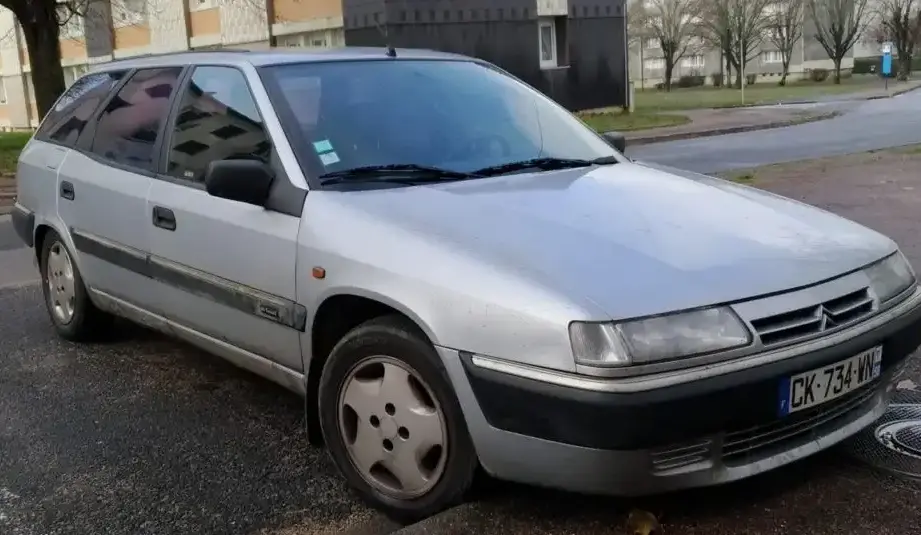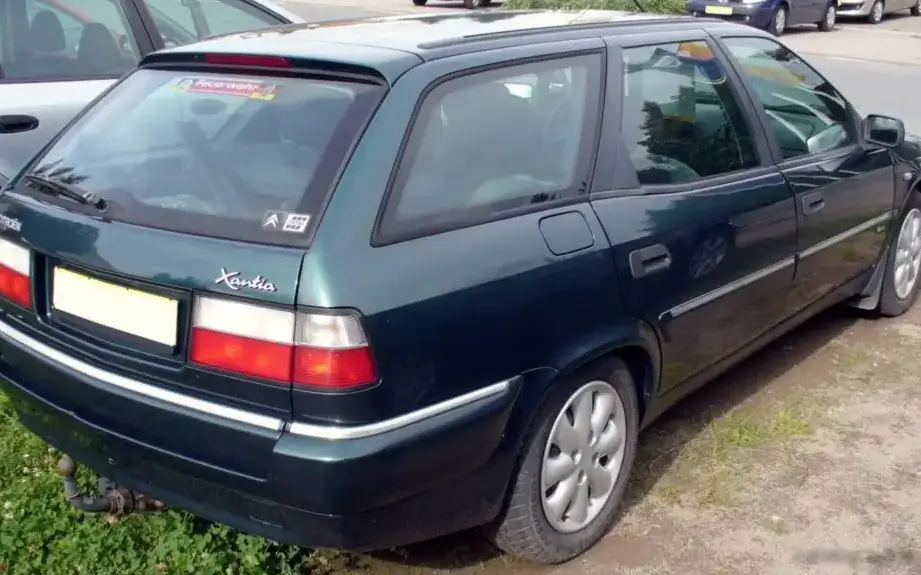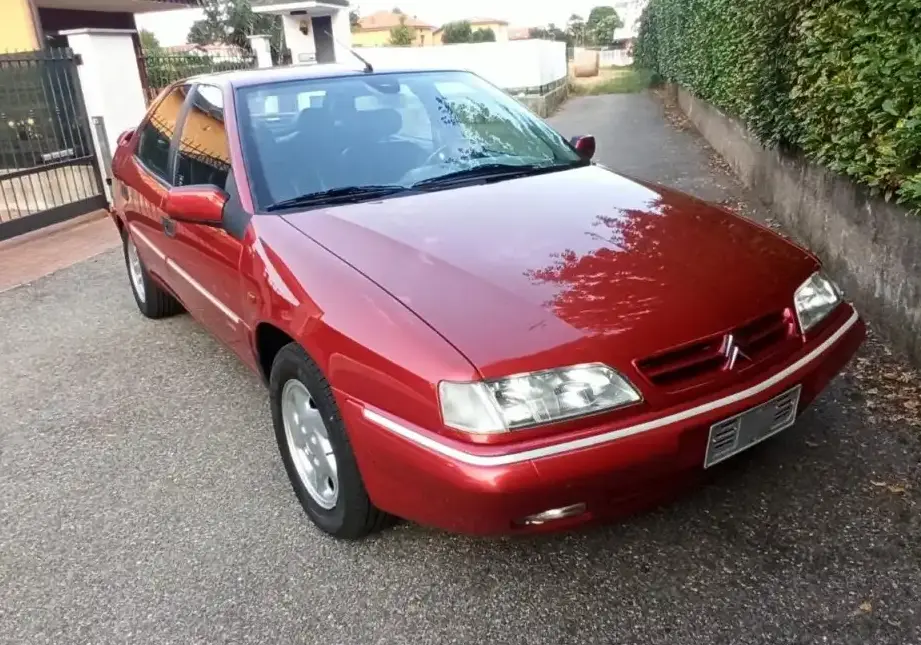
The Citroen Xantia 2.0 Turbo CT (147 hp) was a performance-oriented variant of the X2 generation Xantia, produced between 1998 and 2001. Positioned as a near-top-of-the-line model, it offered a significant step up in power and driving experience compared to the base models, while remaining more accessible than the flagship V6 versions. The Xantia itself was a large family car, intended to replace the BX and positioned as a competitor to vehicles like the Ford Mondeo and Peugeot 406 in the European market. It was known for its innovative hydropneumatic suspension, offering a uniquely comfortable ride.
Technical Specifications
| Brand | Citroen |
| Model | Xantia |
| Generation | Xantia (X2) |
| Type (Engine) | 2.0 Turbo CT (147 Hp) |
| Start of production | 1998 |
| End of production | 2001 |
| Powertrain Architecture | Internal Combustion engine |
| Body type | Hatchback |
| Seats | 5 |
| Doors | 4 |
| Fuel consumption (urban) | 13.9 l/100 km (16.9 US mpg, 20.3 UK mpg, 7.2 km/l) |
| Fuel consumption (extra urban) | 7.6 l/100 km (30.9 US mpg, 37.2 UK mpg, 13.2 km/l) |
| Fuel consumption (combined) | 9.9 l/100 km (23.8 US mpg, 28.5 UK mpg, 10.1 km/l) |
| CO2 emissions | 237 g/km |
| Fuel Type | Petrol (Gasoline) |
| Maximum speed | 213 km/h (132.35 mph) |
| Emission standard | Euro 2 |
| Weight-to-power ratio | 9.7 kg/Hp, 103.1 Hp/tonne |
| Weight-to-torque ratio | 6.1 kg/Nm, 164.8 Nm/tonne |
| Power | 147 Hp @ 5300 rpm |
| Power per litre | 73.6 Hp/l |
| Torque | 235 Nm @ 2500 rpm (173.33 lb.-ft. @ 2500 rpm) |
| Engine layout | Front, Transverse |
| Engine Model/Code | RGX XU10J2TE |
| Engine displacement | 1998 cm3 (121.93 cu. in.) |
| Number of cylinders | 4 |
| Engine configuration | Inline |
| Cylinder Bore | 86 mm (3.39 in.) |
| Piston Stroke | 86 mm (3.39 in.) |
| Compression ratio | 8:1 |
| Number of valves per cylinder | 2 |
| Fuel injection system | Multi-port manifold injection |
| Engine aspiration | Turbocharger, Intercooler |
| Valvetrain | OHC |
| Engine oil capacity | 4.75 l (5.02 US qt | 4.18 UK qt) |
| Kerb Weight | 1426 kg (3143.79 lbs.) |
| Max. weight | 1930 kg (4254.92 lbs.) |
| Max load | 504 kg (1111.13 lbs.) |
| Trunk (boot) space – minimum | 480 l (16.95 cu. ft.) |
| Trunk (boot) space – maximum | 878 l (31.01 cu. ft.) |
| Fuel tank capacity | 65 l (17.17 US gal | 14.3 UK gal) |
| Max. roof load | 75 kg (165.35 lbs.) |
| Permitted trailer load with brakes (12%) | 1500 kg (3306.93 lbs.) |
| Permitted trailer load without brakes | 750 kg (1653.47 lbs.) |
| Permitted towbar download | 85 kg (187.39 lbs.) |
| Length | 4524 mm (178.11 in.) |
| Width | 1755 mm (69.09 in.) |
| Width including mirrors | 1980 mm (77.95 in.) |
| Height | 1410 mm (55.51 in.) |
| Wheelbase | 2740 mm (107.87 in.) |
| Front track | 1502 mm (59.13 in.) |
| Rear (Back) track | 1454 mm (57.24 in.) |
| Front overhang | 983 mm (38.7 in.) |
| Rear overhang | 801 mm (31.54 in.) |
| Minimum turning circle (turning diameter) | 10.8 m (35.43 ft.) |
| Drivetrain Architecture | The Internal combustion engine (ICE) drives the front wheels of the vehicle. |
| Drive wheel | Front wheel drive |
| Number of gears and type of gearbox | 5 gears, manual transmission |
| Front suspension | Hydro-pneumatic element |
| Rear suspension | Hydro-pneumatic element |
| Front brakes | Ventilated discs |
| Rear brakes | Disc |
| Assisting systems | ABS (Anti-lock braking system) |
| Steering type | Steering rack and pinion |
| Power steering | Hydraulic Steering |
| Tires size | 205/60 R15 |
INTRODUCTION
The Citroen Xantia 2.0 Turbo CT, launched in 1998, represented a compelling blend of performance and comfort within the Xantia range. Built on the 1HX0/A3 platform shared with the Peugeot 406, the Xantia was designed as a modern, spacious, and technologically advanced family car. The “CT” designation signified a higher trim level, offering more standard equipment and a more refined interior. The 2.0 Turbo engine was a key differentiator, providing a noticeable power increase over the naturally aspirated engines available in lower trims.
Powertrain & Engine Architecture
The heart of the Xantia 2.0 Turbo CT is the RGX XU10J2TE engine, a 1998cc inline-four cylinder petrol engine. This engine is a member of the PSA Group’s XU series, known for its robustness and tuning potential. The “TE” suffix indicates a turbocharged and fuel-injected variant. It utilizes a single overhead camshaft (OHC) valvetrain with two valves per cylinder. Fuel delivery is managed by a multi-port fuel injection system, ensuring precise fuel metering for optimal performance and efficiency. The turbocharger, coupled with an intercooler, significantly boosts power output. The Xantia 2.0 Turbo CT came exclusively with a 5-speed manual transmission, designed to handle the increased torque. This transmission featured a relatively long gearing, prioritizing fuel economy at cruising speeds.
Driving Characteristics
The 147 hp and 235 Nm of torque delivered by the 2.0 Turbo engine transformed the Xantia’s driving experience. Compared to the base 1.6L or 1.8L models, the Turbo CT offered significantly quicker acceleration and more effortless cruising. While not a sports car, the Xantia 2.0 Turbo CT provided a responsive and engaging drive. The hydropneumatic suspension, a Citroen hallmark, played a crucial role in delivering a remarkably smooth and comfortable ride, even on uneven surfaces. The long gearing of the manual transmission meant that the engine didn’t feel strained at highway speeds, but required downshifts for quicker overtaking maneuvers. The steering, while hydraulic, lacked some of the directness found in more modern vehicles.
Equipment & Trim Levels
The “CT” trim level for the Xantia included a generous array of standard features. Interior appointments typically included comfortable cloth upholstery, power windows, central locking, and an upgraded audio system. Air conditioning was standard. Optional extras included leather upholstery, a sunroof, and upgraded alloy wheels. The dashboard layout was functional and ergonomically designed, with easy-to-read gauges and intuitive controls. The Xantia also featured Citroen’s distinctive steering wheel design with a single spoke.
Chassis & Braking
The Xantia 2.0 Turbo CT utilized Citroen’s renowned hydropneumatic suspension system on both the front and rear axles. This system allowed for self-leveling and adjustable ride height, contributing to the car’s exceptional ride quality. The front brakes were ventilated discs, providing ample stopping power, while the rear brakes were solid discs. Anti-lock Braking System (ABS) was standard, enhancing safety and control during emergency braking. The chassis was reinforced compared to lower-spec models to handle the increased power and torque.
Market Reception & Comparison
The Xantia 2.0 Turbo CT was generally well-received by automotive critics. It was praised for its comfortable ride, spacious interior, and strong performance. However, some reviewers noted the slightly dated interior design and the lack of a truly sporty driving experience. Compared to the naturally aspirated Xantia models, the 2.0 Turbo CT offered a significant performance upgrade, but at a higher price point. It competed directly with other turbocharged family cars of the era, such as the Ford Mondeo 2.5 V6 and the Peugeot 406 2.0 Turbo. Fuel economy, while reasonable for a turbocharged engine, was not a strong point, averaging around 23.8 US mpg in combined driving.
Legacy
The Citroen Xantia 2.0 Turbo CT has developed a loyal following among enthusiasts. The XU10J2TE engine is known for its durability and relatively straightforward maintenance. However, the hydropneumatic suspension system requires specialized knowledge and can be expensive to repair if neglected. Today, well-maintained examples of the Xantia 2.0 Turbo CT are becoming increasingly sought after by collectors and classic car enthusiasts who appreciate its unique blend of comfort, performance, and French automotive engineering. Finding parts can be challenging, but a dedicated community and specialist suppliers help keep these cars on the road.