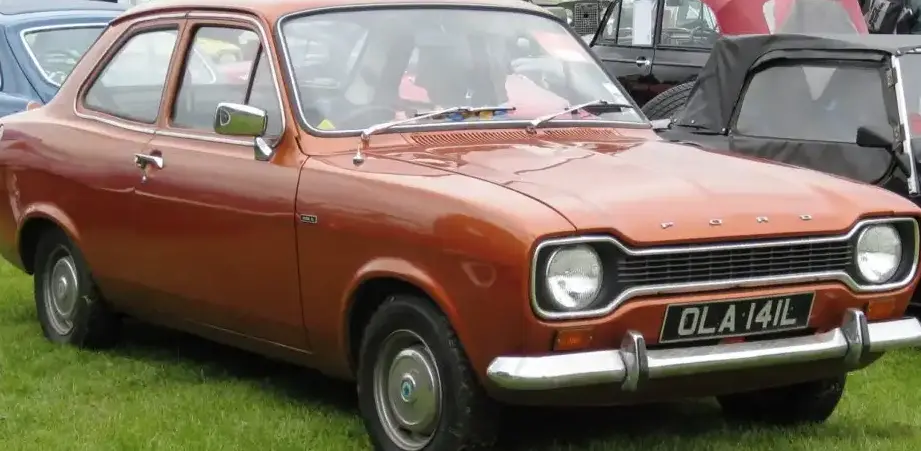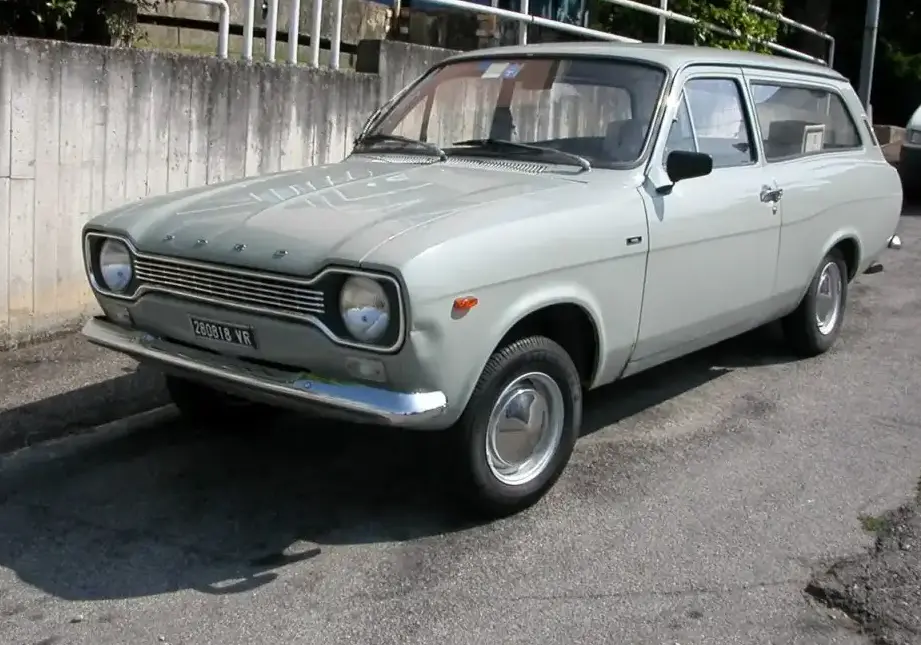
The Ford Escort II 1.3, produced between 1979 and 1980, represented the entry point into the second generation of Ford’s globally successful Escort line. Part of the ATH series, this variant was primarily aimed at budget-conscious buyers in Europe, offering affordable transportation during a period of economic uncertainty. While not known for blistering performance, the 1.3-liter engine and typically paired automatic transmission provided a comfortable and economical driving experience. It served as a crucial volume seller for Ford, offering a practical and reliable option alongside more powerful and luxurious trims.
Technical Specifications
| Brand | Ford |
| Model | Escort |
| Generation | Escort II (ATH) |
| Type (Engine) | 1.3 (60 Hp) |
| Start of Production | 1979 |
| End of Production | 1980 |
| Powertrain Architecture | Internal Combustion Engine |
| Body Type | Sedan |
| Fuel Type | Petrol (Gasoline) |
| Power | 60 Hp |
| Engine Aspiration | Naturally Aspirated |
| Engine Displacement | 1.3 Liters |
| Transmission | Automatic (Typically 3-speed) |
| Drive Type | Front-Wheel Drive |
| Curb Weight (approx.) | 950 – 1000 kg (2094 – 2205 lbs) |
Powertrain & Engine Architecture
The heart of the Escort II 1.3 was the Ford Valencia engine, a 1.3-liter inline-four cylinder petrol engine. This engine, internally designated as the 1300cc OHV, was a relatively simple design, prioritizing reliability and fuel efficiency over outright power. It featured a single overhead valve (OHV) configuration, with two valves per cylinder. Fuel delivery was managed by a single downdraft carburetor, typically a Ford 32 DFEV, which was known for its simplicity and ease of maintenance. The engine produced 60 horsepower at approximately 6000 rpm and around 78 lb-ft of torque at 3000 rpm.
The automatic transmission offered with this variant was generally a three-speed unit, designed to provide smooth, if not particularly rapid, gear changes. While the exact transmission model varied depending on the specific market, it was typically a Ford-sourced automatic, geared towards maximizing fuel economy and providing comfortable cruising. The transmission was not known for its sporty characteristics, and its primary focus was on ease of use for everyday driving.
Driving Characteristics
The Escort II 1.3 Automatic offered a decidedly unhurried driving experience. Acceleration was modest, with a 0-60 mph time estimated to be around 15-18 seconds. The automatic transmission, while convenient, contributed to this lack of urgency, often holding onto gears for longer periods to maximize fuel efficiency. However, the engine proved to be reasonably tractable, providing sufficient power for everyday driving situations, such as commuting and running errands. The gear ratios were optimized for low-speed cruising and fuel economy, rather than spirited performance. Compared to the manual transmission versions of the 1.3, the automatic suffered a noticeable performance penalty, and even the slightly more powerful 1.6-liter models offered a significantly more engaging driving experience. The automatic transmission also reduced the driver’s control over gear selection, limiting the ability to exploit the engine’s limited power band.
Equipment & Trim Levels
The Escort II 1.3 Automatic typically represented the base trim level. Standard equipment was relatively sparse, reflecting its position as an affordable family car. Interior upholstery was typically cloth, often in durable but basic patterns. The dashboard was constructed from hard plastics and featured a simple instrument cluster with a speedometer, fuel gauge, and temperature gauge. A basic AM radio was often included, but features like power windows, central locking, or air conditioning were generally unavailable or offered as rare, expensive options. Exterior features included basic steel wheels with hubcaps, chrome bumpers, and relatively simple lighting. Optional extras included a vinyl roof, upgraded interior trim, and a more powerful radio.
Chassis & Braking
The Escort II featured a MacPherson strut front suspension and a leaf spring rear suspension. This setup provided a comfortable ride, but handling was not particularly sharp. The 1.3 Automatic, due to its heavier automatic transmission and generally higher weight, exhibited slightly more body roll than its manual counterparts. Braking was typically accomplished with disc brakes on the front wheels and drum brakes on the rear. The braking system was adequate for everyday driving, but lacked the stopping power of more modern vehicles. Stabilizer bars were often omitted on the base 1.3 trim, further contributing to the car’s less-than-sporty handling characteristics.
Market Reception & Comparison
The Escort II 1.3 Automatic was generally well-received as an affordable and reliable family car. Critics acknowledged its lack of performance, but praised its fuel economy and ease of use. Compared to other trims in the Escort II lineup, such as the 1.6-liter models, the 1.3 Automatic offered significantly less power and a less engaging driving experience. However, it was also considerably cheaper to purchase and operate. In terms of fuel economy, the 1.3 Automatic typically achieved around 30-35 mpg, making it a relatively economical choice for the time. Reliability was generally good, although the carburetor required periodic adjustment and maintenance. Compared to competitors like the Vauxhall Astra and Volkswagen Golf, the Escort II 1.3 Automatic offered a comparable level of practicality and affordability.
Legacy
The Ford Escort II 1.3 Automatic, while not a performance icon, played a significant role in establishing the Escort as a popular and reliable family car. The Valencia engine proved to be durable and relatively easy to maintain, and many examples remain on the road today. In the used car market, these Escorts are often sought after by enthusiasts looking for a classic and affordable vehicle. However, finding well-maintained examples can be challenging, as many have succumbed to rust or neglect. The automatic transmission, while reliable, is not known for its longevity, and may require rebuilding or replacement in older vehicles. Despite its age, the Escort II 1.3 Automatic remains a testament to Ford’s commitment to providing affordable and practical transportation to the masses.