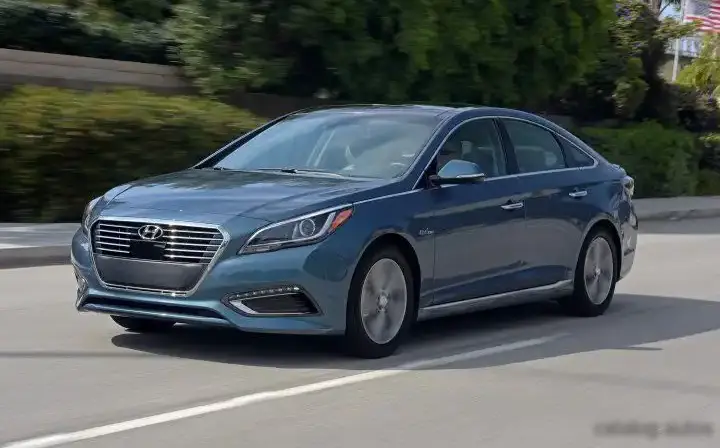
The Hyundai Sonata VII (LF) 2.0 GDi Hybrid SHIFTRONIC, produced from 2015 to 2017, represents a significant step forward in Hyundai’s hybrid technology offerings for the North American and global markets. Positioned as a mid-range trim within the broader LF Sonata lineup, this variant combined a 2.0-liter gasoline direct injection (GDi) engine with an electric motor, offering a balance of fuel efficiency and performance. It was designed to appeal to buyers seeking a technologically advanced and economical sedan without sacrificing the comfort and features expected in the mainstream family car segment. The LF Sonata itself was a crucial model for Hyundai, showcasing a more mature design language and improved build quality, aiming to challenge established competitors like the Toyota Camry and Honda Accord.
Technical Specifications
| Brand | Hyundai |
| Model | Sonata |
| Generation | Sonata VII (LF) |
| Type (Engine) | 2.0 GDi (195 Hp) Hybrid SHIFTRONIC |
| Start of production | 2015 |
| End of production | 2017 |
| Powertrain Architecture | FHEV (Full Hybrid Electric Vehicle) |
| Body type | Sedan |
| Seats | 5 |
| Doors | 4 |
| Fuel consumption (urban) | 6.4 l/100 km (36.8 US mpg) |
| Fuel consumption (extra urban) | 3.7 l/100 km (63.6 US mpg) |
| Fuel consumption (combined) | 4.7 l/100 km (50 US mpg) |
| CO2 emissions | 109 g/km |
| Fuel Type | Petrol (Gasoline) |
| Acceleration 0 – 100 km/h | 9.3 sec |
| Acceleration 0 – 62 mph | 9.3 sec |
| Acceleration 0 – 60 mph | 8.8 sec |
| Maximum speed | 192 km/h (119.3 mph) |
| Battery voltage | 270 V |
| Battery technology | Lithium-polymer (LiPo) |
| Electric motor power | 52 Hp @ 1770-2000 rpm |
| Electric motor Torque | 204 Nm @ 0-1770 rpm (150.46 lb.-ft.) |
| System power | 195 Hp |
| System torque | 320 Nm @ 2000 rpm (236.02 lb.-ft.) |
| Engine power | 156 Hp @ 6000 rpm |
| Engine torque | 190 Nm @ 5000 rpm (140.14 lb.-ft.) |
| Engine displacement | 1999 cm3 (121.99 cu. in.) |
| Number of cylinders | 4 |
| Cylinder Bore | 81 mm (3.19 in.) |
| Piston Stroke | 97 mm (3.82 in.) |
| Compression ratio | 13.5:1 |
| Engine oil capacity | 4.1 l (4.33 US qt | 3.61 UK qt) |
| Coolant capacity | 6.6 l (6.97 US qt | 5.81 UK qt) |
| Kerb Weight | 1590-1660 kg (3505.35 – 3659.67 lbs.) |
| Max. weight | 2100 kg (4629.71 lbs.) |
| Trunk (boot) space | 440 l (15.54 cu. ft.) |
| Fuel tank capacity | 60 l (15.85 US gal | 13.2 UK gal) |
| Length | 4855 mm (191.14 in.) |
| Width | 1865 mm (73.43 in.) |
| Height | 1485 mm (58.46 in.) |
| Wheelbase | 2805 mm (110.43 in.) |
| Gearbox | 6 gears, automatic transmission SHIFTRONIC |
Powertrain & Engine Architecture
At the heart of the Sonata Hybrid was Hyundai’s 2.0-liter Nu engine, designated as the GDi variant due to its Gasoline Direct Injection system. This engine, internally known under codes like the NU2.0, produced 156 horsepower and 140 lb-ft of torque. The direct injection system allowed for more precise fuel delivery, improving both power and efficiency. The engine featured a DOHC (Double Overhead Camshaft) valvetrain with Continuously Variable Valve Timing (CVVT) on both intake and exhaust sides, further optimizing performance across the rev range. Paired with the gasoline engine was a 52 horsepower electric motor powered by a 270V lithium-polymer battery pack. The combined system output reached 195 horsepower and 236 lb-ft of torque. The SHIFTRONIC six-speed automatic transmission was specifically tuned for hybrid applications, offering smooth and efficient gear changes. Unlike traditional automatic transmissions, the SHIFTRONIC unit allowed for a degree of manual control, enabling drivers to select gears for more responsive driving or engine braking.
Driving Characteristics
The 2.0 GDi Hybrid SHIFTRONIC offered a noticeably different driving experience compared to the standard 2.4-liter gasoline-only Sonata. While not a performance-oriented trim, the hybrid powertrain provided adequate acceleration, achieving 0-60 mph in around 8.8 seconds. The electric motor provided instant torque, contributing to brisk initial acceleration. The SHIFTRONIC transmission, while generally smooth, could sometimes exhibit a slight hesitation during downshifts. The hybrid system prioritized fuel efficiency, and the engine would often operate in a narrow RPM band to maximize economy. The steering was light and precise, typical of Hyundai’s tuning, and the suspension provided a comfortable ride, absorbing bumps and imperfections in the road well. Compared to the more powerful 2.0T (turbocharged) Sonata, the hybrid lacked the same level of outright performance, but it excelled in fuel economy and quiet operation.
Equipment & Trim Levels
The 2.0 GDi Hybrid SHIFTRONIC typically came well-equipped, reflecting its mid-range positioning. Standard features included automatic climate control, a touchscreen infotainment system with Bluetooth connectivity, a rearview camera, and keyless entry. Higher trim levels offered upgrades such as leather upholstery, a premium audio system, a panoramic sunroof, and advanced safety features like blind-spot monitoring and lane departure warning. Interior materials were generally of good quality, with a focus on comfort and practicality. The dashboard layout was clean and intuitive, with logically placed controls. Optional extras included navigation, heated and ventilated front seats, and a power driver’s seat.
Chassis & Braking
The Sonata Hybrid utilized a McPherson strut front suspension and a multi-link rear suspension, providing a good balance of ride comfort and handling. The suspension was tuned to prioritize comfort, but it still offered reasonable control in corners. Braking duties were handled by ventilated disc brakes on all four wheels. The hybrid system incorporated regenerative braking, which captured energy during deceleration and used it to recharge the battery, further enhancing fuel efficiency. ABS (Anti-lock Braking System) was standard, providing enhanced stopping power and control in emergency situations. The steering system was an electric power-assisted rack and pinion setup, offering light and precise steering feel.
Market Reception & Comparison
The Hyundai Sonata Hybrid was generally well-received by automotive critics. Reviewers praised its fuel efficiency, comfortable ride, and well-equipped interior. However, some criticized its lack of sporty handling and the occasionally hesitant behavior of the SHIFTRONIC transmission. Compared to the standard Sonata trims, the hybrid offered significantly better fuel economy, but it came at a higher price. Against competitors like the Toyota Camry Hybrid and Ford Fusion Hybrid, the Sonata Hybrid offered a competitive combination of features, fuel economy, and value. Reliability reports generally indicated good long-term dependability, although some owners reported minor issues with the hybrid system components.
Legacy
The Hyundai Sonata VII (LF) 2.0 GDi Hybrid SHIFTRONIC played a key role in establishing Hyundai as a serious contender in the hybrid market. The powertrain proved to be relatively reliable, and many examples remain on the road today. In the used car market, these Sonatas are often sought after by buyers looking for a fuel-efficient and well-equipped mid-size sedan. The technology introduced in the LF Sonata Hybrid paved the way for Hyundai’s continued development of hybrid and electric vehicles, solidifying its commitment to sustainable transportation. The model demonstrated Hyundai’s ability to deliver a compelling alternative to established hybrid leaders, contributing to the brand’s growing reputation for quality and innovation.