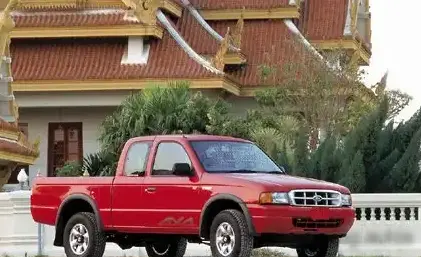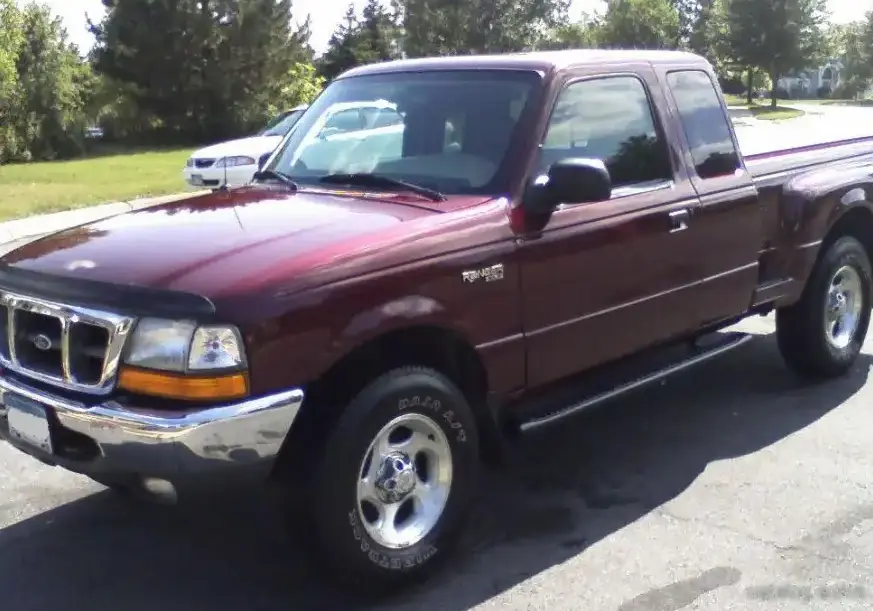
The Ford Ranger I Super Cab 3.0 V6, produced from 2001 to 2006, represented a mid-range offering within the first generation of the globally successful Ford Ranger compact pickup truck. This variant, characterized by its 3.0-liter V6 engine producing 154 horsepower, was primarily marketed towards buyers seeking a balance between capability, affordability, and everyday usability. The Super Cab configuration, offering extended rear seating, broadened the Ranger’s appeal beyond purely utilitarian applications. It was a key model for Ford in North America, competing with offerings from Chevrolet, GMC, and Toyota.
Technical Specifications
| Brand | Ford |
| Model | Ranger |
| Generation | Ranger I Super Cab |
| Type (Engine) | 3.0 V6 (154 Hp) |
| Start of production | 2001 year |
| End of production | 2006 year |
| Powertrain Architecture | Internal Combustion engine |
| Body type | Pick-up |
| Seats | 4 |
| Doors | 2 |
| Fuel Type | Petrol (Gasoline) |
| Weight-to-power ratio | 9.1 kg/Hp, 110.2 Hp/tonne |
| Power | 154 Hp |
| Engine layout | Front, Longitudinal |
| Number of cylinders | 6 |
| Engine configuration | V-engine |
| Fuel injection system | Multi-port manifold injection |
| Engine aspiration | Naturally aspirated engine |
| Engine oil capacity | 4.3 l (4.54 US qt | 3.78 UK qt) |
| Coolant capacity | 14.3 l (15.11 US qt | 12.58 UK qt) |
| Kerb Weight | 1397 kg (3079.86 lbs.) |
| Max. weight | 1969 kg (4340.9 lbs.) |
| Max load | 572 kg (1261.04 lbs.) |
| Fuel tank capacity | 62 l (16.38 US gal | 13.64 UK gal) |
| Length | 4763 mm (187.52 in.) |
| Width | 1786 mm (70.31 in.) |
| Height | 1648 mm (64.88 in.) |
| Wheelbase | 2835 mm (111.61 in.) |
| Front track | 1488 mm (58.58 in.) |
| Rear (Back) track | 1455 mm (57.28 in.) |
| Drivetrain Architecture | The Internal combustion engine (ICE) drives the rear wheels of the vehicle. |
| Drive wheel | Rear wheel drive |
| Number of gears and type of gearbox | 5 gears, manual transmission |
| Front suspension | Independent torsion bar, double wishbone |
| Rear suspension | Dependent suspension of two longitudinal semi-elliptic leaf springs |
| Front brakes | Disc |
| Rear brakes | Drum |
| Assisting systems | ABS (Anti-lock braking system) |
| Steering type | Steering rack and pinion |
| Power steering | Hydraulic Steering |
| Tires size | 225/70 R15 |
| Wheel rims size | 15 |
Powertrain & Engine Architecture
The heart of the Ranger I Super Cab 3.0 V6 is the Ford Vulcan V6 engine. This 3.0-liter (182 cubic inch) engine, internally designated as the 302E, is a naturally aspirated, 12-valve (two valves per cylinder) powerplant. It utilizes a multi-port fuel injection system, delivering fuel directly into the intake ports for improved combustion efficiency. The Vulcan engine is known for its robust construction and relative simplicity, contributing to its longevity. The 154 horsepower output is achieved at 5,500 rpm, with peak torque of 195 lb-ft arriving at 3,500 rpm. This engine is longitudinally mounted in the chassis, driving the rear wheels. The standard transmission for this variant was a 5-speed manual, although an automatic transmission was also available as an option. The automatic, a 4R70W, is a four-speed unit known for its durability, but it does impact fuel economy and acceleration compared to the manual.
Driving Characteristics
The 3.0 V6 with the 5-speed manual transmission provides adequate, though not exhilarating, performance. Acceleration from 0 to 60 mph typically takes around 9-10 seconds. The engine delivers a relatively flat torque curve, making it suitable for hauling and towing, but it lacks the responsiveness of some competitors’ engines. The manual transmission offers precise shifts and allows the driver to maintain control in various driving conditions. The optional automatic transmission, while convenient, results in noticeable power loss and slower acceleration. The rear-wheel-drive configuration provides a traditional truck feel, with predictable handling characteristics. The suspension, featuring independent torsion bars up front and leaf springs in the rear, offers a comfortable ride for everyday use, but can feel somewhat bouncy when heavily loaded.
Equipment & Trim Levels
The Ranger I Super Cab 3.0 V6 typically came standard with features such as air conditioning, an AM/FM radio, and basic cloth upholstery. The Super Cab configuration added a small rear seat, increasing passenger capacity. Higher trim levels, such as the XLT, offered upgrades like power windows and locks, cruise control, upgraded audio systems, and alloy wheels. Optional extras included a towing package, a sliding rear window, and a premium sound system. Interior materials were generally durable and utilitarian, reflecting the truck’s work-oriented nature. The dashboard layout was straightforward and functional, prioritizing ease of use over aesthetic appeal.
Chassis & Braking
The Ranger I Super Cab utilized a body-on-frame construction, providing a robust and durable platform. The front suspension employed independent torsion bars and double wishbone components, while the rear suspension relied on a traditional leaf spring setup. This configuration offered a good balance between ride comfort and load-carrying capacity. Braking duties were handled by disc brakes at the front and drum brakes at the rear. An Anti-lock Braking System (ABS) was standard, enhancing safety and control during emergency braking situations. Steering was accomplished via a hydraulic rack-and-pinion system, providing responsive and precise handling. The standard tire size was 225/70 R15, mounted on 15-inch steel or alloy wheels.
Market Reception & Comparison
The Ranger I Super Cab 3.0 V6 was generally well-received by critics and consumers alike. It was praised for its affordability, reliability, and versatility. However, some reviewers noted that the 3.0 V6 engine lacked the power and refinement of some competitors’ offerings, particularly the V8 engines available in larger trucks. Compared to the 2.3-liter four-cylinder Ranger, the 3.0 V6 offered significantly more power and torque, making it a better choice for towing and hauling. Fuel economy was reasonable for a truck of its size and class, averaging around 16-18 mpg in city driving and 20-22 mpg on the highway. The 3.0 V6 automatic was often criticized for diminishing fuel economy compared to the manual transmission.
Legacy
The Ford Ranger I Super Cab 3.0 V6 has proven to be a remarkably durable and reliable vehicle. The Vulcan V6 engine is known for its longevity, and many examples are still on the road today with well over 200,000 miles. The relatively simple design of the powertrain makes it relatively easy and inexpensive to maintain. In the used car market, these Rangers are often sought after by buyers looking for an affordable and dependable truck. While not a performance leader, the 3.0 V6 variant offers a solid combination of capability, reliability, and value, cementing its place as a popular and enduring choice among truck enthusiasts.