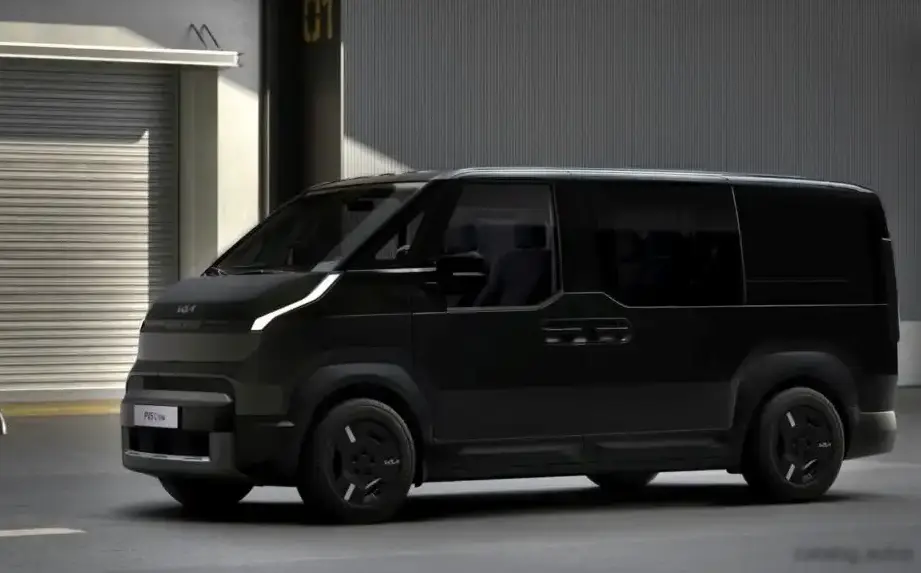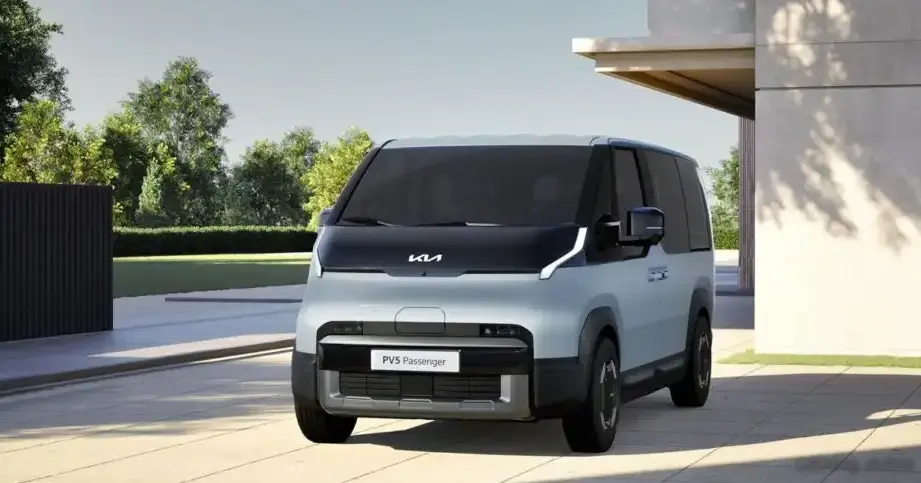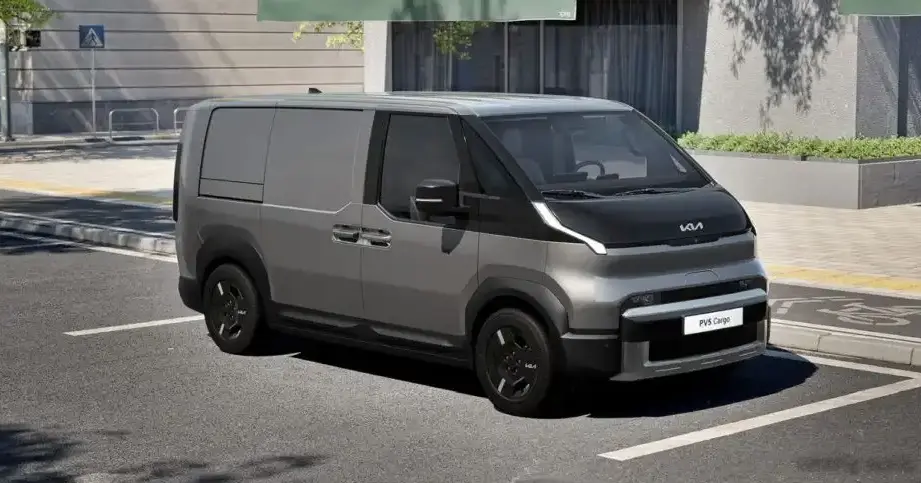
The Kia PV5 Cargo L2/H1 51.5 kWh (122 Hp) Standard Range represents Kia’s entry into the electric commercial vehicle segment, specifically designed for businesses requiring a practical and efficient delivery solution. Introduced in May 2025, this variant is positioned as the base model within the PV5 Cargo lineup, offering a balance between affordability, range, and cargo capacity. The PV5, built on a dedicated electric vehicle platform, aims to provide a compelling alternative to traditional internal combustion engine vans in the European and potentially North American markets, catering to urban logistics and last-mile delivery services. It’s a five-door, two-seater minivan focused on maximizing usable space for commercial applications.
Technical Specifications
| Brand | Kia |
| Model | PV5 |
| Generation | PV5 Cargo L2/H1 |
| Type (Engine) | 51.5 kWh (122 Hp) Standard Range |
| Start of production | May, 2025 |
| Powertrain Architecture | BEV (Electric Vehicle) |
| Body type | Minivan |
| Seats | 2 |
| Doors | 5 |
| Fuel Type | Electricity |
| Acceleration 0 – 100 km/h | 16.3 sec |
| Acceleration 0 – 62 mph | 16.3 sec |
| Acceleration 0 – 60 mph | 15.5 sec |
| Maximum speed | 135 km/h (83.89 mph) |
| Weight-to-power ratio | 15.2 kg/Hp, 65.6 Hp/tonne |
| Weight-to-torque ratio | 7.4 kg/Nm, 134.4 Nm/tonne |
| Gross battery capacity | 51.5 kWh |
| Battery voltage | 400 V |
| Battery technology | Lithium nickel manganese cobalt oxides (Li-NMC) |
| Battery location | Below the floor |
| All-electric range (WLTP) | 291.3 km (181.01 mi) |
| Electric motor power | 122 Hp |
| Electric motor Torque | 250 Nm (184.39 lb.-ft.) |
| Electric motor location | Front axle, Transverse |
| Electric motor type | Synchronous |
| System power | 122 Hp |
| System torque | 250 Nm (184.39 lb.-ft.) |
| Kerb Weight | 1860 kg (4100.6 lbs.) |
| Max. weight | 2650 kg (5842.25 lbs.) |
| Max load | 790 kg (1741.65 lbs.) |
| Trunk (boot) space – maximum | 4400 l (155.38 cu. ft.) |
| Max. roof load | 100 kg (220.46 lbs.) |
| Permitted trailer load with brakes (12%) | 450 kg (992.08 lbs.) |
| Length | 4695 mm (184.84 in.) |
| Width | 1895 mm (74.61 in.) |
| Height | 1923 mm (75.71 in.) |
| Wheelbase | 2995 mm (117.91 in.) |
| Minimum turning circle | 10.8 m (35.43 ft.) |
| Drivetrain Architecture | One electric motor drives the front wheels. |
| Drive wheel | Front wheel drive |
| Number of gears and type of gearbox | 1 gears, automatic transmission |
| Front suspension | Double wishbone |
| Rear suspension | Torsion |
| Assisting systems | ABS (Anti-lock braking system) |
| Steering type | Steering rack and pinion |
| Power steering | Electric Steering |
| Tires size | 215/65 R16 |
| Wheel rims size | 16 |
Powertrain & Engine Architecture
The Kia PV5 Cargo L2/H1 utilizes a fully electric powertrain, centered around a single synchronous electric motor driving the front wheels. The motor produces 122 horsepower and 250 Nm (184.39 lb.-ft.) of torque. Power is drawn from a 51.5 kWh lithium-nickel-manganese-cobalt oxide (Li-NMC) battery pack located under the vehicle floor, contributing to a lower center of gravity and maximizing interior space. The 400V architecture allows for relatively quick charging times, though specific charging rates depend on the charging infrastructure used. The single-speed automatic transmission is inherent to electric vehicle design, providing seamless acceleration without traditional gear changes. The motor’s transverse mounting optimizes packaging within the front-wheel-drive configuration.
Driving Characteristics
The 122 hp output and single-speed automatic transmission of the PV5 Cargo L2/H1 prioritize efficiency and usability over outright performance. Acceleration is modest, with a 0-60 mph time of approximately 15.5 seconds. This configuration is geared towards consistent, predictable power delivery ideal for urban driving and delivery routes. Compared to potential higher-output variants within the PV5 range, this model offers a more economical driving experience, sacrificing some speed for increased range and reduced energy consumption. The single gear ratio provides instant torque, making it suitable for stop-and-go traffic, but limits top-end speed to 135 km/h (83.89 mph). The front-wheel-drive layout provides adequate traction for most conditions, but may exhibit some torque steer under hard acceleration.
Equipment & Trim Levels
As the standard range model, the PV5 Cargo L2/H1 is equipped with essential features for commercial use. Standard equipment includes air conditioning, a basic infotainment system with Bluetooth connectivity, and a suite of safety features such as ABS (Anti-lock Braking System). The interior is designed for durability and practicality, with hard-wearing upholstery and a functional dashboard layout. While not lavishly appointed, the focus is on providing a comfortable and efficient workspace for the driver. Optional extras may include upgraded infotainment systems with navigation, parking sensors, and advanced driver-assistance systems (ADAS) like lane-keeping assist and adaptive cruise control. The two-seater configuration maximizes cargo space.
Chassis & Braking
The PV5 Cargo L2/H1 features a double wishbone front suspension and a torsion beam rear suspension. This setup balances ride comfort with load-carrying capability. The torsion beam rear suspension is a cost-effective solution for commercial vehicles, providing adequate stability without the complexity of a multi-link setup. The braking system utilizes disc brakes on the front wheels and drum brakes on the rear, a common configuration for vehicles in this weight class. Electric power steering provides light and precise steering feel, enhancing maneuverability in urban environments. The vehicle rides on 16-inch wheels with 215/65 R16 tires, offering a good compromise between comfort and rolling resistance.
Market Reception & Comparison
The Kia PV5 Cargo L2/H1 is expected to compete with established electric vans such as the Ford E-Transit, Renault Kangoo E-Tech, and Citroën ë-Berlingo. Critics anticipate that the PV5 will offer a competitive price point and a generous cargo capacity. The 291.3 km (181.01 mi) WLTP range is considered adequate for many urban delivery routes, but may be a limiting factor for longer-distance applications. Fuel economy, measured in kWh per 100 km, is expected to be competitive with other electric vans in its class. Reliability is a key consideration for commercial operators, and Kia’s reputation for build quality and warranty coverage is expected to be a positive factor.
Legacy
The long-term reliability of the PV5’s electric powertrain remains to be seen, but Kia’s extensive experience with electric vehicles suggests a robust and durable system. The Li-NMC battery technology is well-established and offers a good balance between energy density and lifespan. As the electric vehicle market matures, the PV5 Cargo L2/H1 is poised to become a significant player in the commercial vehicle segment, offering businesses a sustainable and cost-effective transportation solution. Its success will depend on factors such as charging infrastructure availability, government incentives, and the overall adoption of electric vehicles by businesses.