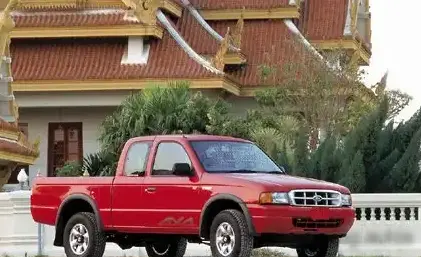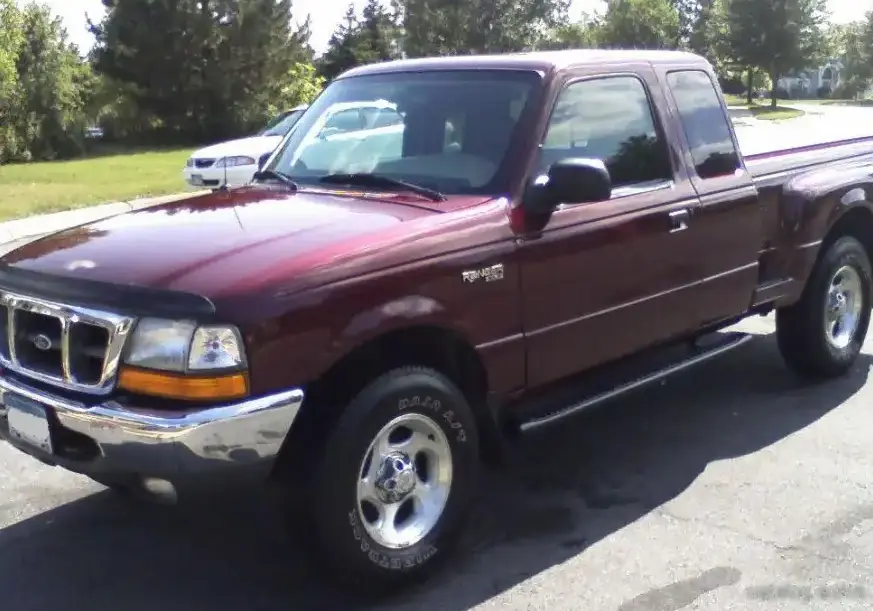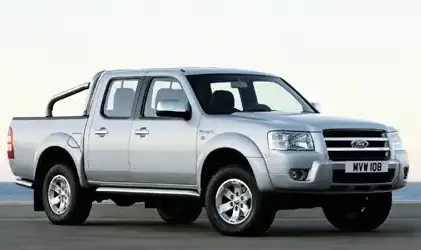
The Ford Ranger II Double Cab 2.3, produced from 2006 to 2010, represented a significant offering in the mid-size pickup truck segment, particularly in markets outside of North America where smaller, more fuel-efficient trucks were highly valued. This variant, equipped with a 2.3-liter inline-four engine producing 143 horsepower, served as a versatile option for both commercial and personal use, offering a balance between capability and affordability. It was positioned as a step up from base models, providing a larger cabin and increased practicality compared to the standard Ranger cab configurations. The Ranger II Double Cab, built on the global Ford P2 platform, aimed to bridge the gap between compact pickups and full-size trucks, appealing to customers needing passenger space alongside cargo capacity.
Technical Specifications
| Brand | Ford |
| Model | Ranger |
| Generation | Ranger II Double Cab |
| Type (Engine) | 2.3 (143 Hp) |
| Start of production | 2006 |
| End of production | 2010 |
| Powertrain Architecture | Internal Combustion engine |
| Body type | Pick-up |
| Seats | 5 |
| Doors | 4 |
| Fuel Type | Petrol (Gasoline) |
| Power | 143 Hp @ 5250 rpm |
| Power per litre | 63.4 Hp/l |
| Torque | 209 Nm @ 3750 rpm / 154.15 lb.-ft. @ 3750 rpm |
| Engine layout | Front, Longitudinal |
| Engine displacement | 2255 cm3 / 137.61 cu. in. |
| Number of cylinders | 4 |
| Engine configuration | Inline |
| Compression ratio | 9.7:1 |
| Number of valves per cylinder | 4 |
| Fuel injection system | Multi-port manifold injection |
| Engine aspiration | Naturally aspirated engine |
| Engine oil capacity | 3.8 l / 4.02 US qt | 3.34 UK qt |
| Coolant | 10 l / 10.57 US qt | 8.8 UK qt |
| Trunk (boot) space – minimum | 1500 l / 52.97 cu. ft. |
| Fuel tank capacity | 70 l / 18.49 US gal | 15.4 UK gal |
| Length | 5075 mm / 199.8 in. |
| Width | 1805 mm / 71.06 in. |
| Height | 1745 mm / 68.7 in. |
| Wheelbase | 3000 mm / 118.11 in. |
| Front track | 1488 mm / 58.58 in. |
| Rear (Back) track | 1455 mm / 57.28 in. |
| Ride height (ground clearance) | 203 mm / 7.99 in. |
| Drivetrain Architecture | The Internal combustion engine (ICE) drives the rear wheels of the vehicle. |
| Drive wheel | Rear wheel drive |
| Number of gears and type of gearbox | 5 gears, manual transmission |
| Front suspension | Independent torsion bar, double wishbone |
| Rear suspension | Dependent suspension of two longitudinal semi-elliptic leaf springs |
| Front brakes | Ventilated discs |
| Rear brakes | Drum |
| Assisting systems | ABS (Anti-lock braking system) |
| Steering type | Steering rack and pinion |
| Tires size | 235/75 R15; 245/70 R16 |
| Wheel rims size | 15; 16 |
Powertrain & Engine Architecture
The heart of the Ranger II Double Cab 2.3 was the 2.3-liter inline-four cylinder engine. This engine, often referred to internally as a Duratec variant, utilized a cast iron block with an aluminum cylinder head. It featured a single overhead camshaft (SOHC) design with four valves per cylinder, operated by hydraulic lifters. Fuel delivery was managed by a multi-port fuel injection system, providing adequate atomization for efficient combustion. The 9.7:1 compression ratio was a compromise between performance and the ability to run on readily available fuel grades. The engine’s longitudinal mounting allowed for a rear-wheel-drive configuration, common for pickup trucks. The five-speed manual transmission was the standard offering, providing a relatively direct connection between the engine and the wheels. The transmission’s gear ratios were tuned for a balance of acceleration and fuel economy, prioritizing usability over outright performance.
Driving Characteristics
The 143 horsepower and 154 lb-ft of torque produced by the 2.3-liter engine translated to adequate, but not exhilarating, performance. Acceleration was modest, particularly when the vehicle was loaded with passengers or cargo. The five-speed manual transmission allowed drivers to keep the engine in its optimal power band, but frequent downshifting was often necessary when tackling hills or overtaking other vehicles. Compared to the higher-output 2.5-liter or larger engines available in the Ranger II lineup, the 2.3-liter felt noticeably less powerful. However, it offered a more refined driving experience and better fuel economy. The rear-wheel-drive configuration provided a traditional truck feel, with predictable handling characteristics. The suspension, while capable of handling moderate loads, was tuned for comfort rather than sporty handling.
Equipment & Trim Levels
The Ranger II Double Cab 2.3 typically came with a reasonable level of standard equipment. This included power steering, air conditioning, and a basic audio system. Interior upholstery was typically vinyl or cloth, depending on the specific trim level. Higher trim levels offered features such as power windows and locks, upgraded audio systems, and alloy wheels. The Double Cab configuration provided ample space for five passengers, making it a practical choice for families or work crews. Optional extras included a tow package, allowing for the hauling of trailers and other equipment. The dashboard layout was functional and straightforward, prioritizing usability over aesthetics.
Chassis & Braking
The Ranger II Double Cab utilized a body-on-frame construction, providing a robust and durable platform. The front suspension consisted of an independent torsion bar setup with double wishbone control arms, offering a comfortable ride and decent handling. The rear suspension employed a traditional leaf spring design, providing a stable platform for carrying loads. Braking duties were handled by ventilated discs at the front and drum brakes at the rear. Anti-lock braking system (ABS) was standard, enhancing safety by preventing wheel lockup during hard braking. The steering system utilized a rack and pinion setup, providing precise and responsive steering feel.
Market Reception & Comparison
The Ranger II Double Cab 2.3 was generally well-received by critics as a practical and affordable pickup truck. It was praised for its spacious cabin, decent fuel economy, and reasonable price point. However, some reviewers noted its lack of power compared to larger engine options. Compared to the 2.5-liter engine, the 2.3-liter offered better fuel economy but significantly less performance. The 2.3-liter was also considered more reliable than some of the larger, more complex engines in the Ranger II lineup. In terms of fuel economy, the 2.3-liter typically achieved around 20-25 mpg in combined driving conditions, making it an attractive option for budget-conscious buyers.
Legacy
The Ford Ranger II Double Cab 2.3 has proven to be a relatively reliable and durable vehicle. The 2.3-liter engine, while not particularly powerful, is known for its longevity and relatively low maintenance costs. In the used car market, these Rangers are often sought after by buyers looking for an affordable and practical pickup truck. While not a collector’s item, well-maintained examples continue to command reasonable prices. The Ranger II Double Cab 2.3 represents a significant chapter in Ford’s pickup truck history, offering a versatile and affordable option for a wide range of customers.