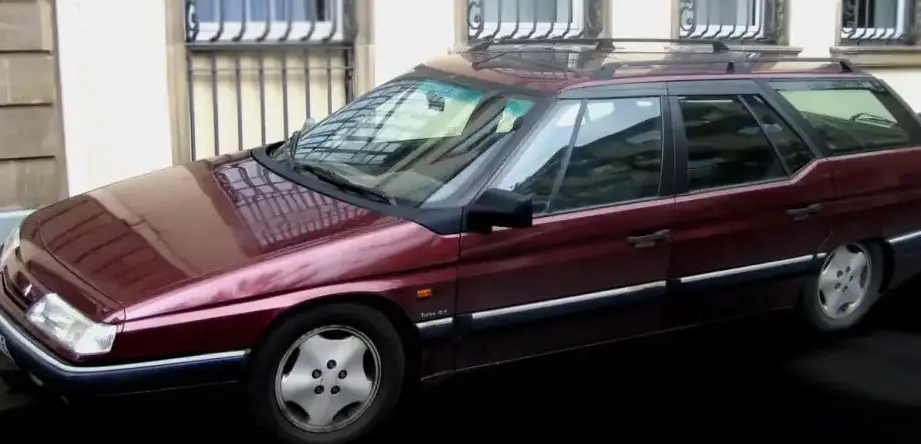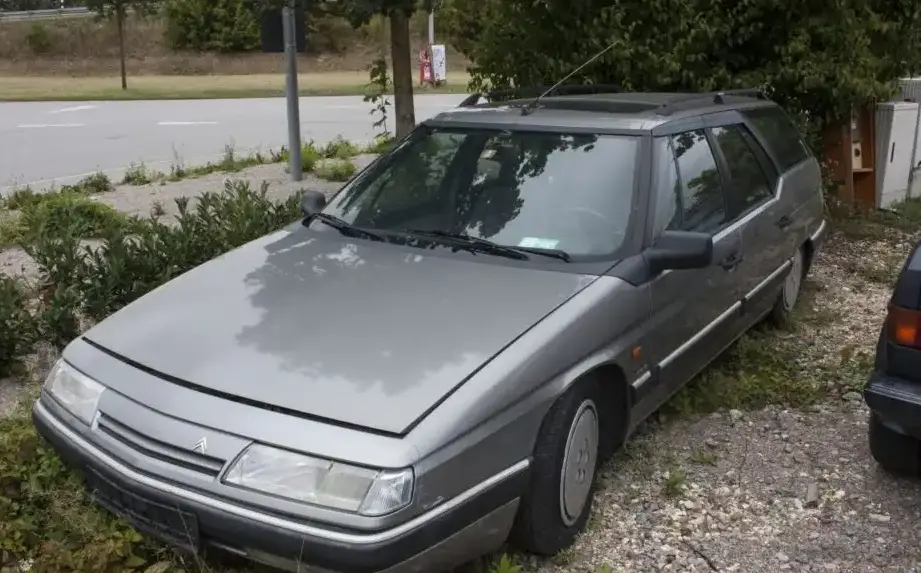
The Citroen XM Break (Y3) 2.1 D12, produced between 1991 and 1994, represented a unique offering within the second generation of the XM series. Positioned as a diesel-powered variant of the spacious Break (estate) body style, it catered to buyers prioritizing fuel economy and practicality over outright performance. The Y3 designation refers to the facelifted version of the XM, introducing subtle styling revisions and improvements to the interior. This particular 2.1-liter diesel engine, producing 83 horsepower, was aimed at a segment of the market seeking a comfortable and capable long-distance cruiser, particularly in Europe where diesel engines enjoyed significant popularity due to favorable taxation and fuel costs.
Technical Specifications
| Brand | Citroen |
| Model | XM |
| Generation | XM Break (Y3) |
| Type (Engine) | 2.1 D12 (83 Hp) |
| Start of production | 1991 year |
| End of production | 1994 year |
| Powertrain Architecture | Internal Combustion engine |
| Body type | Station wagon (estate) |
| Seats | 5 |
| Doors | 5 |
| Fuel consumption (economy) – urban | 8.1 l/100 km (29 US mpg, 34.9 UK mpg, 12.3 km/l) |
| Fuel consumption (economy) – extra urban | 5.2 l/100 km (45.2 US mpg, 54.3 UK mpg, 19.2 km/l) |
| Fuel Type | Diesel |
| Acceleration 0 – 100 km/h | 19 sec |
| Acceleration 0 – 62 mph | 19 sec |
| Acceleration 0 – 60 mph | 18.1 sec |
| Maximum speed | 168 km/h (104.39 mph) |
| Weight-to-power ratio | 16.9 kg/Hp, 59 Hp/tonne |
| Weight-to-torque ratio | 9.7 kg/Nm, 103.1 Nm/tonne |
| Power | 83 Hp @ 4600 rpm |
| Power per litre | 38.8 Hp/l |
| Torque | 145 Nm @ 2000 rpm (106.95 lb.-ft. @ 2000 rpm) |
| Engine layout | Front, Transverse |
| Engine Model/Code | PJZ XUD11A |
| Engine displacement | 2138 cm3 (130.47 cu. in.) |
| Number of cylinders | 4 |
| Engine configuration | Inline |
| Cylinder Bore | 86 mm (3.39 in.) |
| Piston Stroke | 92 mm (3.62 in.) |
| Compression ratio | 22.5:1 |
| Number of valves per cylinder | 3 |
| Fuel injection system | Precombustion chamber injection |
| Engine aspiration | Naturally aspirated engine |
| Valvetrain | OHC |
| Engine oil capacity | 6 l (6.34 US qt | 5.28 UK qt) |
| Coolant | 9.8 l (10.36 US qt | 8.62 UK qt) |
| Kerb Weight | 1406 kg (3099.7 lbs.) |
| Max. weight | 2030 kg (4475.38 lbs.) |
| Max load | 624 kg (1375.68 lbs.) |
| Trunk (boot) space – minimum | 720 l (25.43 cu. ft.) |
| Trunk (boot) space – maximum | 1960 l (69.22 cu. ft.) |
| Fuel tank capacity | 80 l (21.13 US gal | 17.6 UK gal) |
| Max. roof load | 100 kg (220.46 lbs.) |
| Permitted trailer load with brakes (12%) | 1300 kg (2866.01 lbs.) |
| Permitted trailer load without brakes | 690 kg (1521.19 lbs.) |
| Permitted towbar download | 80 kg (176.37 lbs.) |
| Length | 4963 mm (195.39 in.) |
| Width | 1794 mm (70.63 in.) |
| Width including mirrors | 2000 mm (78.74 in.) |
| Height | 1385 mm (54.53 in.) |
| Wheelbase | 2850 mm (112.2 in.) |
| Front track | 1520 mm (59.84 in.) |
| Rear (Back) track | 1450 mm (57.09 in.) |
| Front overhang | 1068 mm (42.05 in.) |
| Rear overhang | 1045 mm (41.14 in.) |
| Ride height (ground clearance) | 141 mm (5.55 in.) |
| Minimum turning circle (turning diameter) | 12.5 m (41.01 ft.) |
| Drivetrain Architecture | The Internal combustion engine (ICE) drives the front wheels of the vehicle. |
| Drive wheel | Front wheel drive |
| Number of gears and type of gearbox | 5 gears, manual transmission |
| Front suspension | Independent type McPherson, Wishbone |
| Rear suspension | Hydro-pneumatic element, Trailing arm |
| Front brakes | Ventilated discs |
| Rear brakes | Disc |
| Assisting systems | ABS (Anti-lock braking system) |
| Steering type | Steering rack and pinion |
| Power steering | Hydraulic Steering |
| Tires size | 195/65 R15 |
Powertrain & Engine Architecture
The heart of the XM Break 2.1 D12 is the PJZ XUD11A engine, a 2.1-liter inline-four diesel. This engine, a mainstay of Citroen and Peugeot vehicles during the 1980s and 1990s, is characterized by its indirect injection system utilizing precombustion chambers. This design, while not as efficient as direct injection, offered quieter operation and improved cold-starting performance – crucial for European climates. The XUD11A features a single overhead camshaft (OHC) operating three valves per cylinder (two intake, one exhaust). The engine’s robust construction and relatively simple design contributed to its longevity and ease of maintenance. The 5-speed manual transmission was the standard offering, providing a reasonable spread of gears for maximizing fuel economy and managing the engine’s torque output. The transmission was chosen to complement the engine’s characteristics, prioritizing smooth operation and durability over sporty performance.
Driving Characteristics
The 2.1 D12-powered XM Break offered a distinctly relaxed driving experience. With 83 horsepower and 145 Nm (107 lb-ft) of torque, acceleration was modest, taking approximately 19 seconds to reach 62 mph. However, the engine’s torque delivery was relatively strong at lower RPMs, making it well-suited for effortless cruising on highways and tackling inclines. The long gearing, typical of European diesel vehicles of the era, further emphasized fuel efficiency. Compared to the more powerful petrol (gasoline) versions of the XM, such as the 2.0 16V or V6 models, the 2.1 D12 prioritized economy and comfort over outright speed. The hydropneumatic suspension, a Citroen hallmark, provided an exceptionally smooth and comfortable ride, absorbing bumps and imperfections in the road surface with ease. This, combined with the diesel engine’s quiet operation, made the XM Break an excellent long-distance touring vehicle.
Equipment & Trim Levels
The XM Break 2.1 D12 typically came equipped with a reasonable level of standard features, reflecting its positioning as a practical and comfortable family vehicle. These included central locking, power windows, and a basic audio system. Interior upholstery was typically cloth, with a focus on durability and comfort. Optional extras included air conditioning, a sunroof, and upgraded audio systems. Trim levels varied depending on the market, but generally, the 2.1 D12 represented a mid-range offering within the XM Break lineup, positioned above the base models but below the more luxurious and powerful variants.
Chassis & Braking
The XM Break featured an independent front suspension utilizing McPherson struts and wishbones, providing good handling and stability. The rear suspension employed Citroen’s innovative hydropneumatic system, offering self-leveling and exceptional ride comfort. Braking duties were handled by ventilated discs at the front and solid discs at the rear. Anti-lock braking system (ABS) was standard, enhancing safety and control during emergency braking situations. The steering was a rack-and-pinion system with hydraulic power assistance, providing light and precise steering feel.
Market Reception & Comparison
The Citroen XM Break 2.1 D12 was generally well-received by critics for its comfortable ride, spacious interior, and fuel efficiency. However, its relatively slow acceleration was often noted. Compared to other diesel estate cars of the time, such as the Ford Mondeo Estate or Peugeot 505 Break, the XM offered a unique combination of comfort and practicality, thanks to its hydropneumatic suspension. Fuel economy was competitive, making it an attractive option for drivers covering long distances. Reliability was generally good, although the complexity of the hydropneumatic suspension could occasionally lead to maintenance issues.
Legacy
The Citroen XM Break 2.1 D12, while not the most powerful or fastest version of the XM, remains a fondly remembered vehicle for its unique blend of comfort, practicality, and fuel efficiency. The XUD11A engine is known for its durability and longevity, and well-maintained examples continue to be found on the road today. In the used car market, the 2.1 D12 variant represents a relatively affordable entry point into XM ownership, offering a classic Citroen experience without the higher costs associated with the more powerful models. The hydropneumatic suspension, while requiring occasional maintenance, continues to be praised for its exceptional ride quality, making the XM Break 2.1 D12 a comfortable and distinctive choice for enthusiasts and classic car collectors.