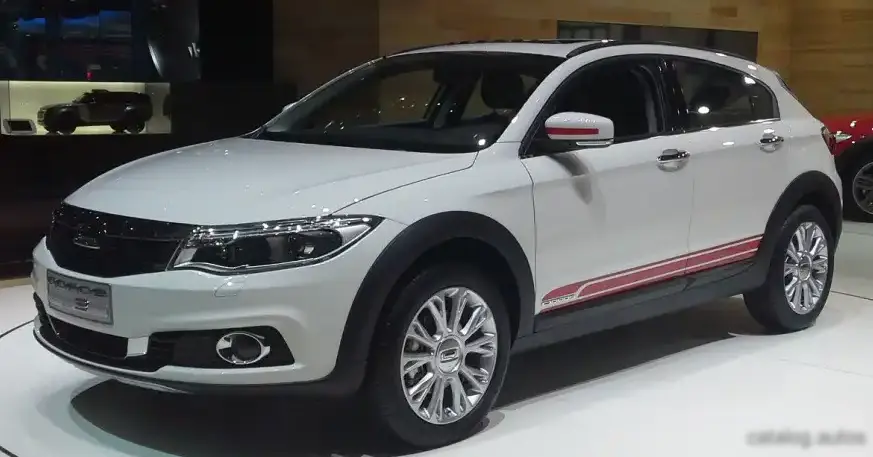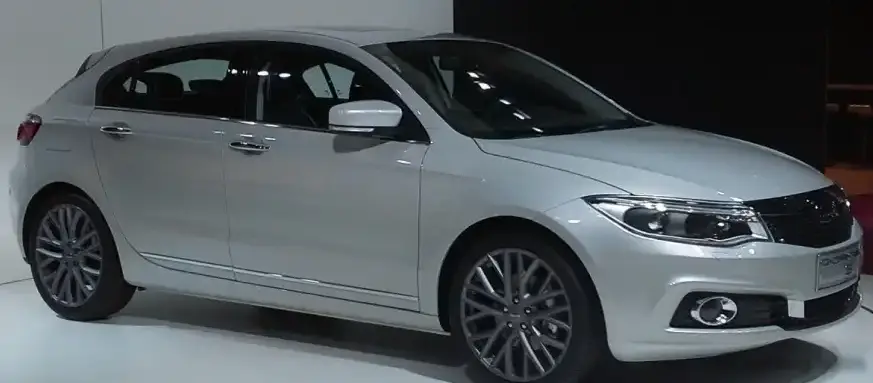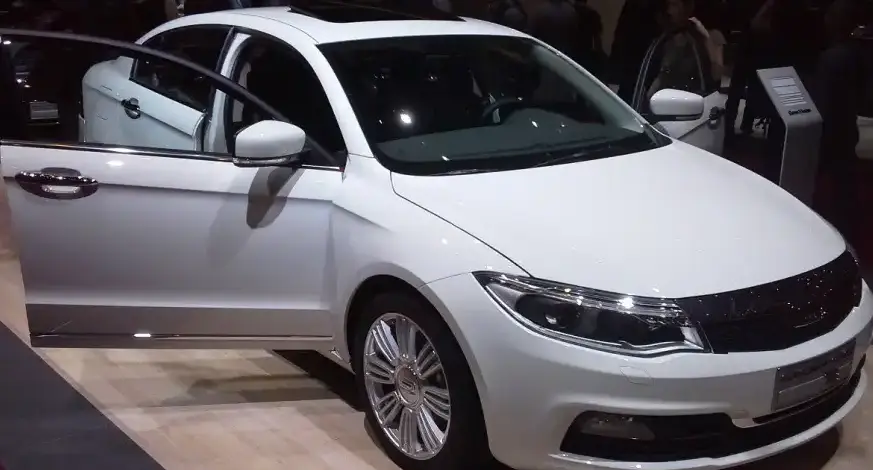
The Qoros 3 Sedan 1.6 (126 Hp) DCT represents a significant entry for the Qoros brand, launched in November 2013 and continuing production through 2020. Positioned as a mainstream compact sedan, it aimed to compete in a crowded market segment, primarily targeting consumers in China and select European countries. This variant, equipped with a 1.6-liter gasoline engine and a dual-clutch transmission (DCT), served as a core offering within the 3 Sedan lineup, bridging the gap between more basic trims and potentially higher-performance options that were later introduced. The Qoros 3 was built on the A3 platform, shared with other vehicles, and represented Qoros’s initial foray into establishing itself as a modern automotive manufacturer.
Technical Specifications
| Brand | Qoros |
| Model | 3 |
| Generation | 3 Sedan |
| Type (Engine) | 1.6 (126 Hp) DCT |
| Start of production | November, 2013 |
| End of production | 2020 |
| Powertrain Architecture | Internal Combustion engine |
| Body type | Sedan |
| Seats | 5 |
| Doors | 4 |
| Fuel consumption (combined) | 5.8-6.0 l/100 km (40.6 – 39.2 US mpg, 48.7 – 47.1 UK mpg, 17.2 – 16.7 km/l) |
| Fuel Type | Petrol (Gasoline) |
| Acceleration 0 – 100 km/h | 12.6 sec |
| Acceleration 0 – 62 mph | 12.6 sec |
| Acceleration 0 – 60 mph | 12 sec |
| Maximum speed | 197 km/h (122.41 mph) |
| Weight-to-power ratio | 10.8 kg/Hp, 92.6 Hp/tonne |
| Weight-to-torque ratio | 8.8 kg/Nm, 114 Nm/tonne |
| Power | 126 Hp @ 6150 rpm |
| Power per litre | 78.8 Hp/l |
| Torque | 155 Nm @ 3900 rpm (114.32 lb.-ft. @ 3900 rpm) |
| Engine layout | Front, Transverse |
| Engine Model/Code | SQRE4G16 |
| Engine displacement | 1598 cm3 (97.52 cu. in.) |
| Number of cylinders | 4 |
| Engine configuration | Inline |
| Number of valves per cylinder | 4 |
| Fuel injection system | Multi-port manifold injection |
| Engine aspiration | Naturally aspirated engine |
| Valvetrain | DOHC, D-VVT |
| Kerb Weight | 1360-1375 kg (2998.29 – 3031.36 lbs.) |
| Trunk (boot) space – minimum | 450 l (15.89 cu. ft.) |
| Trunk (boot) space – maximum | 900 l (31.78 cu. ft.) |
| Fuel tank capacity | 55 l (14.53 US gal | 12.1 UK gal) |
| Length | 4627 mm (182.17 in.) |
| Width | 1839 mm (72.4 in.) |
| Height | 1445 mm (56.89 in.) |
| Wheelbase | 2702 mm (106.38 in.) |
| Front track | 1579 mm (62.17 in.) |
| Rear (Back) track | 1585 mm (62.4 in.) |
| Minimum turning circle | 11.5 m (37.73 ft.) |
| Drivetrain Architecture | The Internal combustion engine (ICE) drives the front wheels of the vehicle. |
| Drive wheel | Front wheel drive |
| Number of gears and type of gearbox | 6 gears, automatic transmission DCT |
| Front suspension | Independent type McPherson |
| Rear suspension | Semi-independent, coil spring |
| Front brakes | Ventilated discs |
| Rear brakes | Disc |
| Assisting systems | ABS (Anti-lock braking system) |
| Steering type | Steering rack and pinion |
| Power steering | Electric Steering |
| Tires size | 205/60 R16 |
| Wheel rims size | 16 |
Powertrain & Engine Architecture
At the heart of the Qoros 3 Sedan 1.6 DCT lies the SQRE4G16 engine, a 1.6-liter inline-four cylinder gasoline engine. This engine utilizes a naturally aspirated configuration with multi-port fuel injection and a double overhead camshaft (DOHC) valvetrain incorporating dynamic valve variable timing (D-VVT). This technology helps optimize engine performance and fuel efficiency across a wider range of engine speeds. The engine produces 126 horsepower at 6150 rpm and 155 Nm (114 lb-ft) of torque at 3900 rpm. The engine’s design prioritizes a balance between adequate power for everyday driving and reasonable fuel consumption. The engine is transversely mounted, driving the front wheels. Paired with the engine is a 6-speed dual-clutch transmission (DCT). DCTs offer faster and smoother gear changes compared to traditional automatic transmissions, contributing to improved acceleration and a more engaging driving experience.
Driving Characteristics
The 1.6-liter engine and DCT combination in the Qoros 3 Sedan delivers a respectable, though not particularly sporty, driving experience. Acceleration from 0 to 100 km/h (0-62 mph) takes approximately 12.6 seconds. The DCT provides quick shifts, but the engine’s relatively modest torque output means that strong acceleration requires downshifting. Compared to potential higher-output variants (if offered), this 1.6L version prioritizes fuel economy and ease of driving over outright performance. The gear ratios are tuned for efficiency, resulting in a comfortable cruising experience on highways. The steering is light and precise, making it easy to maneuver in urban environments. Overall, the driving experience is geared towards practicality and comfort rather than enthusiast-level performance.
Equipment & Trim Levels
The Qoros 3 Sedan 1.6 DCT typically came equipped with a standard set of features designed to appeal to a broad range of buyers. These included air conditioning, power windows, power door locks, and a basic audio system with USB connectivity. Higher trim levels offered upgrades such as alloy wheels, a touchscreen infotainment system, rear parking sensors, and automatic climate control. Interior upholstery was generally cloth, with options for leatherette in higher trims. Safety features included ABS (Anti-lock Braking System) and airbags. The specific trim levels and available options varied depending on the market.
Chassis & Braking
The Qoros 3 Sedan utilizes a front-wheel-drive layout with an independent McPherson strut suspension in the front and a semi-independent coil spring suspension in the rear. This suspension setup provides a comfortable ride quality, absorbing bumps and irregularities in the road surface effectively. The front brakes are ventilated discs, providing adequate stopping power, while the rear brakes are solid discs. The steering system employs an electric power steering (EPS) system, offering light and precise steering feel. The chassis is designed to balance ride comfort with handling stability.
Market Reception & Comparison
The Qoros 3 Sedan 1.6 DCT received mixed reviews from automotive critics. While praised for its modern design, build quality, and standard features, it was often criticized for its relatively uninspiring engine performance and lack of brand recognition. Compared to other compact sedans in its class, such as the Volkswagen Jetta or the Hyundai Elantra, the Qoros 3 offered a competitive price point but lacked the established reputation and extensive dealer network of its rivals. Fuel economy was generally considered to be good, falling within the 5.8-6.0 l/100 km range. Reliability reports were limited due to the brand’s relatively short history, but early indications suggested that the powertrain was generally reliable.
Legacy
The Qoros 3 Sedan 1.6 DCT played a crucial role in establishing Qoros as a new player in the automotive market. While the brand ultimately faced challenges in gaining widespread acceptance, the 3 Sedan demonstrated Qoros’s commitment to building modern, well-equipped vehicles. In the used car market, the 1.6 DCT variant is generally considered a practical and affordable option, offering good value for money. The SQRE4G16 engine has proven to be reasonably durable, and the DCT transmission, while requiring occasional maintenance, is generally reliable. The Qoros 3 Sedan, particularly this 1.6L variant, represents an interesting chapter in the evolution of the Chinese automotive industry and its attempts to compete on the global stage.