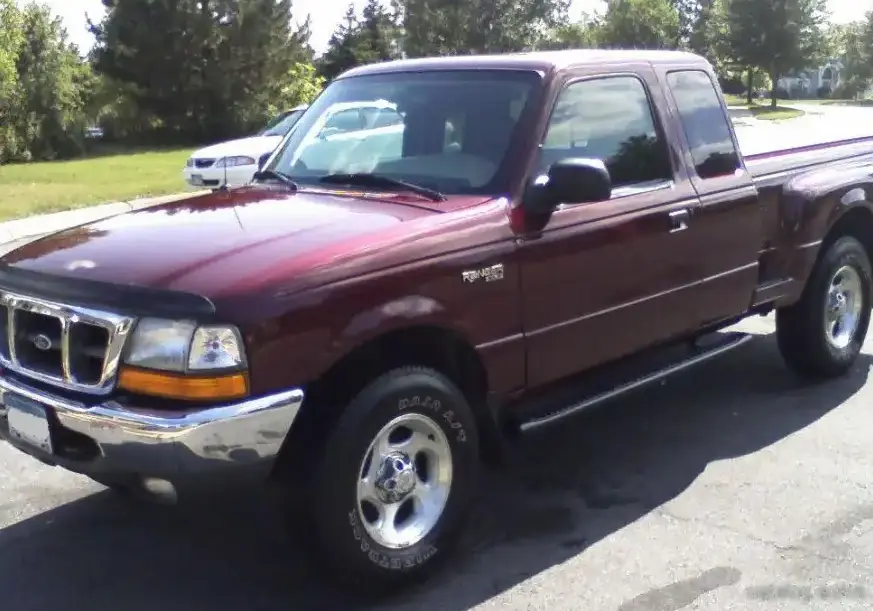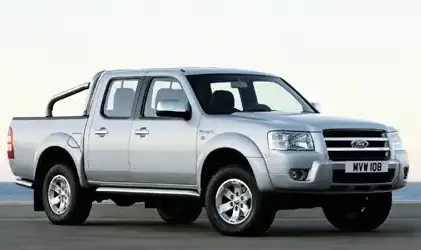
The Ford Ranger II Double Cab 2.5 TDCi 4×4, produced between 2006 and 2012, represents a significant iteration of Ford’s globally successful Ranger pickup truck. This variant, powered by the 2.5-liter TDCi diesel engine producing 143 horsepower, was a popular choice in European and international markets where a robust, versatile, and relatively affordable workhorse was in demand. It slotted into the Ranger II lineup as a mid-range offering, balancing capability with practicality and fuel efficiency. The Double Cab configuration provided seating for five passengers, making it suitable for both commercial and family use, a key differentiator from the standard cab models.
Technical Specifications
| Brand | Ford |
| Model | Ranger |
| Generation | Ranger II Double Cab |
| Type (Engine) | 2.5 TDCi (143 Hp) 4×4 |
| Start of production | 2006 |
| End of production | 2012 |
| Powertrain Architecture | Internal Combustion engine |
| Body type | Pick-up |
| Seats | 5 |
| Doors | 4 |
| Fuel Type | Diesel |
| Acceleration 0 – 100 km/h | 13 sec |
| Acceleration 0 – 62 mph | 13 sec |
| Acceleration 0 – 60 mph | 12.4 sec |
| Maximum speed | 149 km/h (92.58 mph) |
| Emission standard | Euro 4 |
| Weight-to-power ratio | 13.7 kg/Hp, 73.1 Hp/tonne |
| Weight-to-torque ratio | 5.6 kg/Nm, 179 Nm/tonne |
| Power | 143 Hp @ 3600 rpm |
| Power per litre | 57.2 Hp/l |
| Torque | 350 Nm (258.15 lb.-ft.) |
| Engine layout | Front, Longitudinal |
| Engine Model/Code | WLAT |
| Engine displacement | 2500 cm3 (152.56 cu. in.) |
| Number of cylinders | 4 |
| Engine configuration | Inline |
| Number of valves per cylinder | 4 |
| Fuel injection system | Diesel Commonrail |
| Engine aspiration | Turbocharger, Intercooler |
| Engine oil capacity | 7 l (7.4 US qt | 6.16 UK qt) |
| Coolant | 9.4 l (9.93 US qt | 8.27 UK qt) |
| Kerb Weight | 1955 kg (4310.04 lbs.) |
| Max. weight | 2855 kg (6294.2 lbs.) |
| Max load | 900 kg (1984.16 lbs.) |
| Fuel tank capacity | 60 l (15.85 US gal | 13.2 UK gal) |
| Length | 5170 mm (203.54 in.) |
| Width | 1715 mm (67.52 in.) |
| Height | 1745 mm (68.7 in.) |
| Wheelbase | 3000 mm (118.11 in.) |
| Drive wheel | All wheel drive (4×4) |
| Number of gears and type of gearbox | 5 gears, manual transmission |
| Front suspension | Independent torsion bar, double wishbone |
| Rear suspension | Dependent suspension of two longitudinal semi-elliptic leaf springs |
| Front brakes | Disc |
| Rear brakes | Drum |
| Assisting systems | ABS (Anti-lock braking system) |
| Steering type | Steering rack and pinion |
| Power steering | Hydraulic Steering |
| Tires size | 235/75 R15; 245/70 R16 |
| Wheel rims size | 15; 16 |
Powertrain & Engine Architecture
The heart of the Ranger II Double Cab 2.5 TDCi 4×4 is the WLAT engine, a 2.5-liter inline-four cylinder diesel. This engine utilizes a common rail direct injection system, delivering fuel at extremely high pressure for improved combustion efficiency and reduced emissions. A turbocharger with an intercooler further enhances performance by forcing more air into the cylinders. The engine produces 143 horsepower at 3600 rpm and a respectable 350 Nm (258 lb-ft) of torque. The five-speed manual transmission was the standard offering for this variant, providing a balance between fuel economy and usability. The transmission’s gear ratios were tuned for both on-road comfort and off-road capability, with a relatively low first gear for tackling challenging terrain.
Driving Characteristics
The 2.5 TDCi engine, while not exceptionally powerful, provided adequate performance for everyday driving and moderate hauling. Acceleration from 0-60 mph took around 12.4 seconds, and top speed was limited to approximately 92.58 mph. The engine’s torque curve was relatively flat, meaning that usable power was available across a wide range of engine speeds. This made it easy to drive in various conditions, whether navigating city streets or towing a trailer. Compared to the higher-output 3.2-liter TDCi engine offered in some Ranger II models, the 2.5 TDCi felt less strained during acceleration but lacked the same level of outright performance. The manual transmission offered precise gear changes, and the 4×4 system provided excellent traction in slippery conditions.
Equipment & Trim Levels
The Double Cab 2.5 TDCi 4×4 typically came equipped with features such as air conditioning, power steering, central locking, and an AM/FM radio. Higher trim levels offered upgrades like alloy wheels, electric windows, and a more sophisticated audio system. Interior upholstery was generally cloth, with durable plastics used throughout the cabin. Optional extras included a limited-slip differential, a tow bar, and various accessories for customizing the vehicle. The Double Cab configuration provided ample space for five passengers, with a usable rear seat and a reasonably sized cargo bed.
Chassis & Braking
The Ranger II Double Cab featured a robust chassis designed to withstand the rigors of off-road use and heavy loads. The front suspension utilized an independent torsion bar and double wishbone setup, providing a comfortable ride and good handling. The rear suspension employed a traditional leaf spring design, offering durability and load-carrying capacity. Braking duties were handled by disc brakes at the front and drum brakes at the rear. An Anti-lock Braking System (ABS) was standard, enhancing safety during emergency braking situations. The steering system was a rack and pinion type with hydraulic power assistance, providing precise and responsive steering feel.
Market Reception & Comparison
The Ford Ranger II Double Cab 2.5 TDCi 4×4 was generally well-received by critics and buyers alike. It was praised for its versatility, durability, and relatively affordable price point. Fuel economy was a strong point, with the 2.5 TDCi engine returning reasonable mileage for a vehicle of its size and capability. Compared to other pickups in its class, such as the Toyota Hilux and Nissan Navara, the Ranger II offered a compelling combination of features and value. However, some critics noted that the interior was somewhat basic and lacked the refinement of some competitors. The 2.5 TDCi engine, while reliable, was not as powerful as some of the larger diesel engines available in other pickups.
Legacy
The Ford Ranger II Double Cab 2.5 TDCi 4×4 has proven to be a reliable and durable workhorse over the years. The WLAT engine, while not without its quirks, is generally considered to be a robust and long-lasting unit. In the used car market today, these Rangers are still sought after by those looking for a practical and affordable pickup truck. Maintenance costs are relatively low, and parts are readily available. However, potential buyers should be aware of common issues such as turbocharger wear and potential problems with the fuel injection system. Overall, the Ranger II Double Cab 2.5 TDCi 4×4 remains a popular choice for those who need a versatile and dependable pickup truck.