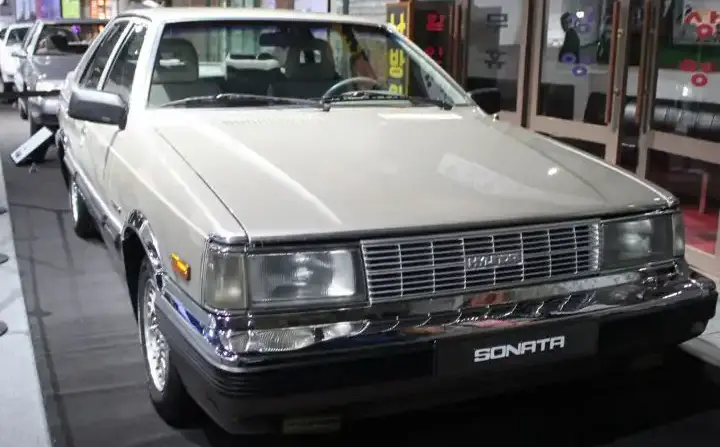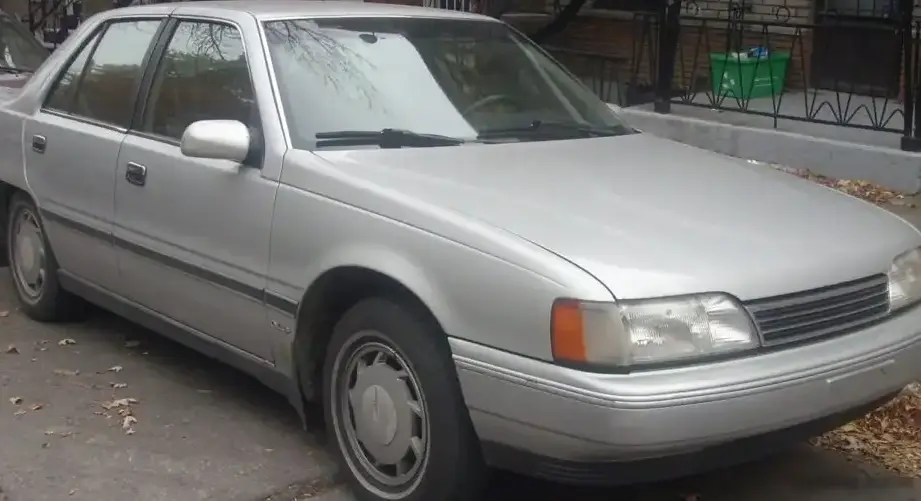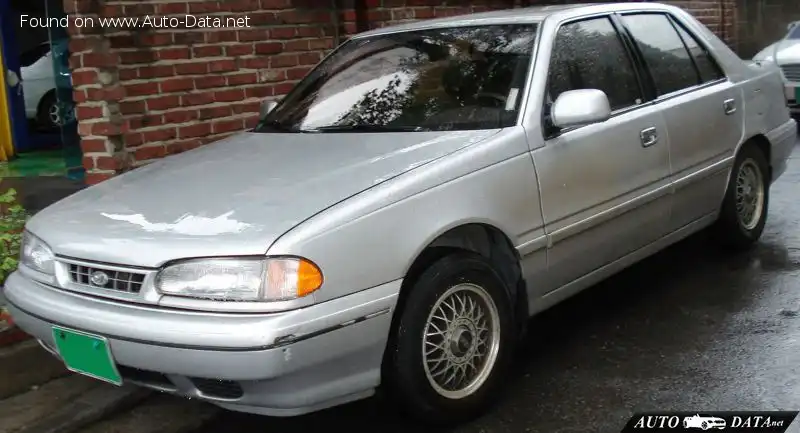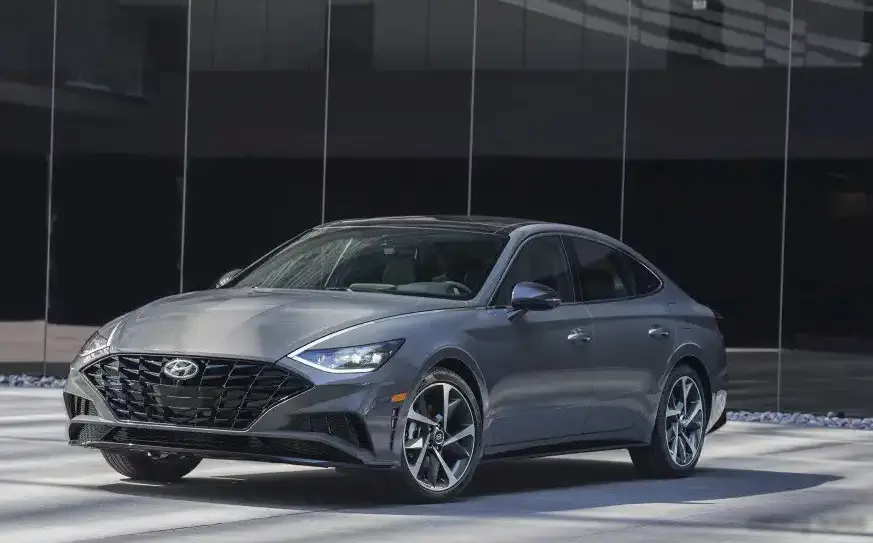
The Hyundai Sonata DN8, launched in March 2019, represented a significant step forward for Hyundai’s mid-size sedan. The eighth generation of the Sonata, designated DN8, moved away from the previous generation’s more conservative styling and embraced a bolder, more expressive design language. Within the DN8 lineup, the 2.5 GDI (Gasoline Direct Injection) variant with the 8-speed automatic transmission served as the mainstream offering, positioned as a balance between affordability and performance. Production of this specific configuration continued through the 2023 model year. It was a key model for Hyundai in the North American market, competing directly with established rivals like the Toyota Camry, Honda Accord, and Nissan Altima.
Technical Specifications
| Brand | Hyundai |
| Model | Sonata |
| Generation | Sonata VIII (DN8) |
| Type (Engine) | 2.5 GDI (191 Hp) Automatic |
| Start of production | March, 2019 |
| End of production | 2023 |
| Powertrain Architecture | Internal Combustion engine |
| Body type | Sedan |
| Seats | 5 |
| Doors | 4 |
| Fuel consumption (economy) – urban | 8.4-8.7 l/100 km (28 – 27 US mpg) |
| Fuel consumption (economy) – extra urban | 6.2-6.4 l/100 km (37.9 – 36.8 US mpg) |
| Fuel consumption (economy) – combined | 7.4-7.6 l/100 km (31.8 – 30.9 US mpg) |
| Fuel Type | Petrol (Gasoline) |
| Emission standard | SULEV 30 |
| Weight-to-power ratio | 7.4 kg/Hp, 135 Hp/tonne |
| Weight-to-torque ratio | 5.8 kg/Nm, 173.1 Nm/tonne |
| Power | 191 Hp @ 6100 rpm |
| Power per litre | 76.5 Hp/l |
| Torque | 245 Nm @ 4000 rpm (180.7 lb.-ft. @ 4000 rpm) |
| Engine layout | Front, Transverse |
| Engine Model/Code | Smartstream / G4KN |
| Engine displacement | 2497 cm3 (152.38 cu. in.) |
| Number of cylinders | 4 |
| Engine configuration | Inline |
| Cylinder Bore | 88.5 mm (3.48 in.) |
| Piston Stroke | 101.5 mm (4 in.) |
| Compression ratio | 13:1 |
| Number of valves per cylinder | 4 |
| Fuel injection system | Direct injection |
| Engine aspiration | Naturally aspirated engine |
| Valvetrain | DOHC |
| Engine oil capacity | 5.8 l (6.13 US qt | 5.1 UK qt) |
| Coolant | 8.59 l (9.08 US qt | 7.56 UK qt) |
| Kerb Weight | 1415-1448 kg (3119.54 – 3192.29 lbs.) |
| Max. weight | 1975 kg (4354.13 lbs.) |
| Max load | 527-560 kg (1161.84 – 1234.59 lbs.) |
| Trunk (boot) space – minimum | 453 l (16 cu. ft.) |
| Fuel tank capacity | 60 l (15.85 US gal | 13.2 UK gal) |
| Length | 4900 mm (192.91 in.) |
| Width | 1859 mm (73.19 in.) |
| Height | 1445 mm (56.89 in.) |
| Wheelbase | 2840 mm (111.81 in.) |
| Ride height (ground clearance) | 135 mm (5.31 in.) |
| Drag coefficient (Cd) | 0.27 |
| Minimum turning circle (turning diameter) | 10.9 m (35.76 ft.) |
| Drivetrain Architecture | The Internal combustion engine (ICE) drives the front wheels of the vehicle. |
| Drive wheel | Front wheel drive |
| Number of gears and type of gearbox | 8 gears, automatic transmission |
| Front suspension | Independent type McPherson |
| Rear suspension | Independent multi-link suspension |
| Front brakes | Ventilated discs, 305-325 mm |
| Rear brakes | Disc, 300 mm |
| Assisting systems | ABS (Anti-lock braking system) |
| Steering type | Steering rack and pinion |
| Power steering | Electric Steering |
| Tires size | 205/65 R16; 215/55 R17 |
| Wheel rims size | 6.5J x 16; 7.5J x 17 |
INTRODUCTION
The 2.5-liter GDI Sonata represented the sweet spot in the DN8 lineup for many buyers. It offered a noticeable step up in power and refinement compared to the base 2.0-liter naturally aspirated engine, without the higher price tag and complexity of the turbocharged 1.6T variant. This configuration was widely available across various trim levels, including SE, SEL, and Limited, making it a common sight on American roads. The DN8 Sonata marked a departure from previous designs, adopting a more coupe-like silhouette and a host of new technologies aimed at improving fuel efficiency, safety, and the overall driving experience.
Powertrain & Engine Architecture
At the heart of the 2.5 GDI Sonata is the Hyundai Smartstream G4KN engine, a 2.5-liter inline-four cylinder powerplant. This engine utilizes direct fuel injection, a key technology for maximizing power and fuel economy. The G4KN engine boasts a relatively high compression ratio of 13:1, contributing to its efficiency. The engine’s valvetrain employs a Dual Overhead Camshaft (DOHC) design with four valves per cylinder, optimizing airflow for improved performance. Paired with the engine is Hyundai’s 8-speed automatic transmission, a significant upgrade from the 6-speed units found in earlier Sonatas. This transmission features a wider gear ratio spread, allowing for both efficient highway cruising and responsive acceleration. The transmission is designed for smooth shifts and contributes to the overall refinement of the driving experience.
Driving Characteristics
The 2.5 GDI Sonata Automatic delivers a comfortable and composed driving experience. With 191 horsepower and 180.7 lb-ft of torque, it provides adequate acceleration for everyday driving situations. While not a sports sedan, the engine offers sufficient power for merging onto highways and passing other vehicles. The 8-speed automatic transmission is well-tuned, providing smooth and timely shifts. Compared to the 1.6T turbocharged engine, the 2.5 GDI feels less urgent off the line, but offers a more linear power delivery. The transmission’s gear ratios are optimized for fuel efficiency, keeping engine speeds relatively low during highway cruising. The suspension is tuned for comfort, absorbing bumps and imperfections in the road with ease. Steering feel is light and precise, making the Sonata easy to maneuver in city traffic.
Equipment & Trim Levels
The 2.5 GDI Sonata was available with a wide range of standard and optional equipment, depending on the trim level. The base SE trim typically included features such as an 8-inch touchscreen infotainment system with Apple CarPlay and Android Auto compatibility, a rearview camera, and a suite of safety features including automatic emergency braking, lane keeping assist, and driver attention warning. Higher trims, like the SEL and Limited, added features such as a larger 10.25-inch touchscreen, a premium audio system, leather upholstery, heated and ventilated front seats, a panoramic sunroof, and adaptive cruise control. Optional extras included a head-up display, a wireless charging pad, and a surround-view monitor.
Chassis & Braking
The DN8 Sonata utilizes a front-wheel-drive platform with an independent McPherson strut suspension in the front and an independent multi-link suspension in the rear. This suspension setup provides a good balance of ride comfort and handling. Braking duties are handled by ventilated discs in the front and solid discs in the rear. All trims come standard with Anti-lock Braking System (ABS). The Sonata’s chassis is designed to be lightweight yet rigid, contributing to its handling and safety. The electric power steering system provides precise and responsive steering feel.
Market Reception & Comparison
The 2.5 GDI Sonata Automatic was generally well-received by automotive critics. It was praised for its comfortable ride, spacious interior, and long list of standard features. Critics noted that the 2.5-liter engine provided adequate power for most drivers, while the 8-speed automatic transmission offered smooth and efficient shifting. Compared to the 1.6T turbocharged engine, the 2.5 GDI offered a more affordable entry point into the DN8 Sonata lineup. Fuel economy was competitive with other mid-size sedans in its class, achieving around 31-32 mpg in combined driving. Reliability reports have been generally positive, with few major issues reported with the 2.5 GDI engine and 8-speed automatic transmission.
Legacy
The Hyundai Sonata DN8 2.5 GDI Automatic has proven to be a reliable and popular choice in the used car market. The Smartstream engine and 8-speed transmission have demonstrated good long-term durability. The Sonata’s spacious interior, comfortable ride, and long list of features continue to appeal to buyers looking for a practical and well-equipped mid-size sedan. As the DN8 generation ages, these models represent a good value proposition for buyers seeking a modern and reliable vehicle at an affordable price point. The DN8 Sonata helped solidify Hyundai’s reputation as a maker of well-engineered and feature-rich vehicles, challenging the dominance of established Japanese brands in the mid-size sedan segment.