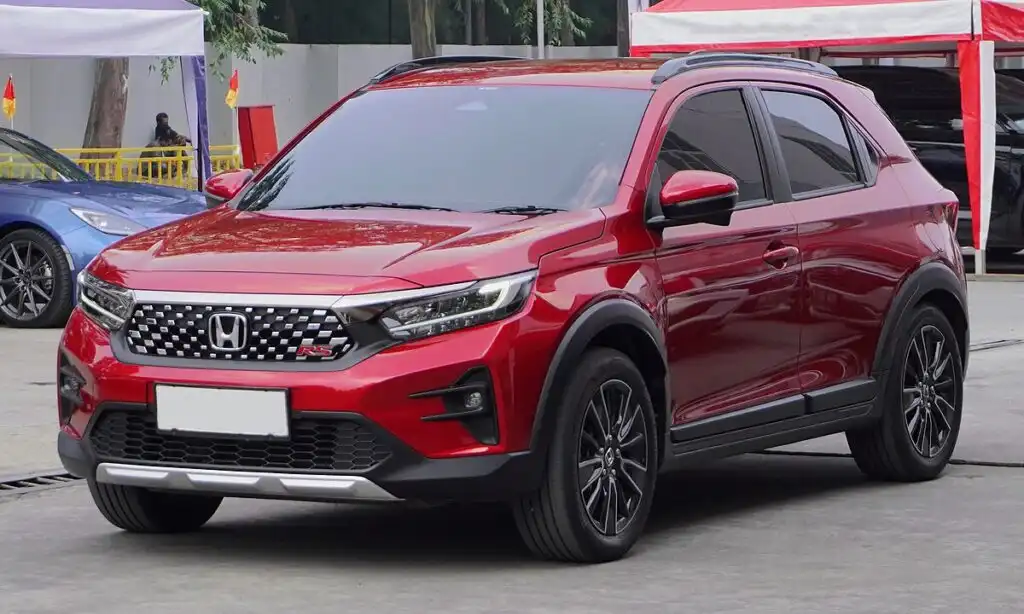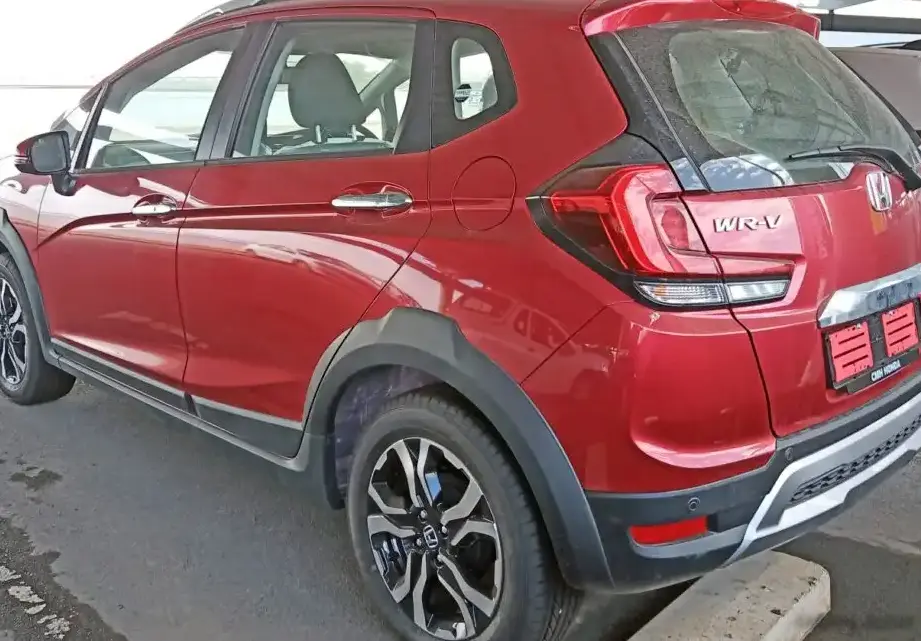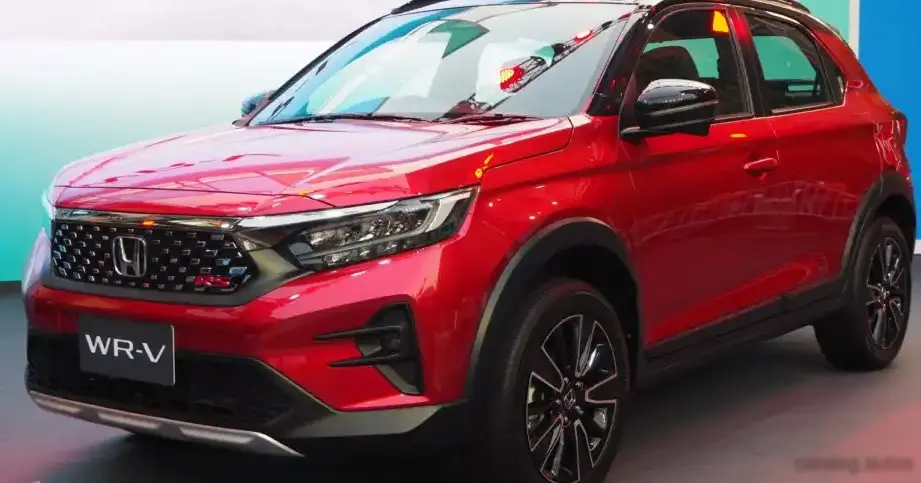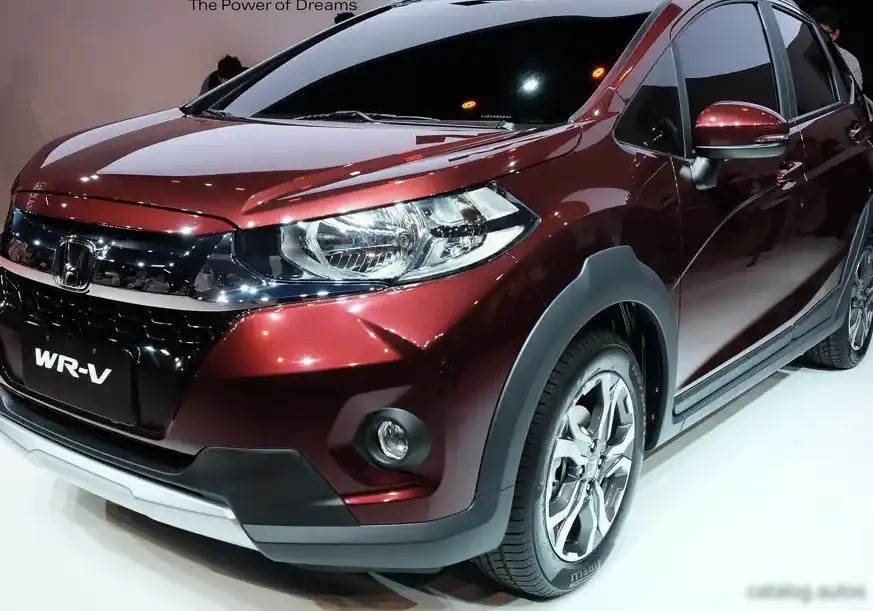
The Honda WR-V I (GL) 1.5 i-DTEC, produced from March 2017 to March 2020, represents Honda’s entry into the subcompact SUV segment, primarily targeted towards emerging markets like India and South America. Positioned as an affordable and practical vehicle, the WR-V is essentially a lifted and restyled version of the Honda Jazz (Fit in North America), offering increased ground clearance and a more rugged aesthetic. This specific 1.5 i-DTEC variant, equipped with a diesel engine and a manual transmission, was a key offering in many of these markets, balancing fuel efficiency with acceptable performance for daily commuting and occasional longer journeys. It falls within the first generation (GL) of the WR-V, built on the Honda B platform.
Technical Specifications
| Brand | Honda |
| Model | WR-V |
| Generation | WR-V I (GL) |
| Type (Engine) | 1.5 i-DTEC (100 Hp) |
| Start of production | March, 2017 |
| End of production | March, 2020 |
| Powertrain Architecture | Internal Combustion engine |
| Body type | SUV |
| Seats | 5 |
| Doors | 5 |
| Fuel Type | Diesel |
| Weight-to-power ratio | 11.8 kg/Hp, 85 Hp/tonne |
| Weight-to-torque ratio | 5.9 kg/Nm, 170.1 Nm/tonne |
| Power | 100 Hp @ 3600 rpm |
| Power per litre | 66.8 Hp/l |
| Torque | 200 Nm @ 1750 rpm (147.51 lb.-ft. @ 1750 rpm) |
| Engine layout | Front, Transverse |
| Engine Model/Code | N15A1 |
| Engine displacement | 1498 cm3 (91.41 cu. in.) |
| Number of cylinders | 4 |
| Engine configuration | Inline |
| Number of valves per cylinder | 4 |
| Engine aspiration | Naturally aspirated engine |
| Valvetrain | DOHC |
| Engine oil capacity | 4.2 l (4.44 US qt | 3.7 UK qt) |
| Coolant | 4.36 l (4.61 US qt | 3.84 UK qt) |
| Kerb Weight | 1176-1204 kg (2592.64 – 2654.37 lbs.) |
| Trunk (boot) space – minimum | 363 l (12.82 cu. ft.) |
| Fuel tank capacity | 40 l (10.57 US gal | 8.8 UK gal) |
| Length | 3999 mm (157.44 in.) |
| Width | 1734 mm (68.27 in.) |
| Height | 1601 mm (63.03 in.) |
| Wheelbase | 2555 mm (100.59 in.) |
| Minimum turning circle (turning diameter) | 10.6 m (34.78 ft.) |
| Drivetrain Architecture | The Internal combustion engine (ICE) drives the front wheels of the vehicle. |
| Drive wheel | Front wheel drive |
| Number of gears and type of gearbox | 6 gears, manual transmission |
| Front suspension | Independent type McPherson |
| Rear suspension | Trailing arm, Coil spring, Elastic beam |
| Front brakes | Ventilated discs |
| Rear brakes | Drum |
| Assisting systems | ABS (Anti-lock braking system) |
| Steering type | Steering rack and pinion |
| Power steering | Electric Steering |
| Tires size | 195/60 R16 |
| Wheel rims size | 6J x 16 |
Powertrain & Engine Architecture
The heart of the WR-V 1.5 i-DTEC is the N15A1 engine, a 1.5-liter inline-four cylinder diesel engine. This engine is a member of Honda’s Earth Dreams Technology series, focusing on efficiency and reduced emissions. It utilizes a common-rail direct injection system, delivering fuel directly into the combustion chamber at high pressure for improved combustion and power output. The engine features a double overhead camshaft (DOHC) valvetrain, optimizing airflow for enhanced performance. The 1.5 i-DTEC is known for its relatively quiet operation for a diesel engine, a characteristic Honda engineers prioritized. The six-speed manual transmission was the sole gearbox option for this variant, providing a balance between fuel economy and driver control. The transmission’s gear ratios are tuned for maximizing torque in lower gears, aiding in city driving and providing sufficient power for overtaking maneuvers.
Driving Characteristics
The 100 horsepower and 200 Nm (147.51 lb-ft) of torque produced by the 1.5 i-DTEC engine provide adequate, though not exhilarating, performance for the WR-V. Acceleration is best described as steady, with a 0-60 mph time estimated around 11-12 seconds. The engine’s peak torque is available from 1750 rpm, meaning that most of the usable power is accessible at lower engine speeds, making it well-suited for everyday driving conditions. Compared to potential gasoline engine options (not widely available in all markets), the diesel offered significantly better fuel economy. However, it lacked the responsiveness and higher-revving nature of a gasoline engine. Compared to higher-spec WR-V models with potentially more powerful engines (depending on the market), the 1.5 i-DTEC felt less capable on inclines or when fully loaded with passengers and cargo.
Equipment & Trim Levels
The WR-V 1.5 i-DTEC typically came with a reasonable level of standard equipment, positioning it as a well-rounded offering in its price segment. Standard features generally included air conditioning, power windows, power steering, and a basic audio system with Bluetooth connectivity. Safety features such as ABS (Anti-lock Braking System) and dual airbags were also standard. Higher trim levels, available as options, could add features like alloy wheels, a touchscreen infotainment system, rear parking sensors, and a multi-function steering wheel. Interior upholstery was typically cloth, with a functional and durable design. The dashboard layout was similar to the Honda Jazz, with a focus on practicality and ease of use.
Chassis & Braking
The WR-V’s chassis is based on the Honda B platform, providing a solid and stable foundation. The front suspension utilizes an independent McPherson strut setup, offering a comfortable ride and good handling characteristics. The rear suspension employs a trailing arm, coil spring, and elastic beam configuration, which is a cost-effective solution that provides adequate ride quality. Braking duties are handled by ventilated discs at the front and drum brakes at the rear. While adequate for the vehicle’s weight and performance, the rear drum brakes were a cost-saving measure and didn’t offer the same stopping power as disc brakes. Electric power steering provides light and easy steering feel, making it convenient for maneuvering in urban environments.
Market Reception & Comparison
The Honda WR-V 1.5 i-DTEC was generally well-received in markets where it was offered. Critics praised its fuel efficiency, practicality, and comfortable ride. However, some reviewers noted that the engine could feel underpowered, especially when the vehicle was fully loaded. Compared to competitors like the Maruti Suzuki Vitara Brezza and Hyundai Creta (depending on the market), the WR-V offered a compelling combination of features and value. The diesel engine provided a significant advantage in terms of fuel economy, making it an attractive option for drivers who covered long distances. Reliability was generally considered to be good, consistent with Honda’s reputation for building durable vehicles.
Legacy
The Honda WR-V 1.5 i-DTEC has proven to be a relatively reliable vehicle in the used car market. The N15A1 diesel engine, while requiring regular maintenance (including diesel particulate filter regeneration), is known for its longevity. Common issues reported by owners include wear and tear on suspension components and occasional problems with the fuel injection system. However, these issues are generally not major and can be addressed with routine servicing. The WR-V’s practicality and fuel efficiency continue to make it a popular choice among budget-conscious buyers looking for a small SUV. Its relatively simple mechanical design also makes it easier and more affordable to maintain compared to more complex modern vehicles.