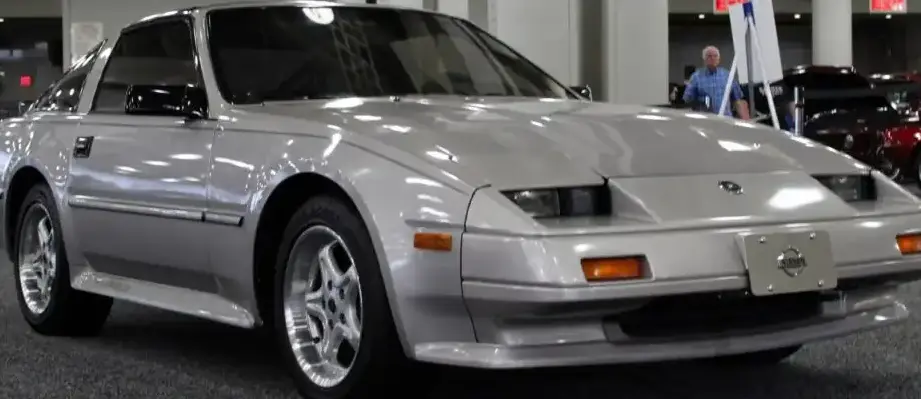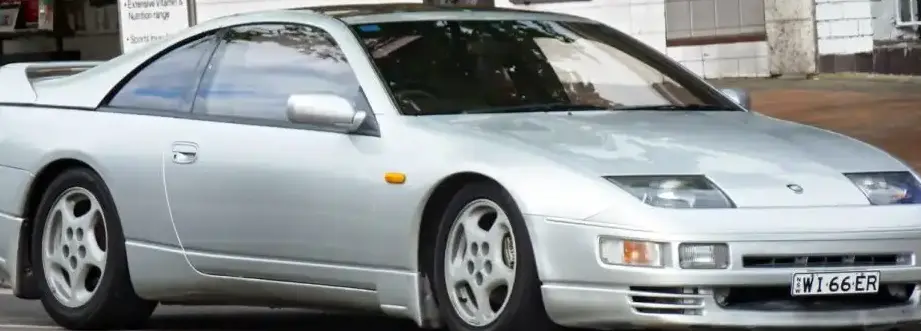
The Nissan 300ZX (Z32) 3.0 Twin Turbo, produced from 1990 to 1995, represents the final iteration of Nissan’s long-running Z-car lineage until the 370Z’s arrival. Positioned as the flagship performance variant of the Z32 generation, it aimed to compete directly with established sports cars like the Porsche 911 and Mazda RX-7. The Z32 marked a significant departure from its predecessors, embracing more sophisticated technology and a more refined driving experience. It was primarily marketed in North America and Japan, with limited sales in other regions. This particular 3.0 Twin Turbo model was the top-of-the-line offering, boasting substantial power and advanced features compared to the naturally aspirated and single-turbo variants.
Technical Specifications
| Brand | Nissan |
| Model | 300 ZX |
| Generation | 300 ZX (Z32) |
| Type (Engine) | 3.0 Twin Turbo (283 Hp) |
| Start of production | 1990 |
| End of production | 1995 |
| Powertrain Architecture | Internal Combustion engine |
| Body type | Coupe |
| Seats | 4 |
| Doors | 2 |
| Fuel consumption (economy) – combined | 11.2 l/100 km |
| Fuel consumption (economy) – combined | 21 US mpg |
| Fuel consumption (economy) – combined | 25.2 UK mpg |
| Fuel consumption (economy) – combined | 8.9 km/l |
| Fuel Type | Petrol (Gasoline) |
| Acceleration 0 – 100 km/h | 5.9 sec |
| Acceleration 0 – 62 mph | 5.9 sec |
| Acceleration 0 – 60 mph | 5.6 sec |
| Maximum speed | 250 km/h |
| Maximum speed | 155.34 mph |
| Weight-to-power ratio | 5.8 kg/Hp |
| Weight-to-power ratio | 172.1 Hp/tonne |
| Weight-to-torque ratio | 4.4 kg/Nm |
| Weight-to-torque ratio | 228.1 Nm/tonne |
| Power | 283 Hp @ 6400 rpm |
| Power per litre | 95.6 Hp/l |
| Torque | 375 Nm @ 3600 rpm |
| Torque | 276.59 lb.-ft. @ 3600 rpm |
| Engine layout | Front, Longitudinal |
| Engine Model/Code | VG30DETT |
| Engine displacement | 2960 cm3 |
| Engine displacement | 180.63 cu. in. |
| Number of cylinders | 6 |
| Engine configuration | V-engine |
| Cylinder Bore | 87 mm |
| Cylinder Bore | 3.43 in. |
| Piston Stroke | 83 mm |
| Piston Stroke | 3.27 in. |
| Compression ratio | 8.5:1 |
| Number of valves per cylinder | 4 |
| Fuel injection system | Multi-port manifold injection |
| Engine aspiration | Turbocharger |
| Valvetrain | DOHC |
| Engine oil capacity | 3.4 l |
| Engine oil capacity | 3.59 US qt | 2.99 UK qt |
| Coolant | 9 l |
| Coolant | 9.51 US qt | 7.92 UK qt |
| Kerb Weight | 1644 kg |
| Kerb Weight | 3624.4 lbs. |
| Max. weight | 2015 kg |
| Max. weight | 4442.31 lbs. |
| Max load | 371 kg |
| Max load | 817.91 lbs. |
| Trunk (boot) space – minimum | 326 l |
| Trunk (boot) space – minimum | 11.51 cu. ft. |
| Fuel tank capacity | 70 l |
| Fuel tank capacity | 18.49 US gal | 15.4 UK gal |
| Length | 4520 mm |
| Length | 177.95 in. |
| Width | 1800 mm |
| Width | 70.87 in. |
| Height | 1255 mm |
| Height | 49.41 in. |
| Wheelbase | 2570 mm |
| Wheelbase | 101.18 in. |
| Front track | 1495 mm |
| Front track | 58.86 in. |
| Rear (Back) track | 1555 mm |
| Rear (Back) track | 61.22 in. |
| Drivetrain Architecture | The Internal combustion engine (ICE) drives the rear wheels of the vehicle. |
| Drive wheel | Rear wheel drive |
| Number of gears and type of gearbox | 5 gears, manual transmission |
| Front suspension | Wishbone |
| Rear suspension | Spring Strut |
| Front brakes | Ventilated discs |
| Rear brakes | Ventilated discs |
| Assisting systems | ABS (Anti-lock braking system) |
| Steering type | Steering rack and pinion |
| Power steering | Hydraulic Steering |
| Tires size | 225/50 R16; 245/45 R16 |
| Wheel rims size | 16 |
Powertrain & Engine Architecture
The heart of the 300ZX Twin Turbo is the VG30DETT, a 3.0-liter V6 engine. This engine utilized a sequential twin-turbocharger system, a relatively advanced setup for its time. Smaller turbos were engaged at lower RPMs for improved throttle response and reduced turbo lag, while larger turbos kicked in at higher RPMs to deliver peak power. The engine featured a cast iron block with an aluminum cylinder head, incorporating dual overhead camshafts (DOHC) and four valves per cylinder. Fuel delivery was handled by a multi-port fuel injection system. The VG30DETT boasted an 8.5:1 compression ratio. The standard transmission for this variant was a 5-speed manual, although a 4-speed automatic was also available, albeit less common and generally considered to diminish the car’s performance potential. The automatic transmission was electronically controlled, offering smoother shifts than earlier iterations, but still couldn’t match the responsiveness of the manual.
Driving Characteristics
The 300ZX Twin Turbo delivered exhilarating performance for its era. The sequential turbo system minimized turbo lag, providing a broad and usable powerband. Acceleration from 0-60 mph was consistently achieved in around 5.6 seconds, and the car could reach a top speed of 155 mph. The manual transmission offered precise shifts and allowed drivers to fully exploit the engine’s capabilities. The automatic, while convenient, resulted in noticeable power loss and a less engaging driving experience. The car’s weight (around 3624 lbs) was relatively high for a sports car, but the powerful engine and well-tuned suspension helped to mitigate this. Handling was generally considered neutral and predictable, making it a confidence-inspiring car to drive at speed.
Equipment & Trim Levels
The 300ZX Twin Turbo was well-equipped, even by modern standards. Standard features included leather upholstery, power seats, air conditioning, a premium sound system, and a trip computer. Optional extras included a Bose audio system, automatic climate control, and a sunroof. The interior design was driver-focused, with a clear and intuitive layout. The dashboard featured analog gauges for vital engine parameters, along with a digital display for additional information. The car’s build quality was generally high, reflecting Nissan’s commitment to creating a world-class sports car.
Chassis & Braking
The Z32 chassis featured independent suspension all around, with wishbones at the front and a multi-link setup at the rear. This provided a comfortable ride while maintaining excellent handling characteristics. Brakes were ventilated discs on all four wheels, providing ample stopping power. An Anti-lock Braking System (ABS) was standard, enhancing safety and control. The steering was a rack-and-pinion system with hydraulic power assistance, offering precise and responsive steering feel. The car rode on 16-inch wheels, typically fitted with 225/50R16 front and 245/45R16 rear tires.
Market Reception & Comparison
The 300ZX Twin Turbo was widely praised by automotive critics for its performance, technology, and refinement. It was often compared favorably to the Porsche 911 and Mazda RX-7, offering similar performance at a lower price point. However, its complexity and relatively high maintenance costs were noted as potential drawbacks. Compared to the naturally aspirated 300ZX, the Twin Turbo offered a significant performance boost, but also came with a higher price tag and increased running costs. The single-turbo variant offered a compromise between performance and affordability. Fuel economy, at 21 mpg combined, was reasonable for a sports car of this caliber.
Legacy
The Nissan 300ZX Twin Turbo remains a highly sought-after sports car among enthusiasts. The VG30DETT engine, while complex, is known for its durability and potential for modification. However, finding well-maintained examples can be challenging, as many cars have suffered from neglect or have been heavily modified. Parts availability can also be an issue, although a dedicated aftermarket has emerged to support the Z32 community. Today, the 300ZX Twin Turbo is considered a classic Japanese sports car, representing a high point in Nissan’s engineering and design capabilities. Its blend of performance, technology, and style continues to appeal to enthusiasts seeking a rewarding and engaging driving experience.