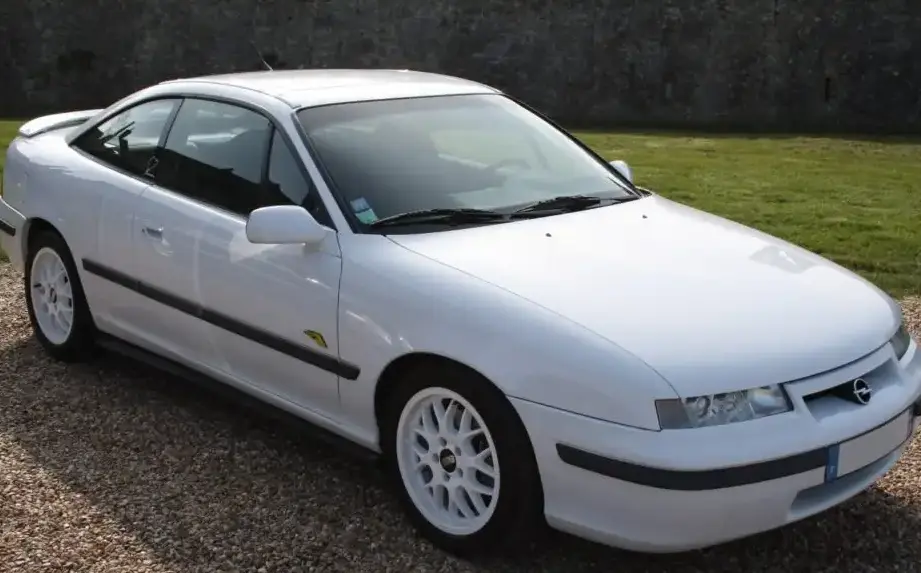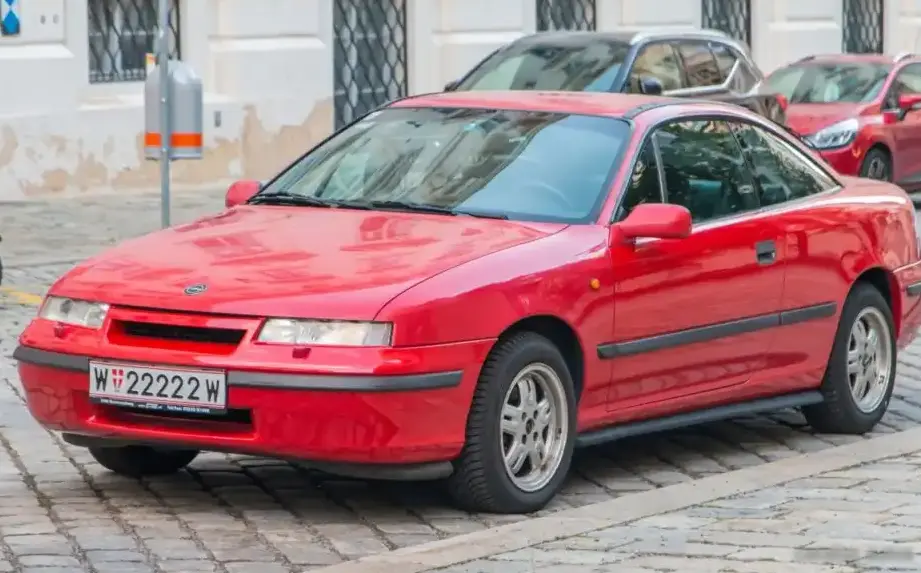
The Opel Calibra 2.0, producing 115 horsepower, was a significant model within the Calibra range, manufactured between June 1990 and 1994. Positioned as a mid-range offering, it slotted between the entry-level 1.6-liter and the more potent 2.8-liter V6 variants. The Calibra itself was a coupe based on the Opel Astra (and Vauxhall Astra in the UK) and was notable for its sleek, aerodynamic design, a key selling point in the early 1990s. It represented Opel’s attempt to create a stylish and affordable sports coupe, appealing to a younger demographic. The Calibra was primarily a European market vehicle, with limited sales in other regions.
Technical Specifications
| Brand | Opel |
| Model | Calibra |
| Generation | Calibra |
| Type (Engine) | 2.0 (115 Hp) |
| Start of production | June, 1990 |
| End of production | 1994 |
| Powertrain Architecture | Internal Combustion engine |
| Body type | Coupe |
| Seats | 4 |
| Doors | 2 |
| Fuel consumption (urban) | 12.1 l/100 km (19.4 US mpg, 23.3 UK mpg, 8.3 km/l) |
| Fuel consumption (extra urban) | 6.2 l/100 km (37.9 US mpg, 45.6 UK mpg, 16.1 km/l) |
| Fuel consumption (combined) | 8.2 l/100 km (28.7 US mpg, 34.4 UK mpg, 12.2 km/l) |
| CO2 emissions | 193 g/km |
| Fuel Type | Petrol (Gasoline) |
| Acceleration 0 – 100 km/h | 10 sec |
| Acceleration 0 – 62 mph | 10 sec |
| Acceleration 0 – 60 mph | 9.5 sec |
| Maximum speed | 205 km/h (127.38 mph) |
| Weight-to-power ratio | 10.3 kg/Hp, 96.6 Hp/tonne |
| Weight-to-torque ratio | 7 kg/Nm, 142.9 Nm/tonne |
| Power | 115 Hp @ 5200 rpm |
| Power per litre | 57.6 Hp/l |
| Torque | 170 Nm @ 2600 rpm (125.39 lb.-ft. @ 2600 rpm) |
| Engine layout | Front, Transverse |
| Engine Model/Code | C20NE |
| Engine displacement | 1998 cm3 (121.93 cu. in.) |
| Number of cylinders | 4 |
| Engine configuration | Inline |
| Cylinder Bore | 86 mm (3.39 in.) |
| Piston Stroke | 86 mm (3.39 in.) |
| Compression ratio | 9.2:1 |
| Number of valves per cylinder | 2 |
| Fuel injection system | Multi-port manifold injection |
| Engine aspiration | Naturally aspirated engine |
| Valvetrain | OHC |
| Engine oil capacity | 4 l (4.23 US qt | 3.52 UK qt) |
| Coolant | 7.4 l (7.82 US qt | 6.51 UK qt) |
| Kerb Weight | 1190 kg (2623.5 lbs.) |
| Max. weight | 1610 kg (3549.44 lbs.) |
| Max load | 420 kg (925.94 lbs.) |
| Trunk (boot) space – minimum | 300 l (10.59 cu. ft.) |
| Trunk (boot) space – maximum | 980 l (34.61 cu. ft.) |
| Fuel tank capacity | 63 l (16.64 US gal | 13.86 UK gal) |
| Length | 4492 mm (176.85 in.) |
| Width | 1688 mm (66.46 in.) |
| Height | 1320 mm (51.97 in.) |
| Wheelbase | 2600 mm (102.36 in.) |
| Front track | 1426 mm (56.14 in.) |
| Rear (Back) track | 1446 mm (56.93 in.) |
| Drag coefficient (Cd) | 0.26 |
| Drivetrain Architecture | The Internal combustion engine (ICE) drives the front wheels of the vehicle. |
| Drive wheel | Front wheel drive |
| Number of gears and type of gearbox | 5 gears, manual transmission |
| Front suspension | Wishbone |
| Rear suspension | Coil spring |
| Front brakes | Ventilated discs |
| Rear brakes | Disc |
| Assisting systems | ABS (Anti-lock braking system) |
| Steering type | Steering rack and pinion |
| Power steering | Hydraulic Steering |
| Tires size | 195/60 R15 |
| Wheel rims size | 15 |
Powertrain & Engine Architecture
The Calibra 2.0 utilized the Opel C20NE engine, an 1,998 cc (121.9 cu in) inline-four cylinder petrol engine. This engine was a mainstay in many Opel and Vauxhall models of the era. It featured a cast iron block and an aluminum cylinder head, employing a single overhead camshaft (OHC) design with two valves per cylinder. Fuel delivery was managed by Bosch multi-port fuel injection, contributing to improved efficiency and responsiveness compared to earlier carbureted engines. The C20NE was known for its relative simplicity and durability. The 115 hp was achieved at 5,200 rpm, with a torque output of 170 Nm (125 lb-ft) at 2,600 rpm. The engine was transversely mounted in the front of the vehicle, driving the front wheels. The standard transmission for this variant was a five-speed manual gearbox, although a four-speed automatic transmission was also available, albeit less common.
Driving Characteristics
The Calibra 2.0 with the manual transmission offered a reasonably engaging driving experience. While not a true sports car, it provided adequate acceleration, reaching 60 mph in around 9.5 seconds and a top speed of 127 mph. The 115 hp engine provided sufficient power for everyday driving and overtaking maneuvers. The automatic transmission, however, noticeably dulled performance, adding approximately a second to the 0-60 mph time. Gear ratios were tuned for a balance between acceleration and fuel economy. The Calibra’s independent front suspension and coil spring rear suspension provided a comfortable ride, although handling could be somewhat compromised by front-wheel drive torque steer under hard acceleration. Compared to the more powerful 2.8-liter V6, the 2.0 felt less refined and lacked the V6’s effortless power delivery. However, it was significantly more fuel-efficient and less expensive to maintain.
Equipment & Trim Levels
The Calibra 2.0 typically came with a reasonable level of standard equipment. This included power steering, central locking, electric front windows, and an adjustable steering column. Interior upholstery was typically cloth, with a relatively simple dashboard layout. Optional extras included a sunroof, alloy wheels, upgraded audio systems, and air conditioning. Higher trim levels, often denoted by specific packages, could add features like leather upholstery and more comprehensive instrumentation. The Calibra’s interior design prioritized functionality over luxury, but it was generally considered well-built and durable for its price point.
Chassis & Braking
The Calibra’s chassis was based on the Opel Astra platform, featuring a monocoque construction. The front suspension utilized independent wishbones, while the rear suspension employed a coil spring setup. This configuration provided a good balance between ride comfort and handling. Braking duties were handled by ventilated discs on the front wheels and solid discs on the rear. An anti-lock braking system (ABS) was standard equipment, enhancing safety. The Calibra’s steering was rack and pinion, providing precise and responsive control. Tire size was typically 195/60 R15, offering a good compromise between grip and ride comfort.
Market Reception & Comparison
The Calibra 2.0 was generally well-received by automotive critics. It was praised for its stylish design, comfortable ride, and reasonable performance. However, some critics noted its front-wheel drive limitations and the relatively basic interior. Compared to the 1.6-liter Calibra, the 2.0 offered a significant performance upgrade, making it a more appealing option for drivers seeking a more engaging driving experience. The 2.8-liter V6, while more powerful, was considerably more expensive and less fuel-efficient. In terms of reliability, the C20NE engine was generally considered robust, although regular maintenance was essential. Fuel economy was respectable for a coupe of its era, averaging around 28.7 US mpg on the combined cycle.
Legacy
The Opel Calibra, particularly the 2.0 variant, has gained a cult following among car enthusiasts. The C20NE engine is known for its durability and relative ease of maintenance, making it a popular choice for modifications and restorations. Today, well-maintained Calibras are becoming increasingly collectible. While not as highly sought after as the V6 model, the 2.0 offers a more affordable entry point into Calibra ownership. The Calibra’s influence can be seen in subsequent Opel coupe designs, and it remains a fondly remembered icon of the early 1990s.