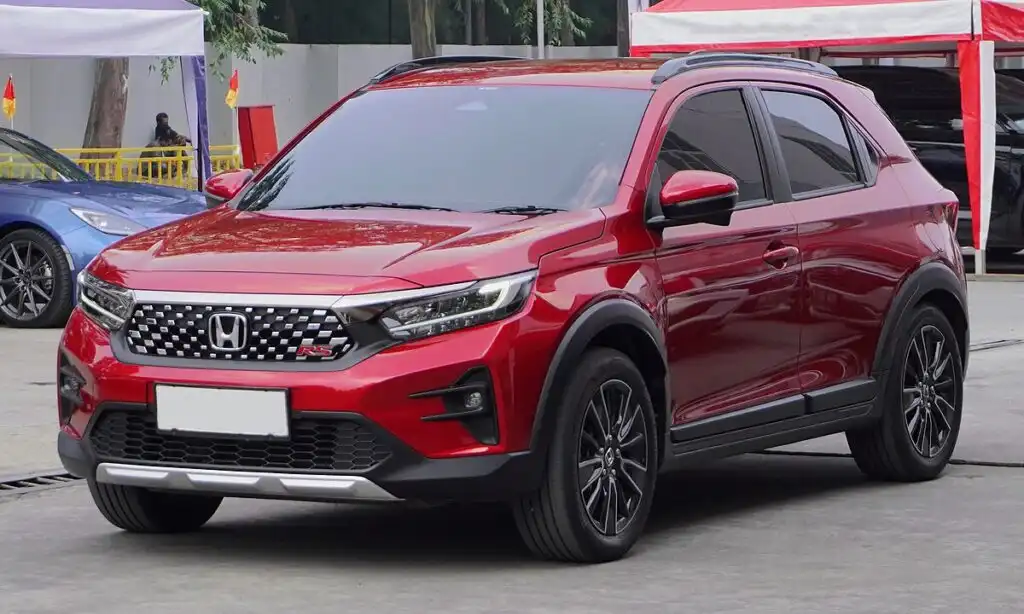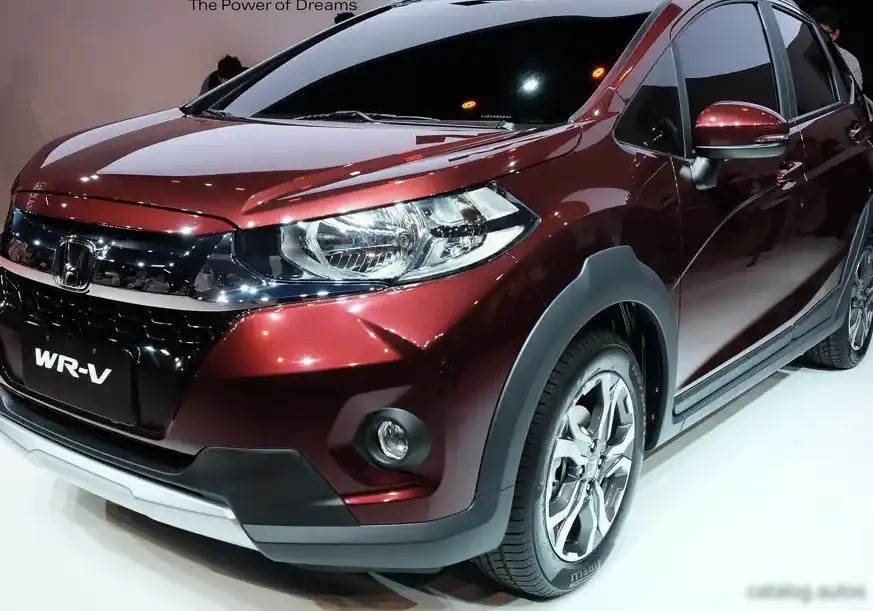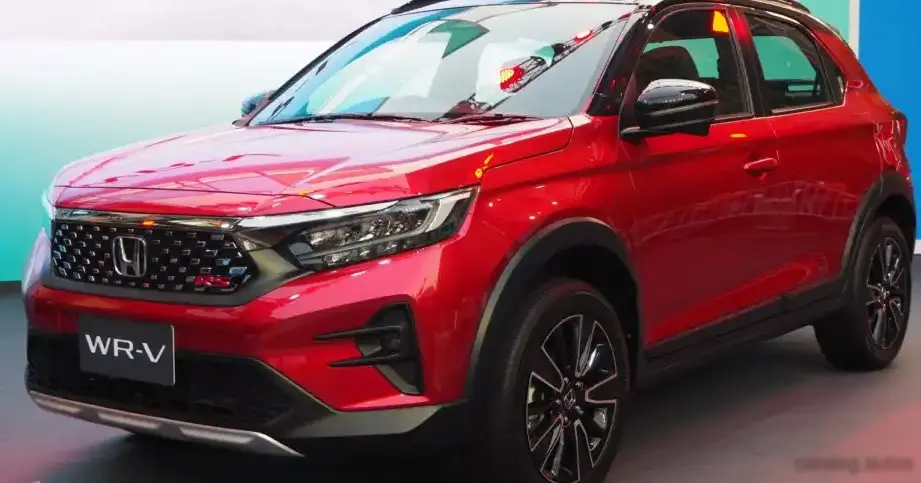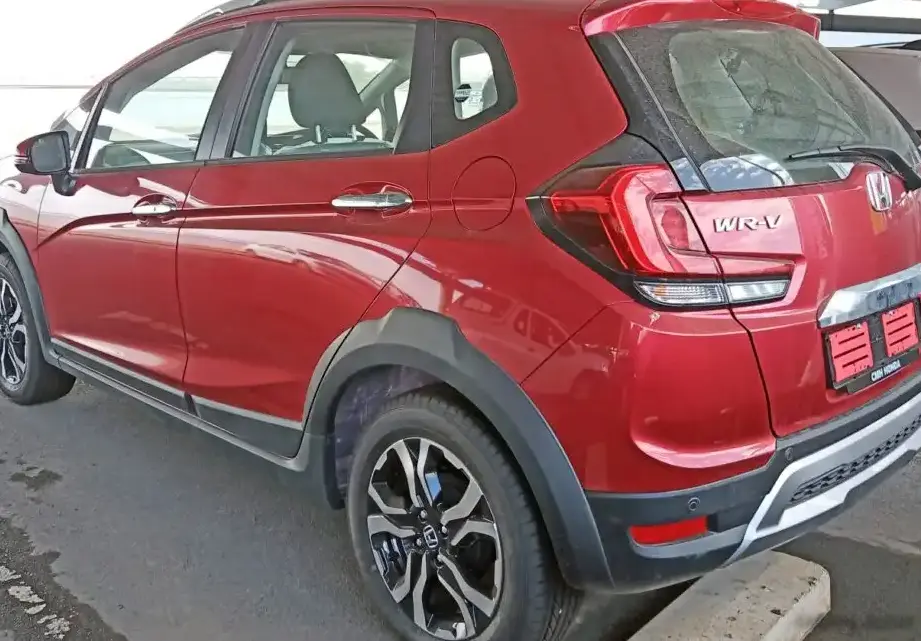
The Honda WR-V I (GL, facelift 2020) 1.5 i-DTEC (99 Hp) represents a specific configuration within the first generation of Honda’s WR-V subcompact crossover SUV. Introduced in March 2020 as part of a facelift for the model, this variant was primarily aimed at markets outside of North America, particularly in regions where diesel engines were favored for their fuel efficiency. Production continued through November 2022. This model sat within the broader WR-V lineup as an entry-level to mid-range option, offering a balance between affordability and economy. It’s built on the same platform as the Honda Jazz/Fit, offering a practical and versatile package in a relatively small footprint.
Technical Specifications
| Brand | Honda |
| Model | WR-V |
| Generation | WR-V I (GL, facelift 2020) |
| Type (Engine) | 1.5 i-DTEC (99 Hp) |
| Start of production | March, 2020 |
| End of production | November, 2022 |
| Powertrain Architecture | Internal Combustion engine |
| Body type | SUV |
| Seats | 5 |
| Doors | 5 |
| Fuel consumption (combined) | 4.2 l/100 km (56 US mpg, 67.3 UK mpg, 23.8 km/l) |
| Fuel Type | Diesel |
| Weight-to-power ratio | 12.2 kg/Hp, 82.2 Hp/tonne |
| Weight-to-torque ratio | 6 kg/Nm, 166 Nm/tonne |
| Power | 99 Hp @ 3600 rpm |
| Power per litre | 66.1 Hp/l |
| Torque | 200 Nm @ 1750 rpm (147.51 lb.-ft. @ 1750 rpm) |
| Engine layout | Front, Transverse |
| Engine Model/Code | N15A1 |
| Engine displacement | 1498 cm3 (91.41 cu. in.) |
| Number of cylinders | 4 |
| Engine configuration | Inline |
| Number of valves per cylinder | 4 |
| Fuel injection system | Diesel Commonrail |
| Engine aspiration | Turbocharger, Intercooler |
| Valvetrain | DOHC, i-DTEC |
| Engine oil capacity | 4.2 l (4.44 US qt | 3.7 UK qt) |
| Coolant | 4.36 l (4.61 US qt | 3.84 UK qt) |
| Kerb Weight | 1205-1234 kg (2656.57 – 2720.5 lbs.) |
| Trunk (boot) space – minimum | 363 l (12.82 cu. ft.) |
| Fuel tank capacity | 40 l (10.57 US gal | 8.8 UK gal) |
| Length | 3999 mm (157.44 in.) |
| Width | 1734 mm (68.27 in.) |
| Height | 1601 mm (63.03 in.) |
| Wheelbase | 2555 mm (100.59 in.) |
| Minimum turning circle | 10.6 m (34.78 ft.) |
| Drivetrain Architecture | Front wheel drive, Internal Combustion engine (ICE) |
| Number of gears and type of gearbox | 6 gears, manual transmission |
| Front suspension | Independent type McPherson |
| Rear suspension | Torsion |
| Front brakes | Ventilated discs |
| Rear brakes | Drum |
| Assisting systems | ABS (Anti-lock braking system) |
| Steering type | Steering rack and pinion |
| Power steering | Electric Steering |
| Tires size | 195/60 R16 |
| Wheel rims size | 6J x 16 |
Powertrain & Engine Architecture
The heart of the WR-V 1.5 i-DTEC is the N15A1 engine, a 1.5-liter inline-four cylinder diesel engine. This engine utilizes a common-rail direct injection system, delivering fuel directly into the combustion chamber at extremely high pressure for improved efficiency and reduced emissions. The engine is turbocharged and intercooled, enhancing power output and torque. The DOHC (Double Overhead Camshaft) valvetrain, coupled with Honda’s i-DTEC technology, optimizes valve timing and lift for enhanced performance across the rev range. The 6-speed manual transmission was the sole gearbox option for this variant, chosen for its efficiency and driver engagement. The engine’s design prioritizes low-end torque, making it well-suited for everyday driving conditions and providing ample pulling power.
Driving Characteristics
The 99 horsepower and 200 Nm (147.51 lb-ft) of torque produced by the 1.5 i-DTEC engine translate to adequate, though not exhilarating, performance. The WR-V 1.5 i-DTEC is geared towards fuel economy rather than outright speed. Acceleration is linear, with the turbocharger providing a noticeable boost in the mid-range. The 6-speed manual transmission allows drivers to keep the engine in its optimal power band. Compared to potential gasoline variants, the diesel offered significantly better fuel economy, but at the expense of some refinement and higher engine noise. Compared to higher-output diesel versions available in other Honda models, this engine prioritized efficiency over peak power.
Equipment & Trim Levels
The WR-V 1.5 i-DTEC (GL, facelift 2020) typically came equipped with features such as air conditioning, power windows, central locking, and an audio system with Bluetooth connectivity. Safety features included ABS (Anti-lock Braking System) and dual airbags. The “GL” trim level represented a mid-range offering, often including features like alloy wheels, a multi-function steering wheel, and a more comprehensive infotainment system. Optional extras could include a rearview camera, parking sensors, and upgraded interior trim materials.
Chassis & Braking
The WR-V utilizes a McPherson strut front suspension and a torsion beam rear suspension. This setup provides a comfortable ride quality, suitable for varied road conditions. The front brakes are ventilated discs, offering good stopping power, while the rear brakes are drums, a cost-saving measure common in this segment. Electric power steering provides light and responsive steering feel. The suspension tuning is geared towards comfort and stability, rather than sporty handling.
Market Reception & Comparison
The Honda WR-V 1.5 i-DTEC was generally well-received in markets where diesel engines were popular. Critics praised its fuel efficiency, practicality, and affordability. However, some noted the engine could be somewhat noisy and lacked the refinement of some competitors. Compared to gasoline-powered WR-V variants, the diesel offered superior fuel economy, making it an attractive option for drivers covering long distances. Against rivals like the Renault Duster or Suzuki Vitara, the WR-V offered a competitive package with Honda’s reputation for reliability.
Legacy
The N15A1 engine, while not known for being particularly complex, has proven to be reasonably reliable when properly maintained. Common issues include diesel particulate filter (DPF) clogging, particularly in vehicles used primarily for short trips. The WR-V 1.5 i-DTEC remains a popular choice in the used car market, particularly for buyers seeking a fuel-efficient and practical subcompact SUV. Its relatively simple mechanicals and readily available parts contribute to its ongoing appeal. The model represents a significant step for Honda in catering to the growing demand for affordable and efficient crossovers in emerging markets.