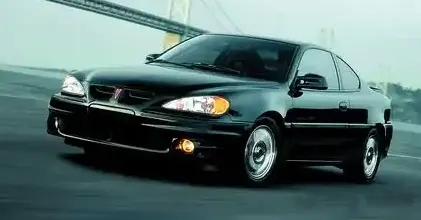
The Pontiac Grand Prix Coupe VI (W) 3.8 i V6 GTP, produced from 1996 to 2003, represented the performance-oriented pinnacle of the sixth-generation Grand Prix lineup. Positioned as the premium trim, the GTP distinguished itself with a supercharged 3.8-liter V6 engine, offering a significant power upgrade over the base and mid-range models. This coupe, built on the GM W-body platform, aimed to deliver a blend of sporty handling and comfortable cruising, appealing to buyers seeking a domestic alternative to import performance cars. The “W” designation refers to the platform code, and the sixth generation (VI) spanned from the 1997 to 2003 model years.
Technical Specifications
| Brand | Pontiac |
| Model | Grand Prix |
| Generation | Grand Prix Coupe VI (W) |
| Type (Engine) | 3.8 i V6 GTP (243 Hp) |
| Start of production | 1996 |
| End of production | 2003 |
| Powertrain Architecture | Internal Combustion engine |
| Body type | Coupe |
| Seats | 5 |
| Doors | 2 |
| Fuel consumption (urban) | 13.1 l/100 km (18 US mpg) |
| Fuel consumption (extra urban) | 8.4 l/100 km (28 US mpg) |
| Fuel Type | Petrol (Gasoline) |
| Maximum speed | 205 km/h (127.38 mph) |
| Weight-to-power ratio | 6.6 kg/Hp |
| Weight-to-torque ratio | 4.2 kg/Nm |
| Power | 243 Hp @ 5200 rpm |
| Power per litre | 64.1 Hp/l |
| Torque | 380 Nm @ 3600 rpm (280.27 lb.-ft. @ 3600 rpm) |
| Engine layout | Front, Transverse |
| Engine Model/Code | L67 |
| Engine displacement | 3791 cm3 (231.34 cu. in.) |
| Number of cylinders | 6 |
| Engine configuration | V-engine |
| Cylinder Bore | 96.5 mm (3.8 in.) |
| Piston Stroke | 86.4 mm (3.4 in.) |
| Compression ratio | 8.5:1 |
| Number of valves per cylinder | 2 |
| Fuel injection system | Multi-port manifold injection |
| Engine aspiration | Supercharger |
| Engine oil capacity | 4.3 l (4.54 US qt | 3.78 UK qt) |
| Coolant | 11.7 l (12.36 US qt | 10.29 UK qt) |
| Kerb Weight | 1600 kg (3527.4 lbs.) |
| Trunk (boot) space | 454 l (16.03 cu. ft.) |
| Fuel tank capacity | 68 l (17.96 US gal | 14.96 UK gal) |
| Length | 4991 mm (196.5 in.) |
| Width | 1847 mm (72.72 in.) |
| Height | 1390 mm (54.72 in.) |
| Wheelbase | 2807 mm (110.51 in.) |
| Front track | 1567 mm (61.69 in.) |
| Rear track | 1554 mm (61.18 in.) |
| Drivetrain Architecture | Front wheel drive |
| Number of gears | 4 |
| Type of gearbox | Automatic transmission |
| Front suspension | Spring Strut |
| Rear suspension | Double wishbone |
| Front brakes | Ventilated discs |
| Rear brakes | Disc |
| Assisting systems | ABS (Anti-lock braking system) |
| Steering type | Steering rack and pinion |
| Power steering | Hydraulic Steering |
| Tires size | 225/60 R16 |
Powertrain & Engine Architecture
The heart of the Grand Prix GTP was the 3.8-liter (3791 cc) L67 V6 engine. This engine was a member of GM’s 3800 Series V6 family, but uniquely featured a Roots-type supercharger. The supercharger, coupled with multi-port fuel injection, boosted output to 243 horsepower at 5200 rpm and 280 lb-ft of torque at 3600 rpm. The engine utilized a 8.5:1 compression ratio and a two-valve per cylinder configuration. The L67 was known for its robust construction and relatively simple design, contributing to its longevity. The 4T65E four-speed automatic transmission was the sole transmission option for the GTP. This transmission was electronically controlled and featured overdrive for improved highway fuel economy. While not known for lightning-fast shifts, the 4T65E was generally reliable and well-suited to the engine’s torque characteristics.
Driving Characteristics
The Grand Prix GTP, with its supercharged V6 and automatic transmission, offered brisk acceleration. While not a track-focused machine, it could achieve 0-60 mph times in the low-to-mid 6-second range. The automatic transmission, while smooth, did rob some of the engine’s potential, especially compared to the available manual transmission in other Grand Prix models. The gear ratios were tuned for a balance of acceleration and highway cruising. The supercharger provided instant torque, making for effortless passing maneuvers. However, the added weight of the supercharger and automatic transmission did impact handling compared to lighter, manual transmission-equipped Grand Prix models. The suspension was tuned for comfort, resulting in a relatively soft ride, but body roll was noticeable during aggressive cornering.
Equipment & Trim Levels
The GTP trim came standard with a number of features designed to enhance both comfort and convenience. These included leather upholstery, power-adjustable front seats, air conditioning, a premium sound system, and alloy wheels. Optional extras included a sunroof, upgraded sound systems, and various appearance packages. The interior featured a sporty design with analog gauges and a center console-mounted shifter. The GTP also benefited from upgraded interior trim and detailing compared to lower trims.
Chassis & Braking
The Grand Prix GTP utilized a front-wheel-drive layout with independent front suspension featuring coil springs and a strut design. The rear suspension employed a multi-link setup with coil springs. This configuration aimed to provide a comfortable ride while maintaining reasonable handling characteristics. Braking duties were handled by ventilated disc brakes at all four corners, supplemented by an anti-lock braking system (ABS). The braking system was adequate for the car’s performance, but lacked the stopping power of some contemporary sports coupes. Steering was provided by a hydraulic power rack-and-pinion system, offering responsive and precise control.
Market Reception & Comparison
The Grand Prix GTP was generally well-received by automotive critics. It was praised for its strong acceleration, comfortable ride, and spacious interior. However, some critics noted the car’s somewhat dated design and lack of a truly sporty driving experience. Compared to other trims in the Grand Prix lineup, the GTP offered a significant performance advantage but came at a higher price. The base and mid-range models, with their naturally aspirated V6 engines, were more fuel-efficient and less expensive to maintain. The GTP competed with other American coupes, such as the Ford Mustang and Chevrolet Camaro, as well as import models like the Honda Accord Coupe and Toyota Camry Solara.
Legacy
The Pontiac Grand Prix GTP, particularly the 3.8L supercharged version, has developed a following among enthusiasts. The L67 engine is known for its durability and potential for modification. While the 4T65E transmission can be prone to failure with heavy use or neglect, it is generally considered reliable when properly maintained. Today, well-maintained GTP models are sought after by collectors and enthusiasts looking for a comfortable and capable American coupe. The car represents a high point in Pontiac’s history, offering a compelling blend of performance, comfort, and value. The L67 engine continues to be a popular choice for engine swaps and performance upgrades in other vehicles.