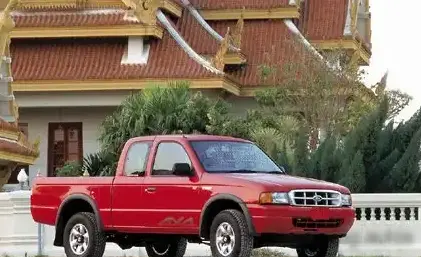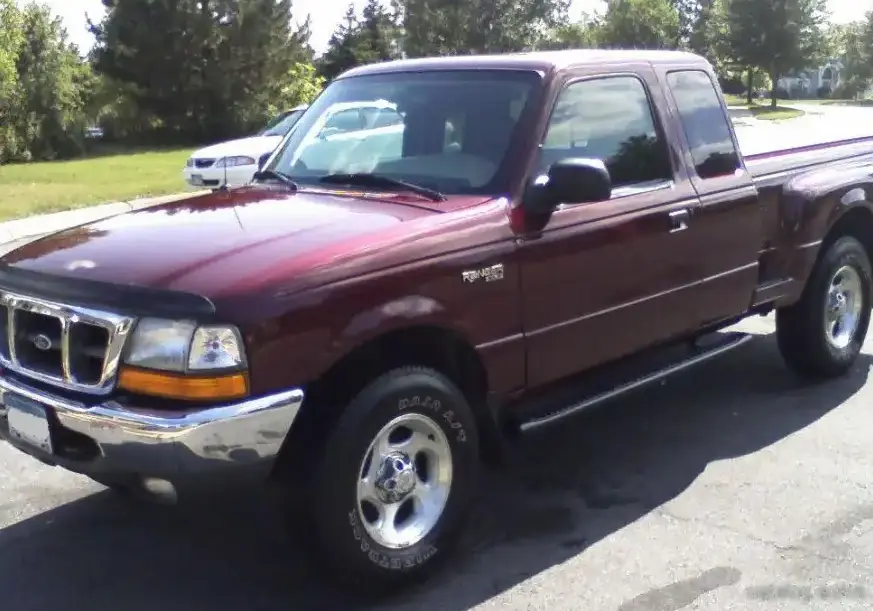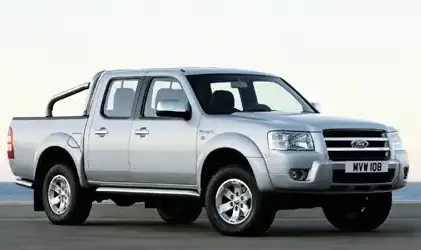
The Ford Ranger II Double Cab 3.0 TDCi 4×4 Automatic, produced between 2006 and 2010, represented a significant offering in the mid-size pickup truck segment, particularly in European and Australian markets. This variant occupied a middle ground within the Ranger II lineup, providing a balance between capability, comfort, and fuel efficiency. It was positioned above the base models with smaller engines and manual transmissions, but below the higher-specification trims with more powerful engines or luxury features. The Ranger II, a rebadged and heavily updated version of the Mazda B-Series, aimed to provide a versatile vehicle suitable for both commercial and personal use.
Technical Specifications
| Brand | Ford |
| Model | Ranger |
| Generation | Ranger II Double Cab |
| Type (Engine) | 3.0 TDCi (156 Hp) 4×4 Automatic |
| Start of production | 2006 |
| End of production | 2010 |
| Powertrain Architecture | Internal Combustion engine |
| Body type | Pick-up |
| Seats | 5 |
| Doors | 4 |
| Fuel consumption (urban) | 12.6 l/100 km (18.7 US mpg, 22.4 UK mpg, 7.9 km/l) |
| Fuel consumption (extra urban) | 8.9 l/100 km (26.4 US mpg, 31.7 UK mpg, 11.2 km/l) |
| Fuel consumption (combined) | 10.2 l/100 km (23.1 US mpg, 27.7 UK mpg, 9.8 km/l) |
| Fuel Type | Diesel |
| Acceleration 0 – 100 km/h | 13.6 sec |
| Acceleration 0 – 62 mph | 13.6 sec |
| Acceleration 0 – 60 mph | 12.9 sec |
| Maximum speed | 170 km/h (105.63 mph) |
| Emission standard | Euro 4 |
| Power | 156 Hp @ 3200 rpm |
| Power per litre | 52.8 Hp/l |
| Torque | 380 Nm @ 1800 rpm (280.27 lb.-ft. @ 1800 rpm) |
| Engine layout | Front, Longitudinal |
| Engine Model/Code | WEC |
| Engine displacement | 2953 cm3 (180.2 cu. in.) |
| Number of cylinders | 4 |
| Engine configuration | Inline |
| Compression ratio | 9.7:1 |
| Number of valves per cylinder | 4 |
| Fuel injection system | Diesel Commonrail |
| Engine aspiration | Turbocharger, Intercooler |
| Valvetrain | DOHC |
| Engine oil capacity | 7 l (7.4 US qt, 6.16 UK qt) |
| Coolant capacity | 9.4 l (9.93 US qt, 8.27 UK qt) |
| Trunk (boot) space (minimum) | 1500 l (52.97 cu. ft.) |
| Fuel tank capacity | 70 l (18.49 US gal, 15.4 UK gal) |
| Length | 5075 mm (199.8 in.) |
| Width | 1805 mm (71.06 in.) |
| Height | 1745 mm (68.7 in.) |
| Wheelbase | 3000 mm (118.11 in.) |
| Front track | 1488 mm (58.58 in.) |
| Rear track | 1455 mm (57.28 in.) |
| Ride height (ground clearance) | 205 mm (8.07 in.) |
| Drive wheel | All wheel drive (4×4) |
| Number of gears and type of gearbox | 5 gears, automatic transmission |
| Front suspension | Independent torsion bar, double wishbone |
| Rear suspension | Dependent suspension of two longitudinal semi-elliptic leaf springs |
| Front brakes | Ventilated discs |
| Rear brakes | Drum |
| Assisting systems | ABS (Anti-lock braking system) |
| Steering type | Steering rack and pinion |
| Power steering | Hydraulic Steering |
| Tires size | 245/70 R16 |
| Wheel rims size | 16 |
Powertrain & Engine Architecture
The heart of this Ranger variant is the 3.0-liter TDCi (Turbo Diesel Commonrail Injection) engine, designated with the WEC engine code. This engine is a four-cylinder, inline configuration, utilizing a common rail direct injection system for optimized fuel delivery and combustion. The engine benefits from a turbocharger and intercooler, which enhance power output and efficiency. The 9.7:1 compression ratio is typical for diesel engines of this era, balancing performance and durability. The double overhead camshaft (DOHC) valvetrain, with four valves per cylinder, contributes to improved breathing and overall engine efficiency. The automatic transmission is a five-speed unit, designed to provide smooth shifting and ease of use, particularly appealing to drivers who prefer not to operate a manual gearbox.
Driving Characteristics
The 156 horsepower and 380 Nm (280 lb-ft) of torque delivered by the 3.0 TDCi engine, when paired with the five-speed automatic transmission, resulted in a driving experience geared towards practicality rather than outright performance. Acceleration from 0-60 mph took approximately 12.9 seconds, and top speed was limited to 170 km/h (105.63 mph). The automatic transmission, while convenient, did slightly diminish the engine’s responsiveness compared to the manual transmission options. Gear ratios were tuned for towing and hauling, prioritizing low-end torque over rapid acceleration. In real-world conditions, the Ranger II Double Cab 3.0 TDCi 4×4 Automatic proved capable of handling moderate loads and navigating varied terrain, making it a suitable choice for both work and leisure.
Equipment & Trim Levels
The Double Cab configuration offered seating for five passengers, making it a more versatile option than the standard cab models. Standard equipment typically included air conditioning, power windows, central locking, and an AM/FM radio. Higher trim levels offered options such as alloy wheels, upgraded audio systems, leather upholstery, and a sunroof. The interior design was functional and durable, reflecting the truck’s work-oriented nature. The dashboard layout was straightforward, with easy-to-read gauges and logically placed controls.
Chassis & Braking
The Ranger II Double Cab utilized a body-on-frame construction, providing a robust and durable platform. The front suspension featured an independent torsion bar and double wishbone setup, offering a reasonable level of ride comfort and handling. The rear suspension employed a more traditional dependent leaf spring design, prioritizing load-carrying capacity. Braking duties were handled by ventilated discs at the front and drum brakes at the rear. Anti-lock Braking System (ABS) was standard, enhancing safety during emergency braking situations. The 4×4 system provided enhanced traction in off-road conditions, making the Ranger II a capable all-terrain vehicle.
Market Reception & Comparison
The Ford Ranger II Double Cab 3.0 TDCi 4×4 Automatic was generally well-received in its target markets. Critics praised its versatility, durability, and fuel efficiency. However, some noted that the automatic transmission could feel sluggish at times, and the interior lacked the refinement of some competitors. Compared to the 2.5 TDCi versions, the 3.0 TDCi offered a noticeable increase in power and torque, making it a better choice for towing and hauling. The 3.0 TDCi was also more fuel-efficient than the gasoline engine options. Against rivals like the Toyota Hilux and Nissan Navara, the Ranger II offered a competitive package, particularly in terms of value for money.
Legacy
The Ford Ranger II Double Cab 3.0 TDCi 4×4 Automatic has proven to be a relatively reliable vehicle in the used car market. The 3.0 TDCi engine, while not without its potential issues (such as injector wear and turbocharger problems), is generally considered durable when properly maintained. The automatic transmission is also known to be fairly robust. Today, these Rangers are often sought after by those looking for a capable and affordable pickup truck. Their practicality, combined with their relatively simple mechanical design, makes them a popular choice for both work and recreational use. Parts availability remains good, ensuring that these vehicles can be kept on the road for many years to come.