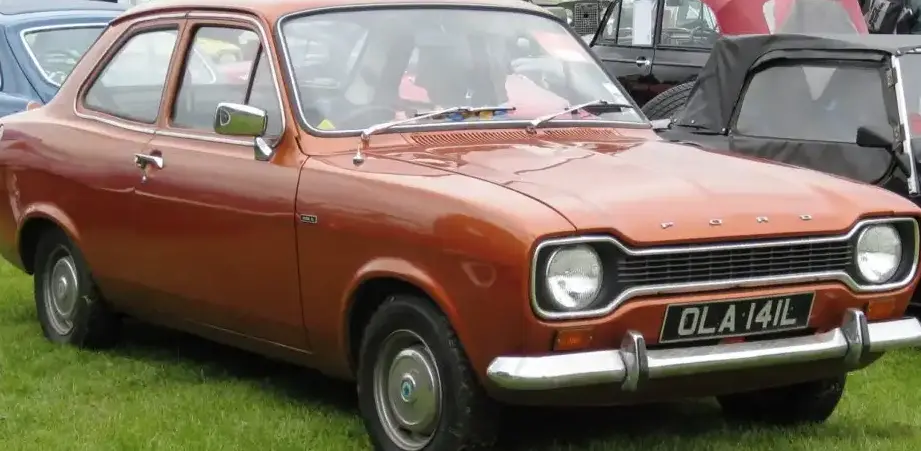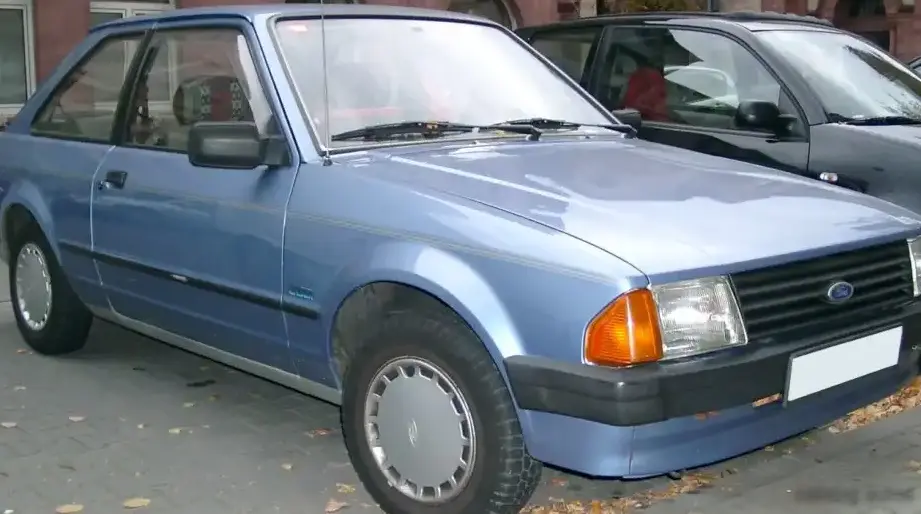
The Ford Escort III, produced between 1980 and 1986, represented a significant evolution of Ford of Europe’s popular compact car. Within the Escort III range (chassis codes GAA, AWA, ABFT, and AVA), the 1.1-liter variant, producing 54 horsepower, occupied the entry-level position in the lineup. This model was primarily aimed at buyers seeking economical transportation, particularly in markets where fuel costs were a major concern. Production spanned from 1980 to 1983, before being superseded by later iterations within the Escort III family. It was a key offering in a period of increasing fuel efficiency demands and economic uncertainty.
Technical Specifications
| Brand | Ford |
| Model | Escort |
| Generation | Escort III (GAA, AWA, ABFT, AVA) |
| Type (Engine) | 1.1 (54 Hp) |
| Start of Production | 1980 |
| End of Production | 1983 |
| Powertrain Architecture | Internal Combustion Engine |
| Body Type | Hatchback |
| Fuel Type | Petrol (Gasoline) |
| Power | 54 Hp |
| Engine Aspiration | Naturally Aspirated |
| Engine Displacement | 1.1 Liters |
| Cylinders | 4 |
| Valves per Cylinder | 2 |
| Fuel System | Carburetor (Typically Ford 280CD) |
| Transmission | 4-Speed Manual (Most Common), 3-Speed Automatic (Optional) |
| Drive Type | Front-Wheel Drive |
| Weight (Approx.) | 780-820 kg (1720-1808 lbs) |
| Top Speed (Approx.) | 90 mph (145 km/h) |
| 0-60 mph (Approx.) | 14-16 seconds |
Powertrain & Engine Architecture
The heart of the Escort III 1.1 was the Ford 1.1-liter inline-four cylinder engine. This engine, internally designated as the Ford 1100, was a relatively simple design, reflecting the focus on cost-effectiveness and reliability. It featured a cast iron block and cylinder head, with a two-valve per cylinder configuration. The engine utilized a single downdraft carburetor, typically a Ford 280CD model, for fuel delivery. This carburetor system, while simple, was prone to requiring periodic adjustment to maintain optimal performance and fuel economy. The engine’s modest output of 54 horsepower at around 6000 rpm and approximately 68 lb-ft of torque was sufficient for basic transportation, but it wasn’t designed for spirited driving.
While a four-speed manual transmission was the most common pairing for this engine, a three-speed automatic transmission was offered as an optional extra. The automatic, while providing convenience, noticeably impacted acceleration and fuel economy. The transmission was a Ford-built unit, designed for smooth but not particularly quick shifts. The front-wheel drive layout was standard across the Escort III range, contributing to its relatively stable handling characteristics.
Driving Characteristics
The driving experience in the Escort III 1.1 was characterized by its light steering and relatively comfortable ride. However, the 54 horsepower engine meant that acceleration was leisurely, especially when equipped with the optional automatic transmission. Overtaking maneuvers required careful planning, and hill climbs often necessitated downshifting. The four-speed manual transmission allowed for better control and slightly improved performance, but still didn’t transform the Escort into a sporty vehicle. The gear ratios were optimized for fuel efficiency rather than outright speed. The suspension, consisting of MacPherson struts at the front and a twist-beam rear axle, provided adequate handling for everyday driving, but lacked the sophistication of more expensive competitors.
Equipment & Trim Levels
The Escort III 1.1 typically came with a basic level of equipment. Standard features included cloth upholstery, a basic instrument cluster, and manually operated windows and door locks. The interior was functional and durable, but lacked the refinement of higher-spec Escort models. Optional extras included a radio, heated rear window, and upgraded interior trim. The trim level was generally referred to as the “L” trim, representing the base model. Later in its production run, minor cosmetic updates were introduced, such as revised dashboard trim and seat fabrics, but the core features remained largely unchanged.
Chassis & Braking
The Escort III utilized a monocoque chassis construction, providing a reasonable balance of strength and weight. The front suspension featured MacPherson struts with an anti-roll bar, while the rear suspension employed a simple twist-beam axle. Braking was typically accomplished with disc brakes at the front and drum brakes at the rear. The braking system was adequate for the car’s performance, but lacked the stopping power of more modern vehicles. Steering was rack and pinion, providing light and precise control. The relatively lightweight construction of the Escort III 1.1 contributed to its nimble handling characteristics, despite its modest power output.
Market Reception & Comparison
The Escort III 1.1 was generally well-received as an affordable and economical mode of transportation. Critics acknowledged its practicality and fuel efficiency, but often criticized its lack of power and refinement. Compared to other trims in the Escort III lineup, such as the 1.3L and 1.6L models, the 1.1 offered significantly less performance. The 1.6L, in particular, provided a much more engaging driving experience, but at a higher price point. The 1.1 also lagged behind competitors like the Vauxhall Astra and Volkswagen Golf in terms of performance and features. However, its lower price and Ford’s established reputation for reliability helped it maintain a strong presence in the market.
Legacy
The Ford Escort III 1.1, while not a performance icon, played an important role in providing affordable transportation to a wide range of buyers. The 1.1-liter engine proved to be reasonably reliable, although regular maintenance was essential to prevent issues with the carburetor and cooling system. Today, the Escort III 1.1 is a relatively rare sight on the roads, but it has gained a following among classic car enthusiasts. Its simplicity and affordability make it an attractive option for restoration projects. Parts availability can be challenging, but a dedicated network of Ford enthusiasts and suppliers continues to support the preservation of these classic vehicles. The Escort III 1.1 remains a testament to Ford’s commitment to providing practical and economical cars for the masses.