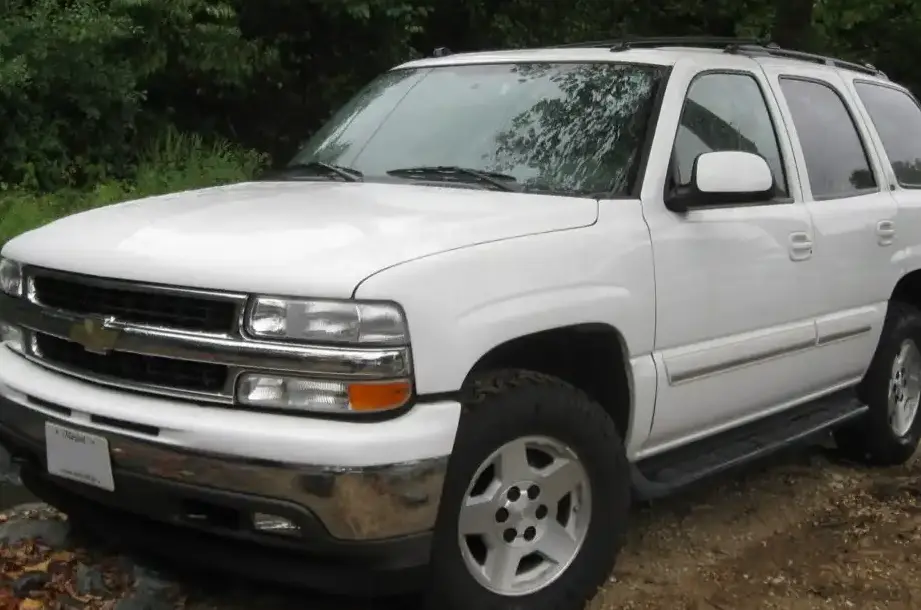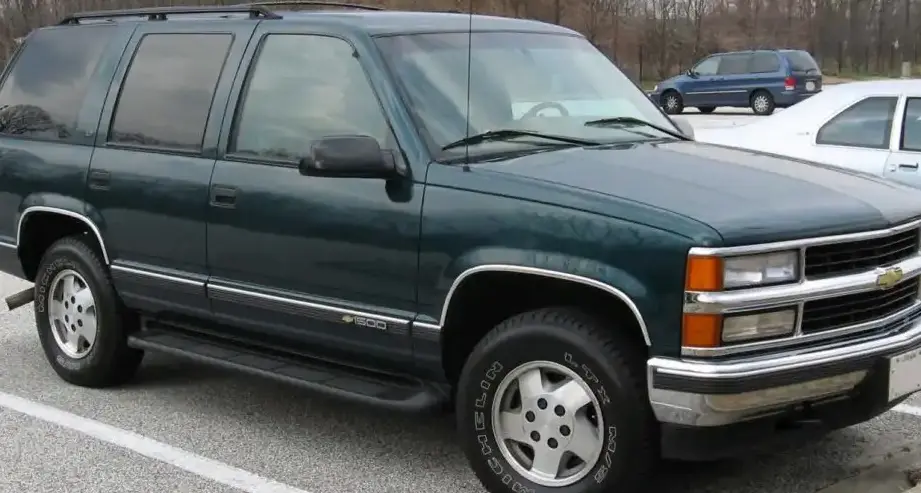
The Chevrolet Tahoe (GMT410) with the 5.7-liter V8 engine, producing 258 horsepower, represents a significant iteration in the Tahoe’s lineage. Produced from 1996 to 1999, this generation marked a substantial redesign for Chevrolet’s full-size SUV, moving away from the older, more truck-like GMT330 platform. This version of the Tahoe aimed to blend the rugged capability expected of a body-on-frame SUV with a greater degree of refinement and family-oriented features, solidifying its position as a popular choice in the burgeoning SUV market of the late 1990s. It was positioned as a step up in power and capability from the base engine options, appealing to buyers needing towing capacity and robust performance.
Technical Specifications
| Brand | Chevrolet |
| Model | Tahoe |
| Generation | Tahoe (GMT410) |
| Type (Engine) | 5.7 i V8 (258 Hp) |
| Start of production | 1996 |
| End of production | 1999 |
| Powertrain Architecture | Internal Combustion engine |
| Body type | SUV |
| Seats | 5 |
| Doors | 3 |
| Fuel consumption (urban) | 16.8 l/100 km (14 US mpg, 16.8 UK mpg) |
| Fuel consumption (extra urban) | 13.8 l/100 km (17 US mpg, 20.5 UK mpg) |
| Fuel Type | Petrol (Gasoline) |
| Acceleration 0 – 100 km/h | 8.8 sec |
| Acceleration 0 – 62 mph | 8.8 sec |
| Acceleration 0 – 60 mph | 8.4 sec |
| Maximum speed | 160 km/h (99.42 mph) |
| Weight-to-power ratio | 8.6 kg/Hp, 116.2 Hp/tonne |
| Weight-to-torque ratio | 5 kg/Nm, 198.6 Nm/tonne |
| Power | 258 Hp @ 4600 rpm |
| Power per litre | 45 Hp/l |
| Torque | 441 Nm @ 2800 rpm (325.26 lb.-ft. @ 2800 rpm) |
| Engine layout | Front, Longitudinal |
| Engine displacement | 5733 cm3 (349.85 cu. in.) |
| Number of cylinders | 8 |
| Engine configuration | V-engine |
| Cylinder Bore | 101.6 mm (4 in.) |
| Piston Stroke | 88.4 mm (3.48 in.) |
| Compression ratio | 9.4:1 |
| Number of valves per cylinder | 2 |
| Fuel injection system | Multi-port manifold injection |
| Engine aspiration | Naturally aspirated engine |
| Engine oil capacity | 4.8 l (5.07 US qt | 4.22 UK qt) |
| Coolant | 16.5 l (17.44 US qt | 14.52 UK qt) |
| Kerb Weight | 2220 kg (4894.26 lbs.) |
| Max. weight | 2965 kg (6536.71 lbs.) |
| Max load | 745 kg (1642.44 lbs.) |
| Trunk (boot) space – maximum | 2815 l (99.41 cu. ft.) |
| Fuel tank capacity | 114 l (30.12 US gal | 25.08 UK gal) |
| Length | 4788 mm (188.5 in.) |
| Width | 1958 mm (77.09 in.) |
| Height | 1839 mm (72.4 in.) |
| Wheelbase | 2832 mm (111.5 in.) |
| Front track | 1590 mm (62.6 in.) |
| Rear (Back) track | 1615 mm (63.58 in.) |
| Drivetrain Architecture | The Internal combustion engine (ICE) drives the rear wheels of the vehicle. |
| Drive wheel | Rear wheel drive |
| Number of gears and type of gearbox | 4 gears, automatic transmission |
| Front suspension | Coil spring |
| Rear suspension | Leaf spring |
| Front brakes | Disc |
| Rear brakes | Drum |
| Assisting systems | ABS (Anti-lock braking system) |
| Power steering | Hydraulic Steering |
| Tires size | 235/75 R15 |
Powertrain & Engine Architecture
The heart of this Tahoe variant is the 5.7-liter (349.85 cubic inch) small-block Chevrolet V8 engine. Specifically, this engine falls under the GM Vortec 5700 series. This engine utilized a cast iron block and aluminum cylinder heads, a combination designed for durability and reasonable weight. The engine featured a 9.4:1 compression ratio and was equipped with a multi-port fuel injection system, delivering fuel directly to each cylinder for improved efficiency and power delivery. The Vortec heads were notable for their improved intake ports and combustion chamber design, enhancing airflow and contributing to the engine’s 258 horsepower and 325 lb-ft of torque. The engine’s longitudinal front-engine layout was typical for body-on-frame SUVs of the era. The 4L60E four-speed automatic transmission was the sole transmission option for this engine configuration. This transmission was known for its robustness and relatively smooth shifting, although it could sometimes exhibit a tendency towards early failure if not properly maintained.
Driving Characteristics
The 5.7L V8 and 4L60E automatic combination provided a noticeable step up in performance compared to the base engine options available in the GMT410 Tahoe. Acceleration to 60 mph was achieved in approximately 8.4 seconds, making it reasonably quick for a full-size SUV. The automatic transmission, while not offering the driver engagement of a manual, provided convenient operation and adequate gear ratios for both everyday driving and towing. The 4L60E’s gear ratios were optimized for torque multiplication, aiding in hauling loads and navigating inclines. However, the transmission’s programming prioritized smooth shifts over aggressive performance, resulting in a slightly less responsive feel compared to manual transmission equipped models. The leaf spring rear suspension, while capable of handling substantial weight, could contribute to a somewhat firm ride quality, particularly when unladen.
Equipment & Trim Levels
The 5.7L Tahoe typically came in mid-range trim levels, often designated as LT or similar. Standard features included air conditioning, power windows and locks, an upgraded stereo system, and cloth upholstery. Optional extras commonly included leather upholstery, a sunroof, upgraded sound systems (often with a CD player), and a towing package. The interior design was functional and relatively spacious, prioritizing practicality over luxury. The dashboard layout was straightforward, with clearly labeled controls and a large instrument cluster.
Chassis & Braking
The GMT410 Tahoe utilized a traditional body-on-frame construction, providing a robust and durable platform. The front suspension employed coil springs, while the rear suspension utilized leaf springs, a common configuration for trucks and SUVs of this era. The braking system featured disc brakes on the front wheels and drum brakes on the rear. Anti-lock brakes (ABS) were standard, enhancing safety and control during emergency braking situations. The steering system was hydraulic power steering, providing relatively easy maneuverability, although it lacked the precision of more modern steering systems.
Market Reception & Comparison
The 5.7L Tahoe was generally well-received by critics and consumers alike. It was praised for its powerful engine, spacious interior, and capable towing capacity. Compared to the base engine options, the 5.7L offered a significant improvement in performance, making it a popular choice for buyers who needed to haul trailers or navigate challenging terrain. Fuel economy, however, was a common criticism, with the 5.7L engine returning approximately 14-17 mpg in real-world driving. Reliability was generally good, although the 4L60E transmission was known to be a potential weak point.
Legacy
The GMT410 Tahoe with the 5.7L V8 engine remains a popular choice among enthusiasts and collectors today. The engine is known for its durability and relatively simple maintenance requirements. While the 4L60E transmission can be a source of issues, it is generally repairable and parts are readily available. These Tahoes are often sought after for their classic styling, rugged capability, and relatively affordable price point. They represent a transitional period in SUV design, bridging the gap between traditional truck-based SUVs and the more car-like crossovers that would become dominant in the following decades. A well-maintained example of this Tahoe can provide years of reliable service, making it a worthwhile investment for those seeking a capable and iconic American SUV.