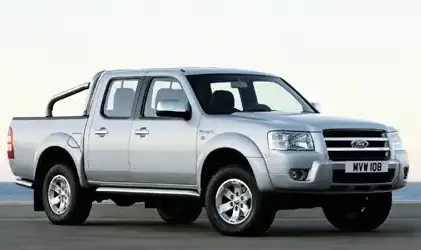
The Ford Ranger II Double Cab 3.0 TDCi Automatic, produced between 2006 and 2010, represented a significant offering in the mid-size pickup truck segment, particularly in European and Australian markets. This variant occupied a middle ground within the Ranger II lineup, providing a balance between work capability and family practicality. It was positioned above the base model Rangers, offering more refinement and convenience features, but below the higher-specification models with more powerful engines. The Ranger II, built on the P2 platform, aimed to modernize Ford’s presence in a growing global pickup market.
Technical Specifications
| Brand | Ford |
| Model | Ranger |
| Generation | Ranger II Double Cab |
| Type (Engine) | 3.0 TDCi (156 Hp) Automatic |
| Start of production | 2006 |
| End of production | 2010 |
| Powertrain Architecture | Internal Combustion engine |
| Body type | Pick-up |
| Seats | 5 |
| Doors | 4 |
| Fuel Type | Diesel |
| Maximum speed | 170 km/h (105.63 mph) |
| Emission standard | Euro 4 |
| Weight-to-power ratio | 11.6 kg/Hp, 86.6 Hp/tonne |
| Weight-to-torque ratio | 4.7 kg/Nm, 210.9 Nm/tonne |
| Power | 156 Hp @ 3200 rpm |
| Power per litre | 52.8 Hp/l |
| Torque | 380 Nm @ 1800 rpm (280.27 lb.-ft. @ 1800 rpm) |
| Engine layout | Front, Longitudinal |
| Engine Model/Code | WEC |
| Engine displacement | 2953 cm3 (180.2 cu. in.) |
| Number of cylinders | 4 |
| Engine configuration | Inline |
| Compression ratio | 9.7:1 |
| Number of valves per cylinder | 4 |
| Fuel injection system | Diesel Commonrail |
| Engine aspiration | Turbocharger, Intercooler |
| Valvetrain | DOHC |
| Engine oil capacity | 7 l (7.4 US qt | 6.16 UK qt) |
| Coolant | 9.4 l (9.93 US qt | 8.27 UK qt) |
| Kerb Weight | 1802 kg (3972.73 lbs) |
| Trunk (boot) space – minimum | 1500 l (52.97 cu. ft) |
| Fuel tank capacity | 70 l (18.49 US gal | 15.4 UK gal) |
| Length | 5075 mm (199.8 in) |
| Width | 1805 mm (71.06 in) |
| Height | 1745 mm (68.7 in) |
| Wheelbase | 3000 mm (118.11 in) |
| Front track | 1488 mm (58.58 in) |
| Rear (Back) track | 1455 mm (57.28 in) |
| Ride height (ground clearance) | 205 mm (8.07 in) |
| Drivetrain Architecture | Rear wheel drive |
| Number of gears and type of gearbox | 5 gears, automatic transmission |
| Front suspension | Independent torsion bar, double wishbone |
| Rear suspension | Dependent suspension of two longitudinal semi-elliptic leaf springs |
| Front brakes | Ventilated discs |
| Rear brakes | Drum |
| Assisting systems | ABS (Anti-lock braking system) |
| Steering type | Steering rack and pinion |
| Power steering | Hydraulic Steering |
| Tires size | 245/70 R16 |
| Wheel rims size | 16 |
Powertrain & Engine Architecture
The heart of this Ranger variant is the 3.0-liter TDCi (Turbo Diesel Commonrail Injection) engine, designated with the WEC engine code. This engine is an inline-four cylinder diesel, utilizing a common rail direct injection system for improved fuel efficiency and reduced emissions. The common rail system, supplied by Bosch, operates at extremely high pressures to atomize the fuel for more complete combustion. The engine features a single turbocharger with an intercooler, boosting power and torque. The double overhead camshaft (DOHC) valvetrain, with four valves per cylinder, optimizes gas flow for enhanced performance. The 3.0L TDCi engine was known for its relatively smooth operation compared to some older diesel designs. The five-speed automatic transmission, sourced from Jatco, was chosen for its durability and suitability for both on-road comfort and off-road capability. While not the sportiest transmission, it provided smooth shifts and adequate responsiveness for everyday driving.
Driving Characteristics
The 156 horsepower and 380 Nm (280 lb-ft) of torque delivered by the 3.0 TDCi engine, coupled with the automatic transmission, resulted in a driving experience geared towards practicality rather than outright performance. Acceleration was adequate, but not brisk, with a 0-60 mph time estimated around 11-12 seconds. The automatic transmission’s gear ratios were tuned for fuel economy and towing capacity, rather than rapid acceleration. Compared to the manual transmission versions of the same engine, the automatic offered less driver engagement but greater convenience. The higher-output 3.2-liter TDCi variants provided significantly more power and quicker acceleration, but at the expense of fuel economy. The automatic transmission did a reasonable job of managing the engine’s torque, providing sufficient power for hauling moderate loads and navigating varied terrain.
Equipment & Trim Levels
The Double Cab 3.0 TDCi Automatic typically came equipped with features such as air conditioning, power windows, central locking, and an AM/FM radio with CD player. Higher trim levels added features like alloy wheels, side steps, a chrome grille, and upgraded interior upholstery. Optional extras included a navigation system, leather seats, and a sunroof. The Double Cab configuration offered seating for five passengers, making it a practical choice for families or work crews. The interior was generally functional and durable, with hard-wearing plastics and comfortable seating. The focus was on practicality and ease of cleaning, rather than luxury.
Chassis & Braking
The Ranger II Double Cab utilized a body-on-frame construction, providing robust durability and off-road capability. The front suspension consisted of an independent torsion bar setup with double wishbones, while the rear suspension employed a traditional leaf spring design. This combination offered a good balance between ride comfort and load-carrying capacity. The braking system featured ventilated discs on the front wheels and drum brakes on the rear. Anti-lock Braking System (ABS) was standard, enhancing safety during emergency braking situations. The steering was a hydraulic rack and pinion system, providing responsive and precise handling.
Market Reception & Comparison
The Ford Ranger II Double Cab 3.0 TDCi Automatic was generally well-received by critics as a capable and practical pickup truck. It was praised for its comfortable ride, spacious cabin, and decent fuel economy. However, some reviewers noted that the automatic transmission could feel sluggish at times, and the engine lacked the outright power of some competitors. Compared to other trims in the Ranger II lineup, the 3.0 TDCi Automatic offered a good compromise between performance, fuel economy, and price. The 2.5 TDCi models were more affordable but offered less power, while the 3.2 TDCi models provided more performance but were more expensive to purchase and operate.
Legacy
The 3.0 TDCi engine, in various iterations, proved to be a relatively reliable powertrain. While not immune to issues, the engine generally held up well over time with proper maintenance. Common issues included turbocharger failure and injector problems, but these were not widespread. Today, the Ranger II Double Cab 3.0 TDCi Automatic remains a popular choice in the used car market, particularly for those seeking a practical and affordable pickup truck. Its durability, spaciousness, and reasonable running costs make it a compelling option for both work and leisure. Parts availability is generally good, and the truck’s relatively simple mechanical design makes it relatively easy to maintain and repair.