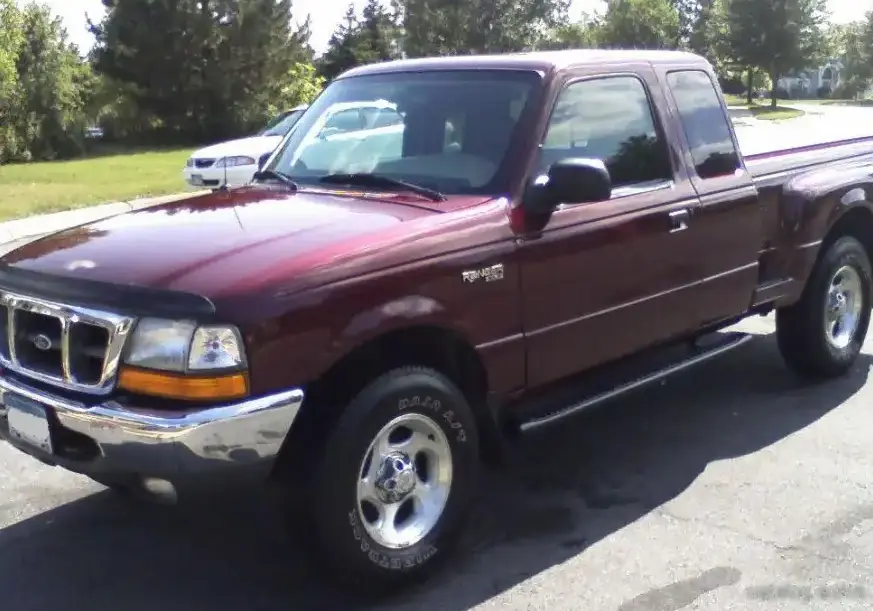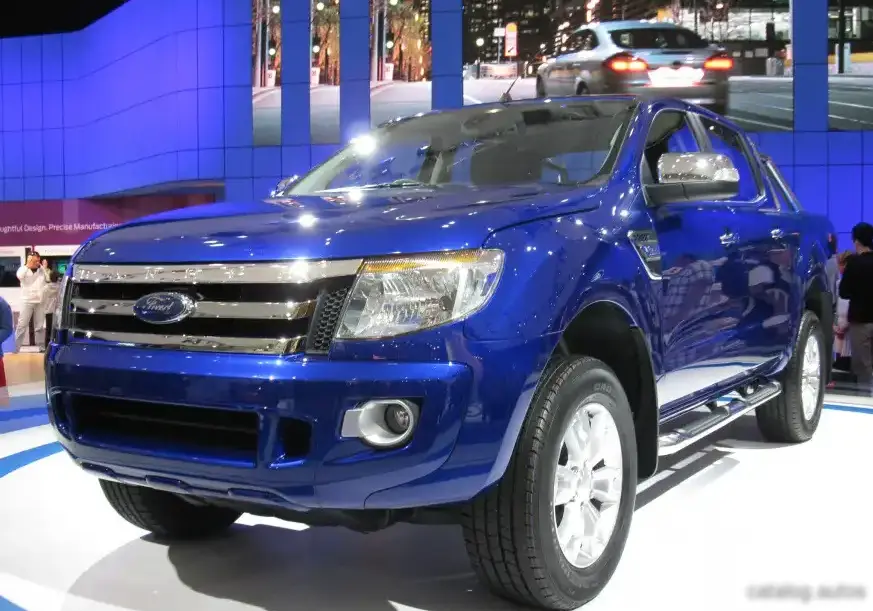
The Ford Ranger II Double Cab (facelift 2009) 2.5 TDCi, producing 143 horsepower, represents a mid-cycle update to the globally-sold Ranger platform. Introduced in 2009 and continuing through 2011, this variant was primarily aimed at markets outside of North America, where the Ranger continued as a popular choice for commercial and personal use. It sat within the broader Ranger II lineup, offering a balance between capability, fuel efficiency, and passenger space, appealing to families and businesses needing a versatile pickup truck. This model year saw styling revisions and refinements to the existing platform, enhancing its appeal in a competitive segment.
Technical Specifications
| Brand | Ford |
| Model | Ranger |
| Generation | Ranger II Double Cab (facelift 2009) |
| Type (Engine) | 2.5 TDCi (143 Hp) |
| Start of production | 2009 |
| End of production | 2011 |
| Powertrain Architecture | Internal Combustion engine |
| Body type | Pick-up |
| Seats | 5 |
| Doors | 4 |
| Fuel Type | Diesel |
| Maximum speed | 170 km/h (105.63 mph) |
| Weight-to-power ratio | 12.9 kg/Hp, 77.5 Hp/tonne |
| Weight-to-torque ratio | 5.6 kg/Nm, 178.9 Nm/tonne |
| Power | 143 Hp @ 3500 rpm |
| Power per litre | 57.2 Hp/l |
| Torque | 330 Nm @ 1800 rpm (243.4 lb.-ft. @ 1800 rpm) |
| Engine layout | Front, Longitudinal |
| Engine Model/Code | WLAA |
| Engine displacement | 2499 cm3 (152.5 cu. in.) |
| Number of cylinders | 4 |
| Engine configuration | Inline |
| Cylinder Bore | 93 mm (3.66 in.) |
| Piston Stroke | 92 mm (3.62 in.) |
| Compression ratio | 17.5:1 |
| Number of valves per cylinder | 4 |
| Fuel injection system | Diesel Commonrail |
| Engine aspiration | Turbocharger, Intercooler |
| Engine oil capacity | 7 l (7.4 US qt | 6.16 UK qt) |
| Coolant | 9.4 l (9.93 US qt | 8.27 UK qt) |
| Kerb Weight | 1845 kg (4067.53 lbs.) |
| Max. weight | 2985 kg (6580.8 lbs.) |
| Max load | 1140 kg (2513.27 lbs.) |
| Trunk (boot) space – minimum | 1500 l (52.97 cu. ft.) |
| Fuel tank capacity | 70 l (18.49 US gal | 15.4 UK gal) |
| Length | 5080 mm (200 in.) |
| Width | 1788 mm (70.39 in.) |
| Height | 1762 mm (69.37 in.) |
| Wheelbase | 3000 mm (118.11 in.) |
| Front track | 1488 mm (58.58 in.) |
| Rear (Back) track | 1455 mm (57.28 in.) |
| Ride height (ground clearance) | 230 mm (9.06 in.) |
| Drivetrain Architecture | The Internal combustion engine (ICE) drives the rear wheels of the vehicle. |
| Drive wheel | Rear wheel drive |
| Number of gears and type of gearbox | 5 gears, manual transmission |
| Front suspension | Independent torsion bar, double wishbone |
| Rear suspension | Dependent suspension of two longitudinal semi-elliptic leaf springs |
| Front brakes | Ventilated discs |
| Rear brakes | Drum |
| Assisting systems | ABS (Anti-lock braking system) |
| Steering type | Steering rack and pinion |
| Tires size | 235/75 R15; 245/70 R16 |
| Wheel rims size | 15; 16 |
Powertrain & Engine Architecture
The heart of the 2009-2011 Ford Ranger II Double Cab 2.5 TDCi is the WLAA engine, a 2.5-liter inline-four cylinder diesel. This engine utilizes a common rail direct injection system, delivering fuel at extremely high pressures for improved combustion efficiency and reduced emissions. The TDCi designation stands for Turbo Diesel Common Injection. A turbocharger with an intercooler is employed to boost power output, providing increased torque at lower engine speeds. The engine features four valves per cylinder, enhancing breathing and contributing to its overall performance. The 17.5:1 compression ratio is typical for a diesel engine, maximizing thermal efficiency. The 5-speed manual transmission was the standard offering, chosen for its durability and cost-effectiveness.
Driving Characteristics
The 143 horsepower and 330 Nm (243 lb-ft) of torque offered a reasonable level of performance for everyday driving and light-duty hauling. While not a performance-oriented pickup, the 2.5 TDCi provided adequate acceleration and the ability to comfortably carry a load. The manual transmission allowed for driver control, but the gear ratios were tuned for fuel economy rather than outright speed. Compared to higher-output Ranger variants, such as those equipped with larger engines, this version felt less responsive, particularly when fully loaded or climbing steep inclines. However, the lower power output also translated to improved fuel efficiency, making it a practical choice for those prioritizing economy.
Equipment & Trim Levels
The Double Cab configuration offered seating for five passengers, making it a more versatile option than the standard cab models. Standard equipment typically included air conditioning, power steering, and basic audio system. Higher trim levels, often denoted by specific package names depending on the market, could add features such as alloy wheels, upgraded interior trim, power windows and locks, and a more sophisticated audio system. The interior generally featured durable, utilitarian materials, reflecting the truck’s work-oriented nature. Safety features were relatively basic, typically including ABS brakes and driver/passenger airbags.
Chassis & Braking
The Ranger II Double Cab utilized a body-on-frame construction, providing robust durability and off-road capability. The front suspension consisted of an independent torsion bar setup with double wishbones, offering a reasonable level of ride comfort. The rear suspension employed a traditional leaf spring design, chosen for its load-carrying capacity. Braking duties were handled by ventilated discs at the front and drum brakes at the rear. The ABS system helped to maintain steering control during hard braking. The relatively high ground clearance of 230mm (9.06 inches) enhanced its off-road prowess.
Market Reception & Comparison
The Ford Ranger II Double Cab 2.5 TDCi was generally well-received in markets where it was offered. Critics praised its practicality, fuel efficiency, and durability. However, some noted that the engine lacked the refinement and power of some competitors. Compared to other Ranger variants, the 2.5 TDCi offered a more affordable entry point, appealing to budget-conscious buyers. It provided a good balance between performance and economy, making it a popular choice for both commercial and personal use. The manual transmission was favored by many for its reliability and driver engagement.
Legacy
The Ford Ranger II, including the 2.5 TDCi variant, established a strong reputation for reliability and durability. The WLAA engine, while not without its quirks, proved to be a robust and long-lasting powerplant when properly maintained. In the used car market, these Rangers continue to be sought after for their affordability and practicality. Common maintenance issues include wear and tear on suspension components, brake system upkeep, and ensuring proper servicing of the fuel injection system. Overall, the 2009-2011 Ford Ranger II Double Cab 2.5 TDCi remains a capable and dependable pickup truck, offering a compelling value proposition for those seeking a versatile and affordable vehicle.