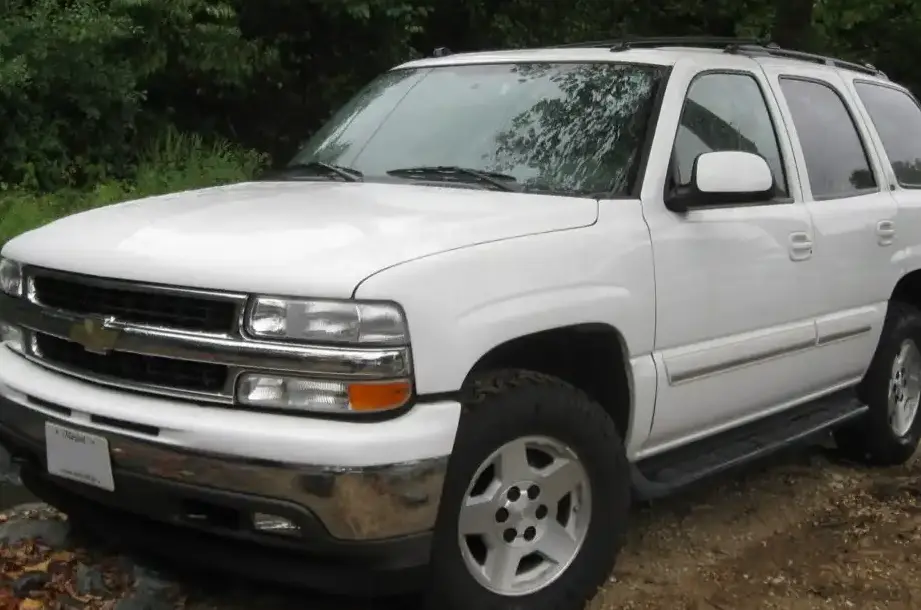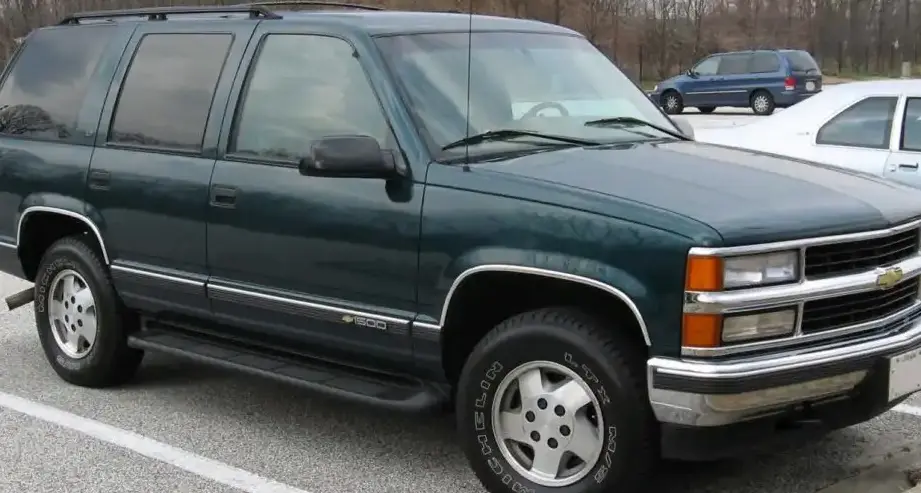
The Chevrolet Tahoe (GMT410) 5.7L V8 4WD, produced from 1996 to 1999, represents a significant iteration of Chevrolet’s full-size SUV. Part of the second generation of the Tahoe, which debuted in 1995, the GMT410 series marked a shift towards a more modern and refined SUV experience compared to its predecessors. This particular variant, equipped with the 5.7-liter V8 engine and a four-speed automatic transmission, was positioned as a robust, capable option for buyers needing substantial towing capacity and all-weather performance. It occupied a middle ground in the Tahoe lineup, offering more power than the base engine options but falling short of the higher-performance trims. The Tahoe, during this generation, was a mainstay of the American SUV market, catering to families and individuals requiring a versatile vehicle for both daily driving and recreational pursuits.
Technical Specifications
| Brand | Chevrolet |
| Model | Tahoe |
| Generation | Tahoe (GMT410) |
| Type | 5.7L i V8 4WD (258 Hp) 6 Seat |
| Start of production | 1996 |
| End of production | 1999 |
| Powertrain Architecture | Internal Combustion engine |
| Body type | SUV |
| Seats | 6 |
| Doors | 5 |
| Fuel consumption (urban) | 18.1 l/100 km (13 US mpg, 15.6 UK mpg, 5.5 km/l) |
| Fuel consumption (extra urban) | 13.8 l/100 km (17 US mpg, 20.5 UK mpg, 7.2 km/l) |
| Fuel consumption (combined) | 15.7 l/100 km (15 US mpg, 18 UK mpg, 6.4 km/l) |
| Fuel Type | Petrol (Gasoline) |
| Weight-to-power ratio | 9.5 kg/Hp (105.5 Hp/tonne) |
| Weight-to-torque ratio | 5.5 kg/Nm (180.4 Nm/tonne) |
| Power | 258 Hp @ 4600 rpm |
| Power per litre | 45 Hp/l |
| Torque | 441 Nm @ 2800 rpm (325.26 lb.-ft. @ 2800 rpm) |
| Engine layout | Front, Longitudinal |
| Engine displacement | 5733 cm3 (349.85 cu. in.) |
| Number of cylinders | 8 |
| Engine configuration | V-engine |
| Cylinder Bore | 101.6 mm (4 in.) |
| Piston Stroke | 88.4 mm (3.48 in.) |
| Compression ratio | 9.4:1 |
| Number of valves per cylinder | 2 |
| Fuel injection system | Multi-port manifold injection |
| Engine aspiration | Naturally aspirated |
| Engine oil capacity | 4.8 l (5.07 US qt, 4.22 UK qt) |
| Coolant capacity | 16.5 l (17.44 US qt, 14.52 UK qt) |
| Kerb Weight | 2445 kg (5390.3 lbs.) |
| Max. weight | 3195 kg (7043.77 lbs.) |
| Max load | 750 kg (1653.47 lbs.) |
| Trunk (boot) space – maximum | 3480 l (122.9 cu. ft.) |
| Fuel tank capacity | 114 l (30.12 US gal, 25.08 UK gal) |
| Length | 5057 mm (199.09 in.) |
| Width | 1941 mm (76.42 in.) |
| Height | 1829 mm (72.01 in.) |
| Wheelbase | 2985 mm (117.52 in.) |
| Front track | 1628 mm (64.09 in.) |
| Rear track | 1613 mm (63.5 in.) |
| Drive wheel | All wheel drive (4×4) |
| Number of gears | 4 |
| Gearbox type | Automatic transmission |
| Front suspension | Torsion |
| Rear suspension | Leaf spring |
| Front brakes | Disc |
| Rear brakes | Drum |
| Assisting systems | ABS (Anti-lock braking system) |
| Power steering | Hydraulic |
| Tires size | 245/75 R15 |
Powertrain & Engine Architecture
The heart of this Tahoe variant is the 5.7-liter (349.85 cubic inch) small-block Chevrolet V8 engine. Specifically, engines produced during this period typically fall under the Vortec 5700 series. This engine utilizes a cast iron block and aluminum cylinder heads, a configuration that balanced durability with weight reduction. The engine employs a multi-port fuel injection system, delivering fuel directly to each cylinder for improved efficiency and power delivery. The valvetrain consists of two valves per cylinder, operated by a hydraulic lifter camshaft. The 4L60E four-speed automatic transmission was the standard pairing for the 5.7L engine. This transmission is electronically controlled, offering smoother shifts and improved adaptability to driving conditions compared to earlier designs. The 4L60E is known for its robustness, but also for potential issues with overheating if subjected to heavy towing or prolonged use in demanding conditions.
Driving Characteristics
The 5.7L V8 and 4L60E automatic combination provided a respectable level of performance for the time. While not a sports car, the Tahoe offered ample power for merging onto highways and maintaining speed while towing. The automatic transmission’s gear ratios were tuned for both everyday drivability and towing capability. Acceleration from a standstill was adequate, but the Tahoe’s substantial weight (over 5,300 pounds) limited its overall quickness. Compared to the 4.3L V6 engine option, the 5.7L provided a noticeable increase in power and torque, making it a more suitable choice for those frequently hauling loads. Compared to the later introduction of the 6.0L Vortec engine, the 5.7L offered a slightly more economical option, though with a corresponding reduction in peak horsepower and torque.
Equipment & Trim Levels
The 1996-1999 Tahoe 5.7L 4WD typically came standard with features like air conditioning, power windows and locks, and an AM/FM stereo. The interior generally featured cloth upholstery, though leather was available as an option. Trim levels varied, but common options included upgraded sound systems, a sunroof, and rear air conditioning. The 6-seat configuration was standard, offering a bench seat in the front and a split-folding bench in the rear. The dashboard layout was functional and straightforward, prioritizing ease of use over stylistic flair.
Chassis & Braking
The GMT410 Tahoe utilized a body-on-frame construction, providing a robust and durable platform. The front suspension consisted of torsion bars, while the rear suspension employed leaf springs. This setup was designed to handle heavy loads and provide a comfortable ride. Braking duties were handled by disc brakes in the front and drum brakes in the rear. Anti-lock braking system (ABS) was standard, enhancing safety during emergency stops. The Tahoe’s relatively high center of gravity and substantial weight meant that handling was not particularly sporty, but the four-wheel-drive system provided excellent traction in adverse weather conditions.
Market Reception & Comparison
The Chevrolet Tahoe (GMT410) was a popular choice among American consumers, consistently ranking among the best-selling SUVs in its class. Critics praised its spacious interior, strong towing capacity, and comfortable ride. However, fuel economy was a common criticism, as the 5.7L V8 was not particularly fuel-efficient. Compared to the Ford Expedition and the GMC Yukon, the Tahoe offered a similar level of capability and features. The Tahoe’s reputation for reliability was generally positive, though some owners reported issues with the 4L60E transmission and the cooling system.
Legacy
The GMT410 Tahoe 5.7L 4WD remains a relatively common sight on used car lots today. While age and mileage can impact reliability, the 5.7L V8 engine is generally considered to be durable and long-lasting, provided it has been properly maintained. The 4L60E transmission, however, can be a potential source of problems, and may require rebuilding or replacement. These vehicles are often sought after by those needing a capable and affordable SUV for towing or off-road use. The GMT410 generation Tahoe laid the groundwork for the continued success of the Tahoe nameplate, establishing it as a dominant force in the full-size SUV segment.