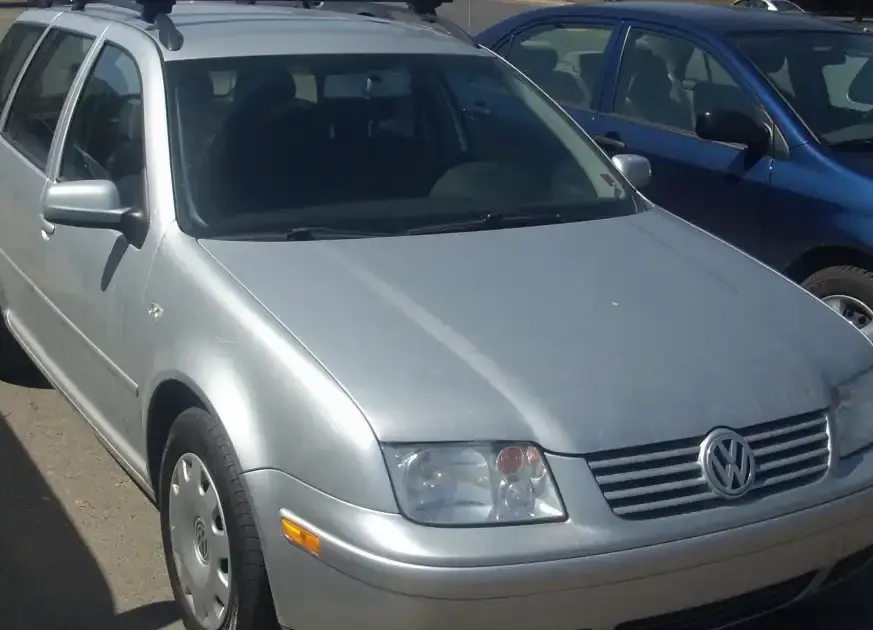
The Volkswagen Jetta IV Wagon 1.9 TDI, produced between 2000 and 2005, represents a compelling blend of practicality, fuel efficiency, and performance within the fourth generation (Mk4) Jetta lineup. Positioned as a premium offering within the wagon variant, it catered to buyers seeking the benefits of a diesel engine – namely, excellent fuel economy and strong torque – combined with the versatility of a station wagon body style. This model was primarily sold in the European market, where diesel engines held a significantly larger market share than in the United States. The Jetta IV, built on the Volkswagen Group’s A4 (or 1HX0) platform, shared its underpinnings with models like the Golf, Bora, and Audi A3.
Technical Specifications
| Brand | Volkswagen |
| Model | Jetta |
| Generation | Jetta IV Wagon |
| Type (Engine) | 1.9 TDI (150 Hp) |
| Start of production | 2000 year |
| End of production | 2005 year |
| Powertrain Architecture | Internal Combustion engine |
| Body type | Station wagon (estate) |
| Seats | 5 |
| Doors | 5 |
| Fuel consumption (urban) | 7.2 l/100 km (32.7 US mpg) |
| Fuel consumption (extra urban) | 4.4 l/100 km (53.5 US mpg) |
| Fuel consumption (combined) | 5.4 l/100 km (43.6 US mpg) |
| Fuel Type | Diesel |
| Acceleration 0 – 100 km/h | 9.2 sec |
| Acceleration 0 – 62 mph | 9.2 sec |
| Acceleration 0 – 60 mph | 8.7 sec |
| Maximum speed | 216 km/h (134.22 mph) |
| Weight-to-power ratio | 9.3 kg/Hp |
| Weight-to-torque ratio | 4.4 kg/Nm |
| Power | 150 Hp @ 4000 rpm |
| Torque | 320 Nm @ 1900 rpm (236.02 lb.-ft. @ 1900 rpm) |
| Engine layout | Front, Transverse |
| Engine Model/Code | ARL |
| Engine displacement | 1896 cm3 (115.7 cu. in.) |
| Number of cylinders | 4 |
| Engine configuration | Inline |
| Cylinder Bore | 79.5 mm (3.13 in.) |
| Piston Stroke | 95.5 mm (3.76 in.) |
| Compression ratio | 18.5:1 |
| Number of valves per cylinder | 2 |
| Fuel injection system | Pump-nozzle (Unit Injector) |
| Engine aspiration | Turbocharger, Intercooler |
| Valvetrain | OHC |
| Engine oil capacity | 4.5 l (4.76 US qt | 3.96 UK qt) |
| Coolant | 6 l (6.34 US qt | 5.28 UK qt) |
| Kerb Weight | 1400 kg (3086.47 lbs.) |
| Max. weight | 1920 kg (4232.88 lbs.) |
| Max load | 520 kg (1146.4 lbs.) |
| Trunk (boot) space – minimum | 460 l (16.24 cu. ft.) |
| Trunk (boot) space – maximum | 1470 l (51.91 cu. ft.) |
| Fuel tank capacity | 55 l (14.53 US gal | 12.1 UK gal) |
| Length | 4409 mm (173.58 in.) |
| Width | 1735 mm (68.31 in.) |
| Height | 1485 mm (58.46 in.) |
| Wheelbase | 2515 mm (99.02 in.) |
| Front track | 1513 mm (59.57 in.) |
| Rear (Back) track | 1494 mm (58.82 in.) |
| Drivetrain Architecture | Front wheel drive |
| Number of gears | 6 gears, manual transmission |
| Front suspension | Coil spring |
| Rear suspension | Coil spring |
| Front brakes | Ventilated discs |
| Rear brakes | Disc |
| Assisting systems | ABS (Anti-lock braking system) |
| Steering type | Steering rack and pinion |
| Power steering | Hydraulic Steering |
| Tires size | 205/55 R16 |
| Wheel rims size | 16 |
Powertrain & Engine Architecture
The heart of the Jetta IV Wagon 1.9 TDI is the ARL engine code, a 1.9-liter inline-four cylinder diesel engine. This engine is a direct-injection diesel, utilizing Volkswagen’s pump-nozzle (Unit Injector) technology. This system, developed by Bosch, injects fuel directly into the combustion chamber at extremely high pressure, promoting efficient combustion and reducing emissions. The ARL engine features an overhead camshaft (OHC) valvetrain with two valves per cylinder. A turbocharger with an intercooler is employed to increase power output and improve throttle response. The 150 horsepower and 320 Nm (236 lb-ft) of torque were substantial figures for a 1.9-liter diesel engine of that era. The six-speed manual transmission was the standard offering, providing a wide range of gear ratios to optimize both fuel economy and performance.
Driving Characteristics
The 1.9 TDI engine in the Jetta Wagon delivered a distinctly different driving experience compared to the gasoline-powered variants. While lacking the high-revving nature of a petrol engine, the TDI offered a broad, flat torque curve, providing strong acceleration from low engine speeds. This made it particularly well-suited for everyday driving and hauling loads. The six-speed manual transmission allowed drivers to keep the engine in its optimal power band, resulting in responsive performance. Compared to the 1.8L gasoline engines available in the Jetta IV, the TDI offered significantly better fuel economy and more torque, but at the expense of outright horsepower. The 0-60 mph time of around 8.7 seconds was respectable for a wagon of this size and weight, but the real strength lay in its mid-range acceleration for overtaking maneuvers.
Equipment & Trim Levels
The Jetta IV Wagon 1.9 TDI typically came equipped with a reasonable level of standard features. These included power windows and locks, central locking, air conditioning, and an AM/FM radio. Higher trim levels, often denoted by designations like “Trendline” or “Comfortline,” added features such as alloy wheels, upgraded interior trim, a multi-function steering wheel, and a sunroof. Optional extras included a navigation system, leather upholstery, and a premium sound system. The interior generally featured a functional, if somewhat understated, design with durable materials. Safety features included dual front airbags and ABS (Anti-lock Braking System).
Chassis & Braking
The Jetta IV Wagon utilized a MacPherson strut front suspension and a multi-link rear suspension, providing a comfortable ride and predictable handling. The suspension was tuned to prioritize comfort over outright sportiness. Braking duties were handled by ventilated discs at the front and solid discs at the rear. The ABS system helped to maintain steering control during hard braking. Stabilizer bars were fitted to both the front and rear axles to reduce body roll during cornering. The chassis was designed to accommodate the added weight of the diesel engine and the wagon body style.
Market Reception & Comparison
The Jetta IV Wagon 1.9 TDI was generally well-received by automotive critics in Europe. Its fuel efficiency, strong torque, and practicality were highly praised. However, some reviewers noted that the engine could be somewhat noisy and that the ride quality was not as refined as some of its competitors. Compared to the gasoline-powered Jetta variants, the TDI offered superior fuel economy and torque, making it a popular choice for drivers who covered long distances. Against rivals like the Ford Focus Wagon and Opel/Vauxhall Astra Estate, the Jetta TDI offered a compelling combination of features and performance.
Legacy
The 1.9 TDI engine, particularly the ARL variant, has earned a reputation for being remarkably durable and reliable. With proper maintenance, these engines can easily exceed 200,000 miles. Today, the Jetta IV Wagon 1.9 TDI remains a relatively popular choice in the used car market, particularly among those seeking a fuel-efficient and practical vehicle. However, potential buyers should be aware of the potential for age-related issues, such as wear and tear on suspension components and the possibility of turbocharger failure. The ARL engine’s robust design and readily available parts contribute to its continued appeal and relatively low cost of ownership.