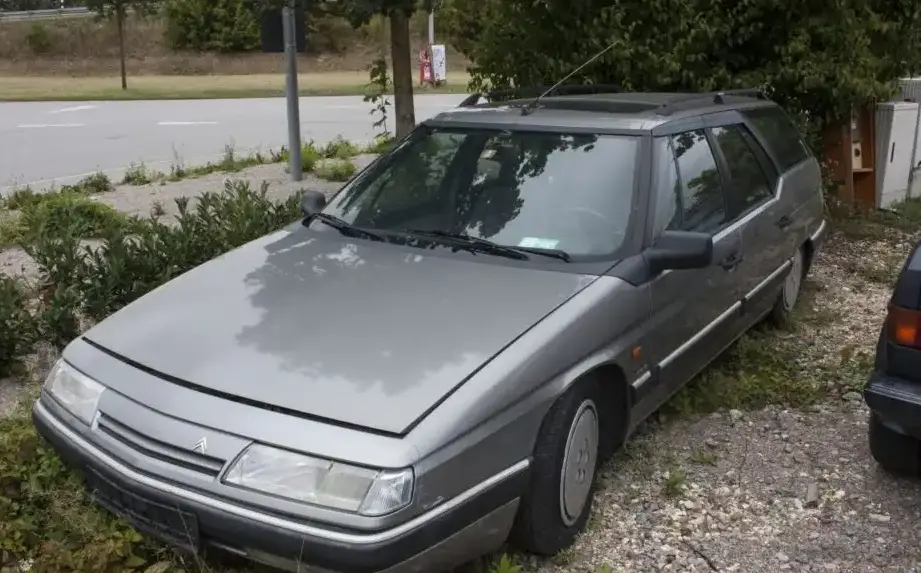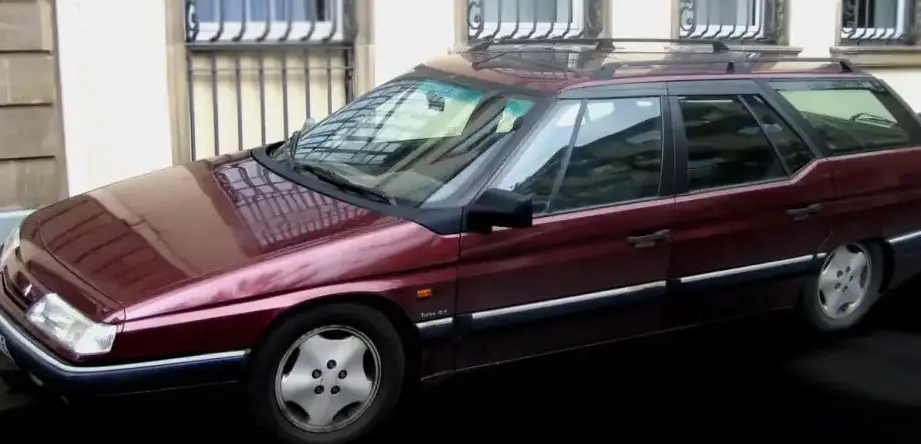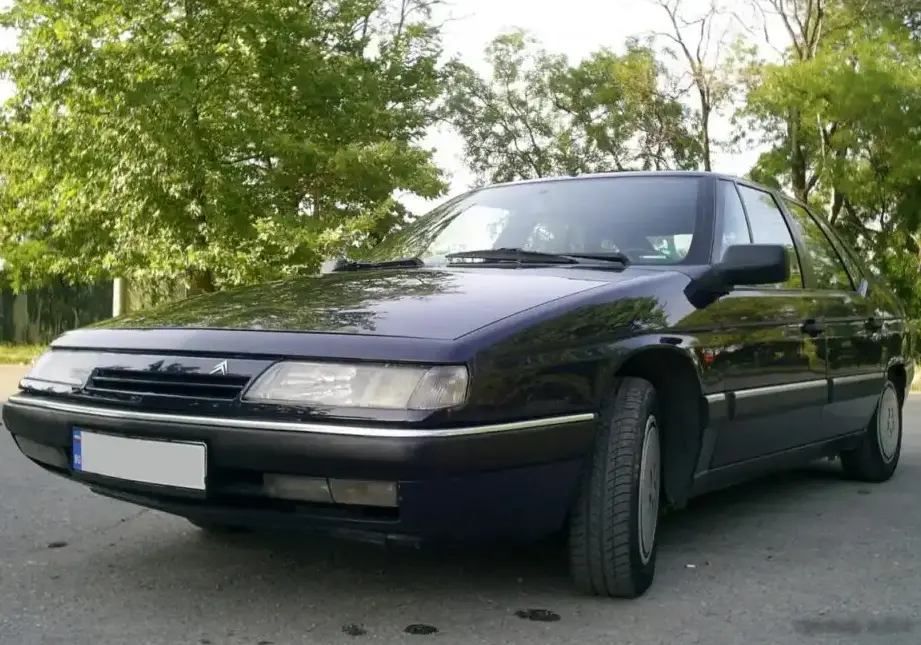
The Citroen XM (Y3) 2.0i 130 Hp, produced between 1989 and 1992, represents a significant iteration of Citroen’s flagship executive car. Positioned as a mid-range offering within the XM lineup, it bridged the gap between the more basic 1.6-liter models and the higher-performance 2.9 V6 and 3.0 PRV V6 variants. The XM, launched as a replacement for the CX, aimed to combine Citroen’s renowned hydropneumatic suspension technology with a more modern and aerodynamic design. This particular 2.0i version was primarily aimed at buyers seeking a comfortable and refined driving experience with reasonable performance and fuel economy, appealing to both family and business users in the European market.
Technical Specifications
| Brand | Citroen |
| Model | XM |
| Generation | XM (Y3) |
| Type (Engine) | 2.0 i (130 Hp) |
| Start of production | 1989 year |
| End of production | 1992 year |
| Powertrain Architecture | Internal Combustion engine |
| Body type | Hatchback |
| Seats | 5 |
| Doors | 5 |
| Fuel consumption (economy) – urban | 11.5 l/100 km (20.5 US mpg, 24.6 UK mpg, 8.7 km/l) |
| Fuel consumption (economy) – extra urban | 6.3 l/100 km (37.3 US mpg, 44.8 UK mpg, 15.9 km/l) |
| Fuel consumption (economy) – combined | 8.3 l/100 km (28.3 US mpg, 34 UK mpg, 12 km/l) |
| Fuel Type | Petrol (Gasoline) |
| Acceleration 0 – 100 km/h | 11.5 sec |
| Acceleration 0 – 62 mph | 11.5 sec |
| Acceleration 0 – 60 mph | 10.9 sec |
| Maximum speed | 205 km/h (127.38 mph) |
| Weight-to-power ratio | 10.1 kg/Hp, 99.2 Hp/tonne |
| Weight-to-torque ratio | 7.4 kg/Nm, 135.9 Nm/tonne |
| Power | 130 Hp @ 5600 rpm |
| Power per litre | 65.1 Hp/l |
| Torque | 178 Nm @ 4800 rpm (131.29 lb.-ft. @ 4800 rpm) |
| Maximum engine speed | 6300 rpm |
| Engine layout | Front, Transverse |
| Engine Model/Code | XU10J2 |
| Engine displacement | 1998 cm3 (121.93 cu. in.) |
| Number of cylinders | 4 |
| Engine configuration | Inline |
| Cylinder Bore | 86 mm (3.39 in.) |
| Piston Stroke | 86 mm (3.39 in.) |
| Compression ratio | 8.8:1 |
| Number of valves per cylinder | 2 |
| Fuel injection system | Multi-port manifold injection |
| Engine aspiration | Naturally aspirated engine |
| Valvetrain | OHC |
| Engine oil capacity | 5.4 l (5.71 US qt | 4.75 UK qt) |
| Coolant | 7.3 l (7.71 US qt | 6.42 UK qt) |
| Kerb Weight | 1310 kg (2888.06 lbs.) |
| Max. weight | 1845 kg (4067.53 lbs.) |
| Max load | 535 kg (1179.47 lbs.) |
| Trunk (boot) space – minimum | 455 l (16.07 cu. ft.) |
| Trunk (boot) space – maximum | 1460 l (51.56 cu. ft.) |
| Fuel tank capacity | 80 l (21.13 US gal | 17.6 UK gal) |
| Max. roof load | 80 kg (176.37 lbs.) |
| Permitted trailer load with brakes (12%) | 1300 kg (2866.01 lbs.) |
| Permitted trailer load without brakes | 655 kg (1444.03 lbs.) |
| Permitted towbar download | 110 kg (242.51 lbs.) |
| Length | 4708 mm (185.35 in.) |
| Width | 1794 mm (70.63 in.) |
| Width including mirrors | 2000 mm (78.74 in.) |
| Height | 1385 mm (54.53 in.) |
| Wheelbase | 2850 mm (112.2 in.) |
| Front track | 1520 mm (59.84 in.) |
| Rear (Back) track | 1447 mm (56.97 in.) |
| Front overhang | 1068 mm (42.05 in.) |
| Rear overhang | 790 mm (31.1 in.) |
| Ride height (ground clearance) | 141 mm (5.55 in.) |
| Minimum turning circle (turning diameter) | 12.5 m (41.01 ft.) |
| Drivetrain Architecture | The Internal combustion engine (ICE) drives the front wheels of the vehicle. |
| Drive wheel | Front wheel drive |
| Number of gears and type of gearbox | 5 gears, manual transmission |
| Front suspension | Independent type McPherson, Wishbone |
| Rear suspension | Hydro-pneumatic element, Trailing arm |
| Front brakes | Ventilated discs, 276×22 mm |
| Rear brakes | Drum, 224×9 mm |
| Assisting systems | ABS (Anti-lock braking system) |
| Steering type | Steering rack and pinion |
| Power steering | Hydraulic Steering |
| Tires size | 195/60 R15 |
Powertrain & Engine Architecture
The 2.0i XM utilized the PSA XU10J2 engine, a naturally aspirated, inline-four cylinder petrol engine. This engine was a mainstay in Peugeot and Citroen vehicles throughout the 1980s and 1990s. It featured a cast iron block and an aluminum cylinder head with a single overhead camshaft (OHC) operating two valves per cylinder. Fuel delivery was managed by a Bosch multi-port fuel injection system, providing improved efficiency and responsiveness compared to earlier carbureted designs. The XU10J2 engine was known for its robustness and relatively simple design, making it easier to maintain. The engine was transversely mounted in the front of the vehicle, driving the front wheels. The transmission was a five-speed manual gearbox, offering a balance between fuel economy and performance. While an automatic transmission was available on some XM models, the 2.0i was primarily offered with the manual.
Driving Characteristics
The 2.0i XM with the five-speed manual transmission offered a comfortable and composed driving experience. With 130 horsepower, acceleration was adequate, reaching 60 mph in approximately 10.9 seconds. However, it wasn’t a particularly sporty car; the focus was on ride comfort and refinement. The hydropneumatic suspension, a Citroen hallmark, provided a remarkably smooth and level ride, even on uneven surfaces. The gear ratios were well-chosen for everyday driving, with a relatively long fifth gear for highway cruising. Compared to the more powerful V6 models, the 2.0i felt less strained during acceleration, but lacked the outright punch for quick overtaking maneuvers. The manual transmission allowed for greater driver control, while the automatic versions, though offering convenience, tended to feel sluggish and diminished the overall driving experience.
Equipment & Trim Levels
The 2.0i XM typically came equipped with a reasonable level of standard features. These included central locking, electric front windows, power steering, and an adjustable steering column. Interior upholstery was typically cloth, with a focus on comfort and durability. Optional extras included air conditioning, a sunroof, and upgraded audio systems. The dashboard layout was functional and ergonomically designed, with easy-to-read gauges and intuitive controls. Higher trim levels offered additional features such as leather upholstery, wood trim, and more advanced audio systems. The XM was designed to be a comfortable and well-equipped executive car, and the 2.0i trim level provided a good balance of features and affordability.
Chassis & Braking
The XM featured an independent front suspension with McPherson struts and wishbones, providing good handling and stability. The rear suspension utilized Citroen’s innovative hydropneumatic system, which offered self-leveling and exceptional ride comfort. The braking system consisted of ventilated discs on the front wheels and drum brakes on the rear. Anti-lock braking system (ABS) was standard, enhancing safety and control during emergency braking. The chassis was designed to provide a stable and comfortable ride, prioritizing comfort over outright sportiness. The steering was rack and pinion, providing precise and responsive steering feel.
Market Reception & Comparison
The Citroen XM 2.0i was generally well-received by automotive critics. It was praised for its comfortable ride, spacious interior, and innovative hydropneumatic suspension. However, some critics noted that the engine lacked the power of the V6 models and that the styling was somewhat polarizing. Compared to its rivals, such as the Ford Granada and Rover 800, the XM offered a unique driving experience thanks to its hydropneumatic suspension. Fuel economy was reasonable for a car of its size and class, and reliability was generally good, although the hydropneumatic system could require occasional maintenance. The 2.0i version offered a more affordable entry point into the XM range, appealing to buyers who prioritized comfort and practicality over outright performance.
Legacy
The Citroen XM, while not a massive sales success, remains a fondly remembered car among enthusiasts. The 2.0i version, with its robust engine and relatively simple mechanicals, has proven to be a reliable and durable classic. Today, well-maintained examples are sought after by collectors and enthusiasts who appreciate the XM’s unique blend of comfort, innovation, and style. The hydropneumatic suspension, while requiring specialized maintenance, continues to provide a remarkably smooth and comfortable ride. The XU10J2 engine is known for its longevity and relatively easy maintenance, making it a practical choice for classic car ownership. The XM represents a high point in Citroen’s engineering and design history, and the 2.0i version offers a particularly accessible and enjoyable way to experience this iconic car.