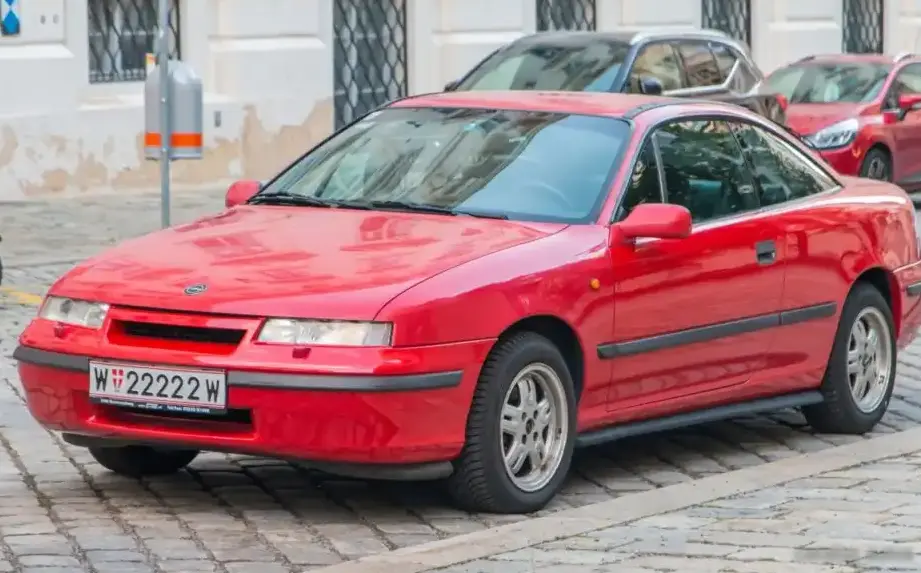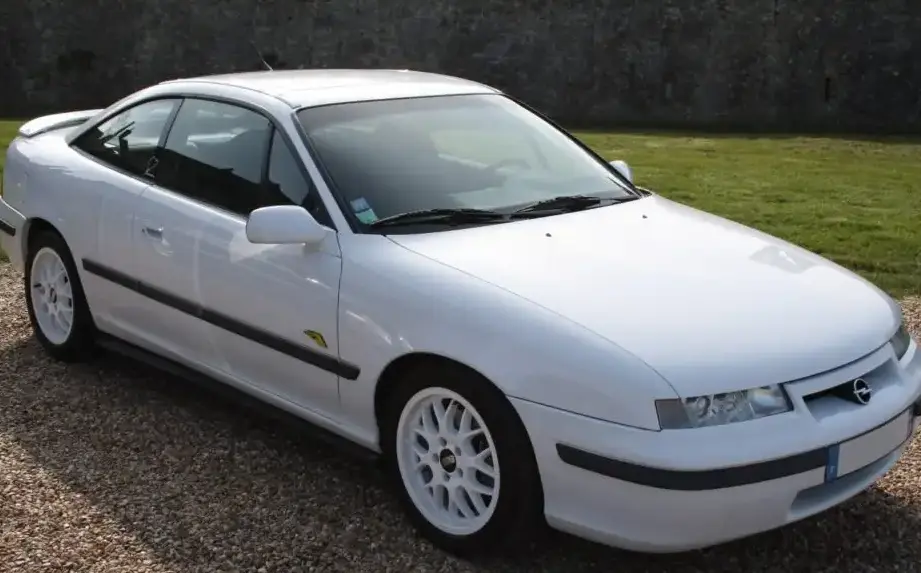
The Opel Calibra, particularly the facelifted version introduced in 1994, represented a bold step for the German automaker. Positioned as a stylish and affordable coupe, the Calibra aimed to capture a younger demographic with its sleek, aerodynamic design – boasting a drag coefficient of just 0.26. The 2.0 8V (115 hp) variant, produced from 1994 to 1996, served as a mid-range offering within the Calibra lineup, bridging the gap between the more economical base models and the performance-oriented turbocharged and V6 versions. It was a key player in the European market, offering a blend of practicality, style, and reasonable performance.
Technical Specifications
| Brand | Opel |
| Model | Calibra |
| Generation | Calibra (facelift 1994) |
| Type (Engine) | 2.0 8V (115 Hp) |
| Start of production | 1994 |
| End of production | 1996 |
| Powertrain Architecture | Internal Combustion engine |
| Body type | Coupe |
| Seats | 4 |
| Doors | 3 |
| Fuel consumption (urban) | 11.1 l/100 km (21.2 US mpg) |
| Fuel consumption (extra urban) | 6.1 l/100 km (38.6 US mpg) |
| Fuel consumption (combined) | 8.2 l/100 km (28.7 US mpg) |
| Fuel Type | Petrol (Gasoline) |
| Acceleration 0 – 100 km/h | 10 sec |
| Acceleration 0 – 62 mph | 10 sec |
| Acceleration 0 – 60 mph | 9.5 sec |
| Maximum speed | 205 km/h (127.38 mph) |
| Weight-to-power ratio | 10.6 kg/Hp |
| Weight-to-torque ratio | 7.1 kg/Nm |
| Power | 115 Hp @ 5200 rpm |
| Torque | 170 Nm @ 2600 rpm (125.39 lb.-ft. @ 2600 rpm) |
| Engine layout | Front, Transverse |
| Engine Model/Code | C20NE |
| Engine displacement | 1998 cm3 (121.93 cu. in.) |
| Number of cylinders | 4 |
| Engine configuration | Inline |
| Cylinder Bore | 86 mm (3.39 in.) |
| Piston Stroke | 86 mm (3.39 in.) |
| Compression ratio | 9.2:1 |
| Number of valves per cylinder | 2 |
| Fuel injection system | Multi-port manifold injection |
| Engine aspiration | Naturally aspirated |
| Valvetrain | SOHC |
| Engine oil capacity | 4 l (4.23 US qt | 3.52 UK qt) |
| Coolant capacity | 7.4 l (7.82 US qt | 6.51 UK qt) |
| Kerb Weight | 1215 kg (2678.62 lbs.) |
| Max. weight | 1635 kg (3604.56 lbs.) |
| Max load | 420 kg (925.94 lbs.) |
| Trunk (boot) space – minimum | 300 l (10.59 cu. ft.) |
| Trunk (boot) space – maximum | 980 l (34.61 cu. ft.) |
| Fuel tank capacity | 63 l (16.64 US gal | 13.86 UK gal) |
| Length | 4492 mm (176.85 in.) |
| Width | 1688 mm (66.46 in.) |
| Height | 1320 mm (51.97 in.) |
| Wheelbase | 2600 mm (102.36 in.) |
| Front track | 1426 mm (56.14 in.) |
| Rear track | 1446 mm (56.93 in.) |
| Drag coefficient (Cd) | 0.26 |
| Minimum turning circle | 11.45 m (37.57 ft.) |
| Drivetrain Architecture | Front wheel drive |
| Number of gears | 5 |
| Gearbox type | Manual transmission |
| Front suspension | Independent type McPherson, Transverse stabilizer |
| Rear suspension | Trailing arm, Transverse stabilizer |
| Front brakes | Ventilated discs |
| Rear brakes | Disc |
| Assisting systems | ABS (Anti-lock braking system) |
| Steering type | Steering rack and pinion |
| Power steering | Hydraulic |
| Tires size | 195/60 R14 |
| Wheel rims size | 5.5J x 14 |
Powertrain & Engine Architecture
The heart of the Calibra 2.0 8V is the Opel C20NE engine, a 1998cc inline-four cylinder unit. This engine, a staple in various Opel and Vauxhall models of the era, features a single overhead camshaft (SOHC) design operating two valves per cylinder. Fuel delivery is managed by a multi-port fuel injection system, providing a balance between efficiency and performance. The C20NE is known for its relative simplicity and durability, making it a reasonably reliable powerplant. The engine’s 9.2:1 compression ratio contributes to its usable torque output. The five-speed manual transmission, standard on this variant, features a conventional gear layout designed for smooth shifts and efficient power delivery. While an automatic transmission was available, the manual was favored by enthusiasts for its greater driver involvement.
Driving Characteristics
The 115 hp output of the 2.0 8V Calibra translates to a 0-60 mph time of around 9.5 seconds and a top speed of 127 mph. While not a sports car by modern standards, the Calibra 2.0 8V offered respectable performance for its time and price point. The engine delivers its peak torque at 2600 rpm, providing adequate pulling power for everyday driving and overtaking maneuvers. Compared to the more powerful turbocharged or V6 Calibras, the 2.0 8V feels less urgent, but its lighter weight and well-tuned suspension contribute to a balanced and enjoyable driving experience. The manual transmission allows for precise control, while the relatively long gearing prioritizes fuel economy over outright acceleration.
Equipment & Trim Levels
The Calibra 2.0 8V typically came equipped with features considered standard for a coupe in the mid-1990s. This included power steering, central locking, electric windows, and an AM/FM radio. Interior upholstery was generally cloth, with options for upgraded materials available. The dashboard layout was functional and driver-focused, with clear instrumentation. Optional extras included a sunroof, alloy wheels, and upgraded audio systems. The trim level often dictated the availability of these extras, with higher trims offering more luxurious appointments.
Chassis & Braking
The Calibra’s chassis features independent McPherson strut suspension at the front and a trailing arm setup at the rear. This configuration provides a good balance between ride comfort and handling. A transverse stabilizer bar is fitted to both axles, reducing body roll during cornering. Braking duties are handled by ventilated discs at the front and solid discs at the rear, providing adequate stopping power for the vehicle’s weight and performance. An Anti-lock Braking System (ABS) was standard, enhancing safety by preventing wheel lockup during hard braking.
Market Reception & Comparison
The Opel Calibra 2.0 8V was generally well-received by automotive critics as an affordable and stylish coupe. It was praised for its aerodynamic design, comfortable ride, and reasonable performance. However, some critics noted that the 2.0 8V engine lacked the excitement of the turbocharged or V6 options. Compared to the Calibra 2.0 16V, the 8V version offered less power but better fuel economy and potentially lower maintenance costs. Against competitors like the Ford Escort Cosworth or the Volkswagen Corrado, the Calibra 2.0 8V offered a more accessible price point and a more practical interior.
Legacy
The Opel Calibra, and specifically the 2.0 8V variant, has developed a cult following among enthusiasts. The C20NE engine is known for its durability and relative ease of maintenance, making it a popular choice for restoration projects and modifications. Today, well-maintained Calibras are becoming increasingly collectible, particularly those in original condition. While not as sought-after as the higher-performance models, the 2.0 8V represents a solid and reliable entry point into Calibra ownership, offering a taste of 1990s coupe styling and driving dynamics. Parts availability remains reasonable, ensuring that these cars can be kept on the road for years to come.