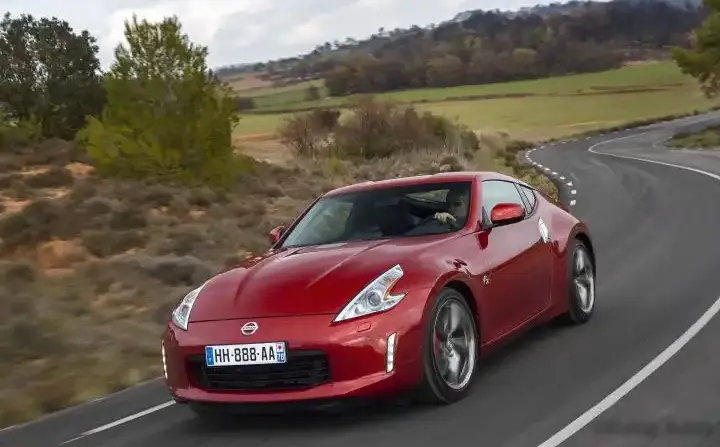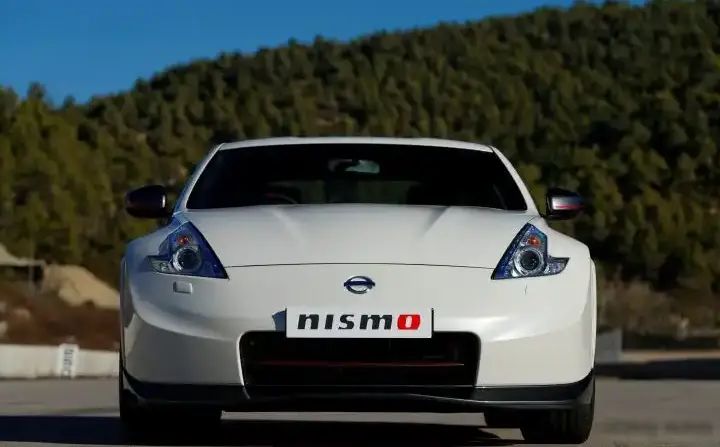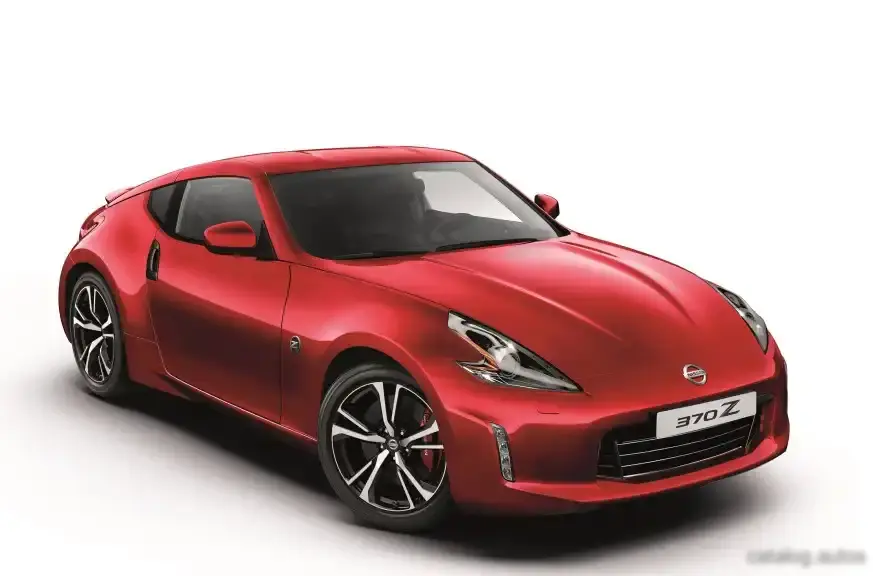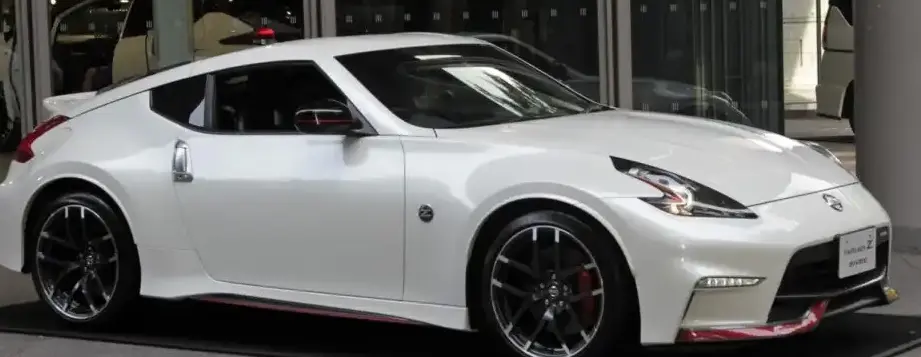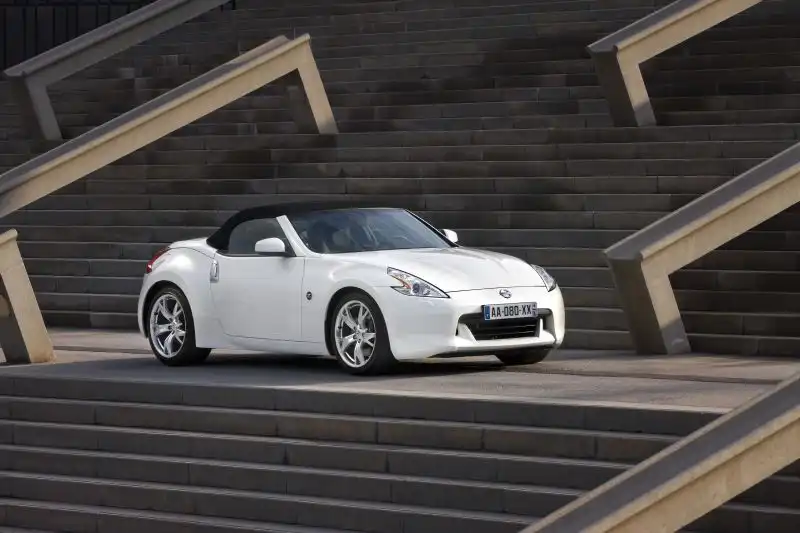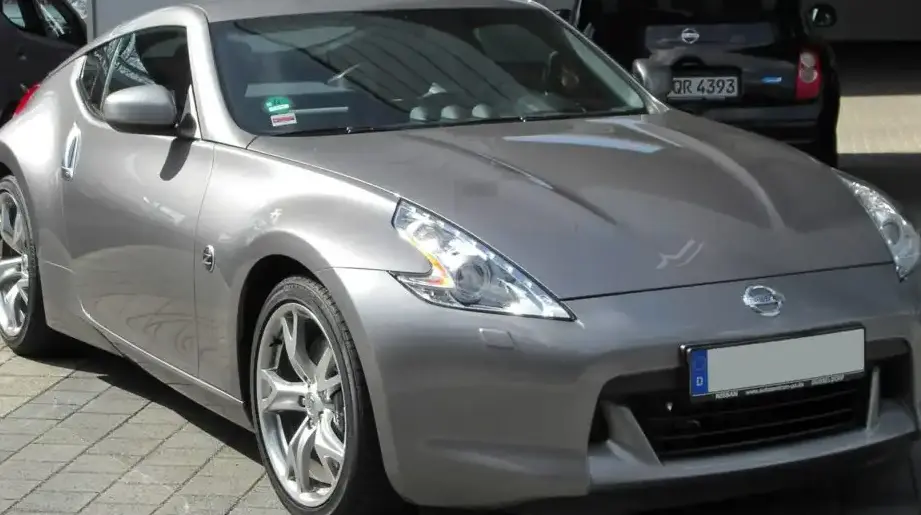
The Nissan 370Z, specifically the 3.7-liter (328 horsepower) variant, represents the second generation of Nissan’s Z-car lineage, succeeding the 350Z. Introduced for the 2009 model year (though often referred to as a 2008 model due to staggered release dates), and continuing through 2012, this iteration of the 370Z aimed to refine the formula of an affordable, rear-wheel-drive sports coupe. It was built upon the Nissan FM platform, shared with the Infiniti G37, and positioned as a direct competitor to cars like the BMW Z4 and Mazda RX-8. The 3.7L engine became the sole engine offering for the US market after its introduction, replacing the previous 3.5L V6.
Technical Specifications
| Brand | Nissan |
| Model | 370Z |
| Generation | 370Z |
| Type (Engine) | 3.7 (328 Hp) |
| Start of production | 2008 year |
| End of production | 2012 year |
| Powertrain Architecture | Internal Combustion engine |
| Body type | Coupe |
| Seats | 2 |
| Doors | 3 |
| Fuel consumption (economy) – urban (NEDC) | 15.4 l/100 km (15.3 US mpg, 18.3 UK mpg, 6.5 km/l) |
| Fuel consumption (economy) – extra urban (NEDC) | 7.8 l/100 km (30.2 US mpg, 36.2 UK mpg, 12.8 km/l) |
| Fuel consumption (economy) – combined (NEDC) | 10.6 l/100 km (22.2 US mpg, 26.6 UK mpg, 9.4 km/l) |
| CO2 emissions (NEDC) | 248 g/km |
| Fuel Type | Petrol (Gasoline) |
| Acceleration 0 – 100 km/h | 5.3 sec |
| Acceleration 0 – 62 mph | 5.3 sec |
| Acceleration 0 – 60 mph | 5 sec |
| Maximum speed | 250 km/h (155.34 mph), Electronically limited |
| Emission standard | Euro 5 |
| Weight-to-power ratio | 4.6 kg/Hp, 219.3 Hp/tonne |
| Weight-to-torque ratio | 4.1 kg/Nm, 242.6 Nm/tonne |
| Power | 328 Hp @ 7000 rpm |
| Power per litre | 88.7 Hp/l |
| Torque | 363 Nm @ 5200 rpm (267.74 lb.-ft. @ 5200 rpm) |
| Engine layout | Front, Longitudinal |
| Engine Model/Code | VQ37VHR |
| Engine displacement | 3696 cm3 (225.54 cu. in.) |
| Number of cylinders | 6 |
| Engine configuration | V-engine |
| Cylinder Bore | 95.5 mm (3.76 in.) |
| Piston Stroke | 86 mm (3.39 in.) |
| Compression ratio | 11:1 |
| Number of valves per cylinder | 4 |
| Fuel injection system | Multi-port manifold injection |
| Engine aspiration | Naturally aspirated engine |
| Valvetrain | DOHC, VVEL |
| Engine oil capacity | 4.9 l (5.18 US qt | 4.31 UK qt) |
| Coolant | 8.6 l (9.09 US qt | 7.57 UK qt) |
| Kerb Weight | 1496 kg (3298.12 lbs.) |
| Max. weight | 1800 kg (3968.32 lbs.) |
| Max load | 304 kg (670.21 lbs.) |
| Trunk (boot) space – minimum | 235 l (8.3 cu. ft.) |
| Fuel tank capacity | 72 l (19.02 US gal | 15.84 UK gal) |
| Length | 4250 mm (167.32 in.) |
| Width | 1845 mm (72.64 in.) |
| Height | 1310 mm (51.57 in.) |
| Wheelbase | 2550 mm (100.39 in.) |
| Front track | 1540-1550 mm (60.63 – 61.02 in.) |
| Rear (Back) track | 1565-1595 mm (61.61 – 62.8 in.) |
| Front overhang | 840 mm (33.07 in.) |
| Rear overhang | 860 mm (33.86 in.) |
| Drag coefficient (Cd) | 0.30 |
| Minimum turning circle (turning diameter) | 10.6 m (34.78 ft.) |
| Drivetrain Architecture | The Internal combustion engine (ICE) drives the rear wheels of the vehicle. |
| Drive wheel | Rear wheel drive |
| Number of gears and type of gearbox | 6 gears, manual transmission |
| Front suspension | Double wishbone, Transverse stabilizer |
| Rear suspension | Independent multi-link suspension, Transverse stabilizer |
| Front brakes | Ventilated discs, 355 mm |
| Rear brakes | Ventilated discs, 350 mm |
| Assisting systems | ABS (Anti-lock braking system) |
| Steering type | Steering rack and pinion |
| Power steering | Hydraulic Steering |
| Tires size | Front wheel tires: 225/50 R18; 245/40 R19 Rear wheel tires: 245/45 R18; 275/35 R19 |
| Wheel rims size | Front wheel rims: 8J x 18; 9J x 19 Rear wheel rims: 9J x 18; 10J x 19 |
Powertrain & Engine Architecture
The heart of the 370Z 3.7 is the VQ37VHR engine, a 3.7-liter naturally aspirated V6. This engine is a significant evolution of the VQ35DE found in the previous 350Z. The “VHR” designation stands for “High Revolution,” indicating Nissan’s focus on increasing the engine’s redline and overall performance. Key improvements included revised intake and exhaust manifolds, increased bore size, and the implementation of Variable Valve Event and Lift (VVEL) technology. VVEL allows for continuously variable control of valve timing and lift, optimizing engine performance across the rev range. The engine utilizes multi-port fuel injection and a compression ratio of 11:1. The 370Z was primarily offered with a six-speed manual transmission, but a five-speed automatic transmission was also available. The automatic transmission featured a manual shift mode, but generally prioritized smooth operation over aggressive shifting.
Driving Characteristics
The 370Z 3.7 with the automatic transmission delivers a comfortable yet engaging driving experience. While not as raw or visceral as the manual version, the automatic provides smooth and predictable gear changes. Acceleration from 0-60 mph takes around 5 seconds, making it a genuinely quick car. The automatic transmission’s gear ratios are tuned for a balance of acceleration and fuel efficiency. However, the automatic does slightly diminish the feeling of direct control compared to the manual. The rear-wheel-drive layout provides excellent balance and handling, especially when paired with the well-tuned suspension. The steering is precise and communicative, offering good feedback to the driver.
Equipment & Trim Levels
The 370Z 3.7 was available in several trim levels, including Base, Touring, and Sport. The Base model offered standard features such as air conditioning, power windows and locks, a four-speaker audio system, and 18-inch alloy wheels. The Touring trim added features like leather upholstery, heated seats, a Bose audio system, and automatic climate control. The Sport trim focused on performance, including a limited-slip differential, sport-tuned suspension, and larger wheels and tires. Optional extras included navigation, Bluetooth connectivity, and a sunroof.
Chassis & Braking
The 370Z utilizes a double-wishbone front suspension and an independent multi-link rear suspension, providing a comfortable ride and precise handling. Stabilizer bars are fitted to both axles to reduce body roll during cornering. The braking system consists of ventilated discs on all four wheels, providing ample stopping power. The base models typically featured smaller rear rotors than the Sport trim. ABS (Anti-lock Braking System) is standard.
Market Reception & Comparison
The 370Z 3.7 was generally well-received by automotive critics. It was praised for its powerful engine, engaging handling, and relatively affordable price. The automatic transmission was often criticized for being less engaging than the manual, but it was acknowledged as being smooth and refined. Compared to the manual version, the automatic 370Z offered slightly lower fuel economy. The 370Z offered a compelling alternative to more expensive sports cars from Europe and Japan.
Legacy
The Nissan 370Z 3.7 has proven to be a reliable and durable sports car. The VQ37VHR engine is known for its longevity, and the overall mechanical design is relatively straightforward, making maintenance relatively affordable. On the used car market, the 370Z 3.7 remains a popular choice for enthusiasts seeking an affordable and engaging rear-wheel-drive sports coupe. While the model has been discontinued, its legacy as a modern classic continues to grow.