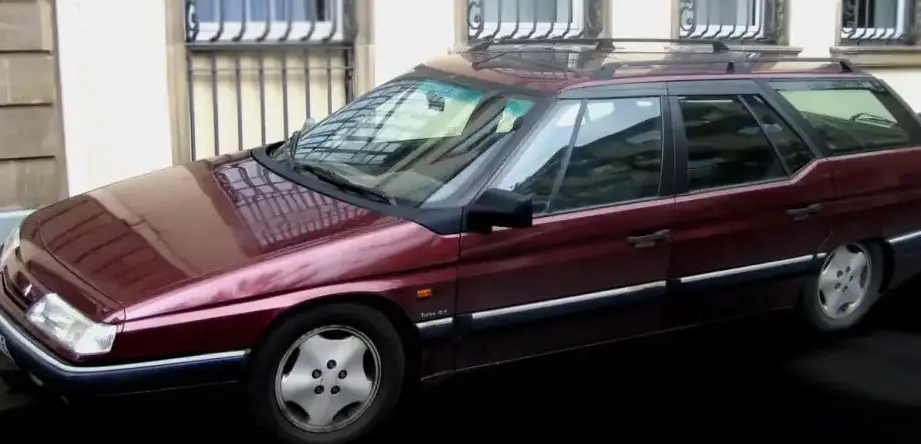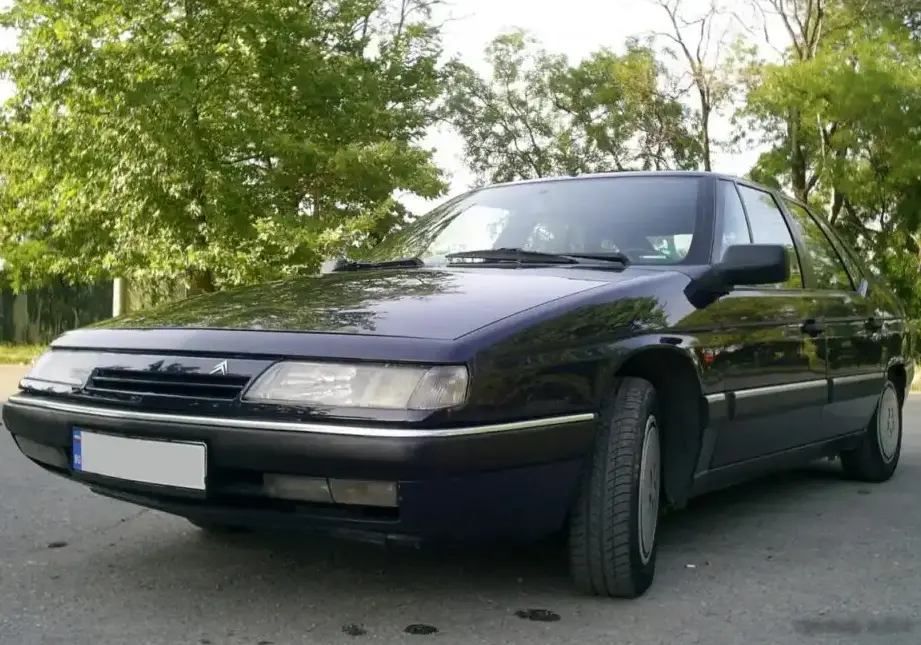
The Citroen XM (Y3) 2.0 i Turbo CT Automatic, produced between 1993 and 1994, represented a compelling blend of performance and comfort within the second generation of the XM line. Positioned as a mid-range offering, it catered to buyers seeking a more spirited driving experience than the base models, without the outright expense of the flagship V6 variants. The XM, launched in 1989, was Citroen’s replacement for the aging CX, and was notable for its innovative hydropneumatic suspension and distinctive, aerodynamic styling penned by Bertone. The Y3 series, introduced in 1994, brought subtle styling revisions and mechanical updates, with the 2.0 i Turbo CT Automatic being a key part of the revised lineup.
Technical Specifications
| Brand | Citroen |
| Model | XM |
| Generation | XM (Y3) |
| Type (Engine) | 2.0 i Turbo CT (141 Hp) Automatic |
| Start of production | 1993 |
| End of production | 1994 |
| Powertrain Architecture | Internal Combustion engine |
| Body type | Hatchback |
| Seats | 5 |
| Doors | 5 |
| Fuel consumption (urban) | 12.7 l/100 km (18.5 US mpg, 22.2 UK mpg, 7.9 km/l) |
| Fuel consumption (extra urban) | 7.1 l/100 km (33.1 US mpg, 39.8 UK mpg, 14.1 km/l) |
| Fuel consumption (combined) | 8.9 l/100 km (26.4 US mpg, 31.7 UK mpg, 11.2 km/l) |
| Fuel Type | Petrol (Gasoline) |
| Acceleration 0 – 100 km/h | 11.8 sec |
| Acceleration 0 – 62 mph | 11.8 sec |
| Acceleration 0 – 60 mph | 11.2 sec |
| Maximum speed | 212 km/h (131.73 mph) |
| Weight-to-power ratio | 9.9 kg/Hp, 100.7 Hp/tonne |
| Weight-to-torque ratio | 6.2 kg/Nm, 161.4 Nm/tonne |
| Power | 141 Hp @ 4400 rpm |
| Power per litre | 70.6 Hp/l |
| Torque | 226 Nm @ 2200 rpm (166.69 lb.-ft. @ 2200 rpm) |
| Engine layout | Front, Transverse |
| Engine Model/Code | RGY XU10 J2TE |
| Engine displacement | 1998 cm3 (121.93 cu. in.) |
| Number of cylinders | 4 |
| Engine configuration | Inline |
| Cylinder Bore | 86 mm (3.39 in.) |
| Piston Stroke | 86 mm (3.39 in.) |
| Compression ratio | 8.5:1 |
| Number of valves per cylinder | 2 |
| Fuel injection system | Multi-port manifold injection |
| Engine aspiration | Turbocharger, Intercooler |
| Engine oil capacity | 5.4 l (5.71 US qt | 4.75 UK qt) |
| Coolant | 7.5 l (7.93 US qt | 6.6 UK qt) |
| Kerb Weight | 1400 kg (3086.47 lbs.) |
| Max. weight | 1950 kg (4299.01 lbs.) |
| Max load | 550 kg (1212.54 lbs.) |
| Trunk (boot) space – minimum | 455 l (16.07 cu. ft.) |
| Trunk (boot) space – maximum | 1460 l (51.56 cu. ft.) |
| Fuel tank capacity | 80 l (21.13 US gal | 17.6 UK gal) |
| Length | 4708 mm (185.35 in.) |
| Width | 1794 mm (70.63 in.) |
| Width including mirrors | 2000 mm (78.74 in.) |
| Height | 1385 mm (54.53 in.) |
| Wheelbase | 2850 mm (112.2 in.) |
| Front track | 1520 mm (59.84 in.) |
| Rear (Back) track | 1450 mm (57.09 in.) |
| Front overhang | 1068 mm (42.05 in.) |
| Rear overhang | 790 mm (31.1 in.) |
| Minimum turning circle | 12.5 m (41.01 ft.) |
| Drivetrain Architecture | The Internal combustion engine (ICE) drives the front wheels of the vehicle. |
| Drive wheel | Front wheel drive |
| Number of gears and type of gearbox | 4 gears, automatic transmission |
| Front suspension | Hydro-pneumatic element |
| Rear suspension | Hydro-pneumatic element |
| Front brakes | Ventilated discs |
| Rear brakes | Disc |
| Assisting systems | ABS (Anti-lock braking system) |
| Steering type | Steering rack and pinion |
| Power steering | Hydraulic Steering |
| Tires size | 205/60 R15 |
| Wheel rims size | 15 |
Powertrain & Engine Architecture
The heart of the XM 2.0 i Turbo CT Automatic is the Peugeot-Renault-Volvo (PRV) XU10 J2TE engine. This 1998cc, inline-four cylinder engine features a single overhead camshaft (SOHC) design with two valves per cylinder. The ‘J2TE’ designation indicates a turbocharged version with multi-point fuel injection. The turbocharger, coupled with an intercooler, significantly boosted power output compared to the naturally aspirated 2.0-liter engines available in other XM trims. The engine management system was a Bosch Motronic MP3.1, controlling fuel delivery and ignition timing. The automatic transmission was a four-speed unit, designed to provide smooth shifts and ease of driving, though it wasn’t known for being particularly sporty. The transmission was geared towards comfort and fuel efficiency rather than outright acceleration.
Driving Characteristics
The 2.0 i Turbo CT Automatic offered a noticeable step up in performance compared to the base-model XMs. While not a sports car, the 141 horsepower and 226 Nm (166.69 lb-ft) of torque provided adequate acceleration for highway cruising and overtaking. The 0-60 mph time of around 11.2 seconds was respectable for the early 1990s. However, the automatic transmission did detract somewhat from the engine’s potential, resulting in a less engaging driving experience than the five-speed manual versions. The hydropneumatic suspension, a Citroen hallmark, provided an exceptionally comfortable ride, absorbing bumps and imperfections in the road with ease. The steering was light and precise, contributing to a relaxed driving experience. The automatic transmission’s gear ratios were optimized for fuel economy and smooth cruising, meaning it wasn’t always in the optimal gear for spirited driving.
Equipment & Trim Levels
The ‘CT’ designation indicated a relatively well-equipped trim level. Standard features typically included central locking, electric windows, power steering, an adjustable steering column, and a basic audio system. Interior upholstery was usually a cloth material, though leather options were available. The dashboard layout was typical of early 1990s Citroens, with a functional but somewhat dated design. Optional extras included a sunroof, upgraded audio systems, and climate control. The XM generally offered a high level of standard equipment for its price point, making it an attractive option for buyers seeking a comfortable and well-equipped family car.
Chassis & Braking
The XM’s chassis was designed around its innovative hydropneumatic suspension system. This system used pressurized fluid and nitrogen to provide a self-leveling and exceptionally comfortable ride. The front suspension utilized independent hydropneumatic spheres, while the rear suspension also employed hydropneumatic elements. Braking was handled by ventilated discs at the front and solid discs at the rear. An Anti-lock Braking System (ABS) was standard, enhancing safety and control during hard braking. The XM’s suspension allowed it to maintain a consistent ride height regardless of load, and also offered the ability to raise the vehicle for improved ground clearance.
Market Reception & Comparison
The XM 2.0 i Turbo CT Automatic was generally well-received by automotive critics. It was praised for its comfortable ride, spacious interior, and distinctive styling. However, the automatic transmission was often criticized for being somewhat sluggish and detracting from the engine’s performance. Compared to the 2.0-liter non-turbo versions, the Turbo CT offered a significant performance boost. Against the V6 models, it provided a more affordable option with reasonable performance. Fuel economy was reasonable for a turbocharged engine of that era, averaging around 26.4 US mpg in combined driving. Reliability was a mixed bag; the hydropneumatic suspension, while comfortable, could be prone to leaks and required specialized maintenance.
Legacy
The Citroen XM, while not a massive sales success, remains a fondly remembered car among enthusiasts. The 2.0 i Turbo CT Automatic, in particular, offers a compelling combination of comfort, performance, and affordability in the used car market. The PRV XU10 engine is generally considered to be a durable unit, although regular maintenance is essential. The hydropneumatic suspension requires specialized knowledge and care, and finding qualified mechanics can be a challenge. Today, well-maintained examples of the XM 2.0 i Turbo CT Automatic are becoming increasingly collectible, appealing to those who appreciate its unique blend of French engineering and distinctive styling.