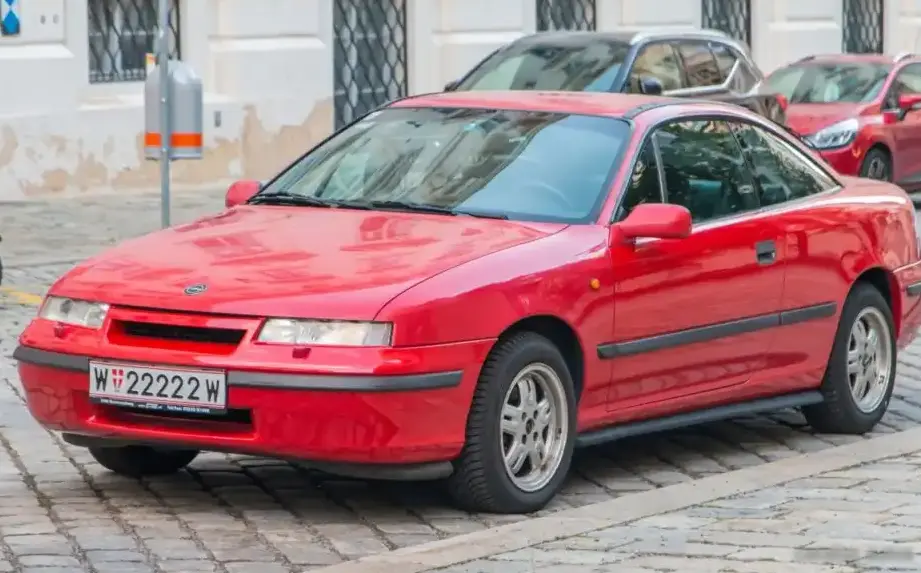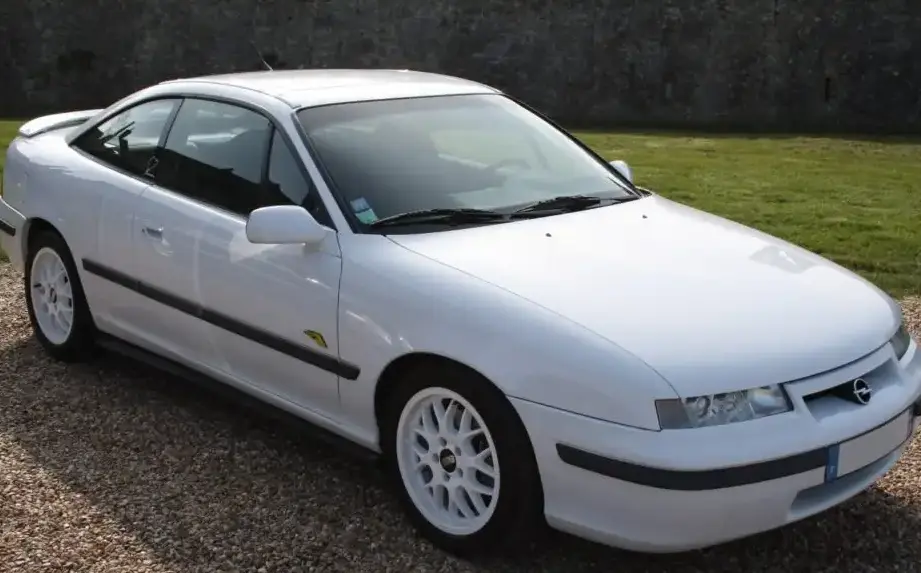
The Opel Calibra, particularly the 2.5 V6 ECOTEC variant with an automatic transmission produced from 1994 to 1996, represents a high-performance iteration of Opel’s popular coupe. Positioned as the flagship model within the Calibra range, it offered a significant step up in power and refinement compared to the four-cylinder options. The Calibra itself was a product of the 1990s, designed to appeal to buyers seeking a stylish, sporty, and relatively affordable coupe. It shared its underpinnings with the Opel Vectra and Opel Cavalier, utilizing the GM410 platform, but distinguished itself with its sleek, aerodynamic fastback design. This variant aimed to deliver a more luxurious and effortless driving experience, appealing to those who desired performance without the involvement of a manual gearbox.
Technical Specifications
| Brand | Opel |
| Model | Calibra |
| Generation | Calibra (facelift 1994) |
| Type (Engine) | 2.5 V6 ECOTEC (170 Hp) Automatic |
| Start of production | 1994 |
| End of production | 1996 |
| Powertrain Architecture | Internal Combustion engine |
| Body type | Coupe |
| Seats | 4 |
| Doors | 3 |
| Fuel consumption (urban) | 11.6 l/100 km (20.3 US mpg) |
| Fuel consumption (extra urban) | 6.6 l/100 km (35.6 US mpg) |
| Fuel consumption (combined) | 8.7 l/100 km (27 US mpg) |
| Fuel Type | Petrol (Gasoline) |
| Acceleration 0 – 100 km/h | 8.8 sec |
| Acceleration 0 – 62 mph | 8.8 sec |
| Acceleration 0 – 60 mph | 8.4 sec |
| Maximum speed | 234 km/h (145.4 mph) |
| Weight-to-power ratio | 8.1 kg/Hp |
| Weight-to-torque ratio | 6.1 kg/Nm |
| Power | 170 Hp @ 6000 rpm |
| Torque | 227 Nm @ 4200 rpm (167.43 lb.-ft. @ 4200 rpm) |
| Engine layout | Front, Transverse |
| Engine Model/Code | C25XE |
| Engine displacement | 2498 cm3 (152.44 cu. in.) |
| Number of cylinders | 6 |
| Engine configuration | V-engine |
| Cylinder Bore | 81.6 mm (3.21 in.) |
| Piston Stroke | 79.6 mm (3.13 in.) |
| Compression ratio | 10.8:1 |
| Number of valves per cylinder | 4 |
| Fuel injection system | Multi-port manifold injection |
| Engine aspiration | Naturally aspirated engine |
| Valvetrain | DOHC |
| Engine oil capacity | 4.5 l (4.76 US qt | 3.96 UK qt) |
| Coolant capacity | 7.5 l (7.93 US qt | 6.6 UK qt) |
| Kerb Weight | 1375 kg (3031.36 lbs.) |
| Max. weight | 1795 kg (3957.3 lbs.) |
| Max load | 420 kg (925.94 lbs.) |
| Trunk (boot) space – minimum | 300 l (10.59 cu. ft.) |
| Trunk (boot) space – maximum | 980 l (34.61 cu. ft.) |
| Fuel tank capacity | 63 l (16.64 US gal | 13.86 UK gal) |
| Length | 4492 mm (176.85 in.) |
| Width | 1688 mm (66.46 in.) |
| Height | 1320 mm (51.97 in.) |
| Wheelbase | 2600 mm (102.36 in.) |
| Front track | 1426 mm (56.14 in.) |
| Rear track | 1446 mm (56.93 in.) |
| Drag coefficient (Cd) | 0.26 |
| Minimum turning circle | 11.45 m (37.57 ft.) |
| Drivetrain Architecture | Front wheel drive |
| Number of gears | 4 |
| Gearbox type | Automatic transmission |
| Front suspension | Independent type McPherson, Transverse stabilizer |
| Rear suspension | Trailing arm, Transverse stabilizer |
| Front brakes | Ventilated discs |
| Rear brakes | Disc |
| Assisting systems | ABS (Anti-lock braking system) |
| Steering type | Steering rack and pinion |
| Power steering | Hydraulic Steering |
| Tires size | 205/55 R15 |
| Wheel rims size | 6J x 15 |
INTRODUCTION
The 1994-1996 Opel Calibra 2.5 V6 ECOTEC Automatic represents the pinnacle of performance for this generation of the Calibra. Introduced as part of the facelifted model, it combined the coupe’s striking design with a potent V6 engine and the convenience of an automatic transmission. This variant was aimed at buyers who appreciated a blend of sporty aesthetics, comfortable cruising, and effortless acceleration. The Calibra, built on the GM410 platform, was intended to be a more affordable and accessible alternative to rivals like the BMW 3 Series Coupe and the Porsche 944. The 2.5 V6 Automatic was the most expensive and well-equipped Calibra available, offering a premium experience within the Opel lineup.
Powertrain & Engine Architecture
At the heart of the Calibra 2.5 V6 Automatic lies the C25XE engine, a 2.5-liter, 60-degree V6. This engine is a naturally aspirated unit featuring multi-port fuel injection and a double overhead camshaft (DOHC) valvetrain. The C25XE was part of Opel’s ECOTEC family, emphasizing efficiency and reduced emissions. The engine produces 170 horsepower at 6,000 rpm and 227 Nm (167.43 lb-ft) of torque at 4,200 rpm. The automatic transmission is a four-speed unit, designed to provide smooth and comfortable gear changes. While not as sporty as a manual transmission, it complements the V6 engine’s torque curve, delivering brisk acceleration without requiring constant gear shifting. The transmission’s gear ratios are tuned for a balance between acceleration and fuel economy, prioritizing comfortable cruising over outright performance.
Driving Characteristics
The Calibra 2.5 V6 Automatic offers a distinctly different driving experience compared to the four-cylinder models or even the V6 with a manual transmission. The automatic gearbox provides smooth and seamless shifts, making it ideal for everyday driving and long-distance journeys. While the 0-60 mph time of around 8.4 seconds is respectable, it’s slightly slower than the manual version due to the transmission’s inherent power loss. However, the automatic transmission allows the driver to fully exploit the V6’s torque, resulting in strong acceleration in most real-world driving situations. The car feels stable and well-balanced, thanks to its relatively low center of gravity and well-tuned suspension. The steering is precise and responsive, providing good feedback to the driver.
Equipment & Trim Levels
The 2.5 V6 Automatic Calibra typically came with a generous level of standard equipment. This included power windows, central locking, power steering, an upgraded sound system, and alloy wheels. Interior upholstery was typically cloth or leather, with the latter being an optional extra. Other available options included a sunroof, air conditioning, and upgraded audio systems. The dashboard layout was functional and driver-focused, with clear instrumentation and easy-to-use controls. The overall interior ambiance was designed to be comfortable and refined, reflecting the car’s premium positioning within the Calibra range.
Chassis & Braking
The Calibra 2.5 V6 Automatic utilizes an independent McPherson strut suspension at the front and a trailing arm suspension at the rear. This setup provides a good balance between ride comfort and handling. Stabilizer bars are fitted to both axles to reduce body roll during cornering. The braking system consists of ventilated discs at the front and solid discs at the rear. Anti-lock braking system (ABS) was standard, enhancing safety and control during emergency braking situations. The chassis was designed to be rigid and lightweight, contributing to the car’s overall handling characteristics.
Market Reception & Comparison
The Calibra 2.5 V6 Automatic was generally well-received by automotive critics. It was praised for its stylish design, comfortable ride, and strong performance. However, some critics noted that the automatic transmission slightly dulled the driving experience compared to the manual version. Compared to other trims, the 2.5 V6 Automatic offered a significant performance advantage, but at a higher price point. The four-cylinder models were more fuel-efficient and affordable, while the manual V6 offered a more engaging driving experience. Fuel economy was reasonable for a V6 engine of this era, averaging around 27 US mpg in combined driving.
Legacy
The Opel Calibra 2.5 V6 ECOTEC Automatic has become a sought-after classic among enthusiasts. The C25XE engine is known for its reliability and durability, provided it is properly maintained. While finding parts can sometimes be challenging, the engine’s robust design ensures that it can withstand years of use. Today, well-maintained examples of the Calibra 2.5 V6 Automatic command a premium in the used car market, appealing to collectors and drivers who appreciate its unique blend of style, performance, and comfort. It remains a testament to Opel’s engineering prowess and design flair of the 1990s.