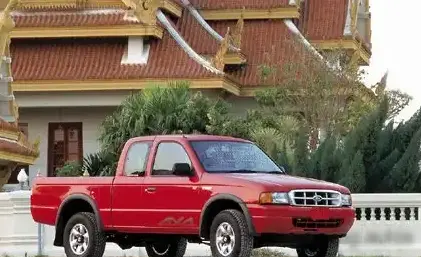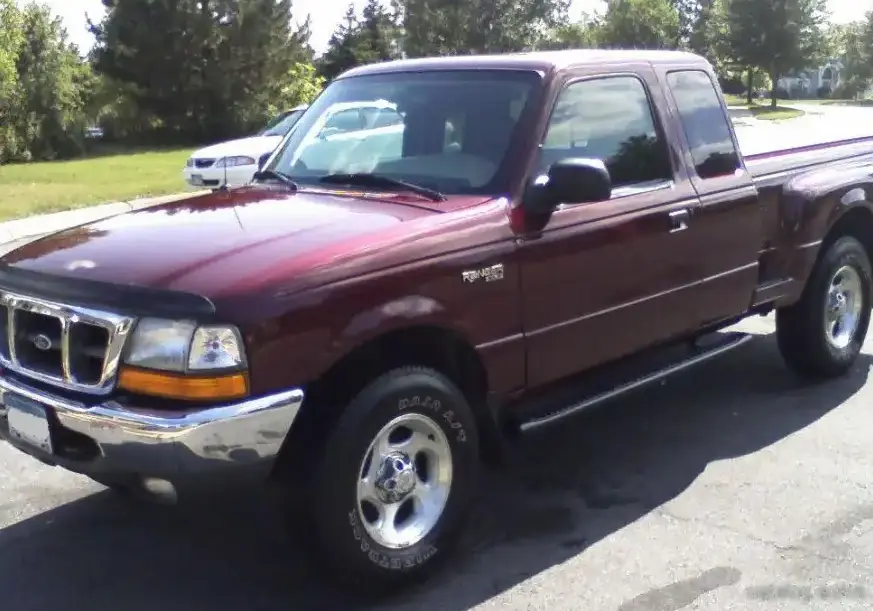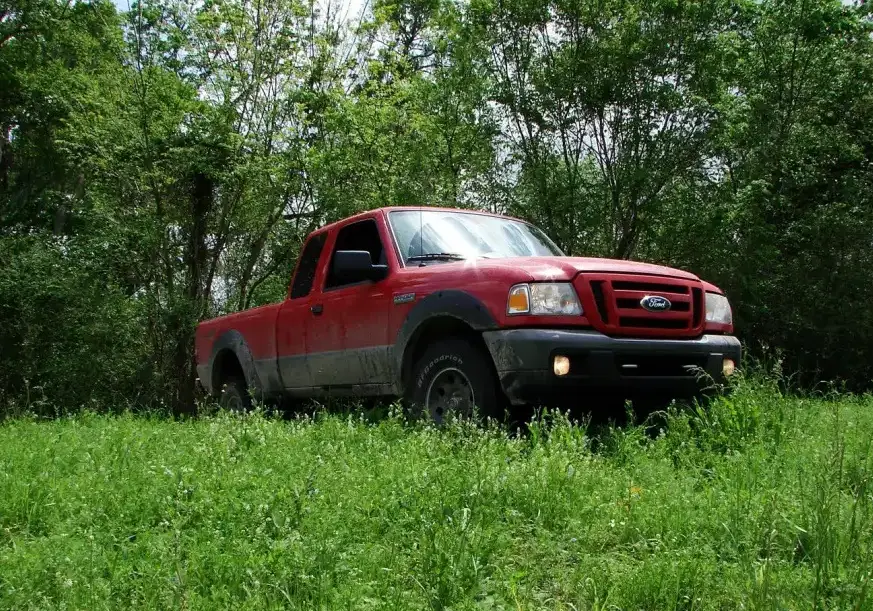
The Ford Ranger II Super Cab 2.3 (143 Hp) Automatic, produced between 2006 and 2010, represented a key offering in Ford’s mid-size pickup truck lineup for the North American market. This variant occupied a middle ground within the Ranger II Super Cab range, providing a balance between affordability, practicality, and ease of use. It was positioned as a step up from the base 2.3L manual transmission models, appealing to buyers who prioritized convenience over outright performance or fuel economy. The Ranger II generation, built on the global Ford P2 platform, aimed to modernize the Ranger while retaining its reputation for ruggedness and utility.
Technical Specifications
| Brand | Ford |
| Model | Ranger |
| Generation | Ranger II Super Cab |
| Type (Engine) | 2.3 (143 Hp) Automatic |
| Start of production | 2006 |
| End of production | 2010 |
| Powertrain Architecture | Internal Combustion engine |
| Body type | Pick-up |
| Seats | 4 |
| Doors | 2 |
| Fuel Type | Petrol (Gasoline) |
| Power | 143 Hp @ 5250 rpm |
| Power per litre | 63.4 Hp/l |
| Torque | 209 Nm @ 3750 rpm / 154.15 lb.-ft. @ 3750 rpm |
| Engine layout | Front, Longitudinal |
| Engine displacement | 2255 cm3 / 137.61 cu. in. |
| Number of cylinders | 4 |
| Engine configuration | Inline |
| Compression ratio | 9.7:1 |
| Number of valves per cylinder | 4 |
| Fuel injection system | Multi-port manifold injection |
| Engine aspiration | Naturally aspirated engine |
| Engine oil capacity | 3.8 l / 4.02 US qt | 3.34 UK qt |
| Coolant | 9.7 l / 10.25 US qt | 8.53 UK qt |
| Trunk (boot) space – minimum | 1500 l / 52.97 cu. ft. |
| Fuel tank capacity | 70 l / 18.49 US gal | 15.4 UK gal |
| Length | 5075 mm / 199.8 in. |
| Width | 1805 mm / 71.06 in. |
| Height | 1745 mm / 68.7 in. |
| Wheelbase | 3000 mm / 118.11 in. |
| Front track | 1488 mm / 58.58 in. |
| Rear (Back) track | 1455 mm / 57.28 in. |
| Ride height (ground clearance) | 203 mm / 7.99 in. |
| Drivetrain Architecture | The Internal combustion engine (ICE) drives the rear wheels of the vehicle. |
| Drive wheel | Rear wheel drive |
| Number of gears and type of gearbox | 5 gears, automatic transmission |
| Front suspension | Independent torsion bar, double wishbone |
| Rear suspension | Dependent suspension of two longitudinal semi-elliptic leaf springs |
| Front brakes | Ventilated discs |
| Rear brakes | Drum |
| Assisting systems | ABS (Anti-lock braking system) |
| Steering type | Steering rack and pinion |
| Power steering | Hydraulic Steering |
| Tires size | 235/75 R15; 245/70 R16 |
| Wheel rims size | 15; 16 |
Powertrain & Engine Architecture
The heart of the Ranger II Super Cab 2.3 Automatic is the 2.3-liter inline-four cylinder engine. This engine, internally designated as the 2.3L Duratec, is a naturally aspirated powerplant utilizing a cast iron block and aluminum cylinder head. It features a single overhead camshaft (SOHC) design with four valves per cylinder, operated by hydraulic lifters. Fuel delivery is managed by a multi-port fuel injection system, providing adequate atomization for efficient combustion. The 9.7:1 compression ratio strikes a balance between performance and fuel economy. The engine’s 143 horsepower peak at 5250 rpm, while its 209 Nm (154.15 lb-ft) of torque is delivered at 3750 rpm. This engine was paired with a 5-speed automatic transmission, a crucial component for the target demographic seeking a more relaxed driving experience. This transmission, while generally reliable, wasn’t known for particularly quick shifts or sporty responsiveness.
Driving Characteristics
The 2.3L automatic Ranger offered a comfortable, if not exhilarating, driving experience. Acceleration was adequate for everyday driving and light hauling, but it wasn’t designed for rapid acceleration or towing heavy loads. The automatic transmission’s gear ratios were tuned for fuel efficiency and smooth operation, rather than performance. Compared to the 3.0L V6 or the 4.0L V6 options, the 2.3L felt noticeably less powerful, especially when climbing hills or carrying a substantial payload. The rear-wheel-drive configuration provided a traditional truck feel, and the suspension, while capable, wasn’t particularly refined. The automatic transmission, while convenient, did contribute to slightly lower fuel economy compared to the manual transmission versions of the same engine.
Equipment & Trim Levels
The Ranger II Super Cab 2.3 Automatic typically came standard with features like air conditioning, an AM/FM stereo, and basic cloth upholstery. The Super Cab configuration offered extended rear seating, providing limited space for passengers. Optional extras included power windows and locks, cruise control, and upgraded audio systems. Higher trim levels, such as the XLT, added features like alloy wheels, a color-matched exterior, and more luxurious interior appointments. The 2.3L automatic trim generally represented a mid-range offering, providing a good balance of features and affordability.
Chassis & Braking
The Ranger II Super Cab utilized a body-on-frame construction, providing a robust and durable platform. The front suspension consisted of an independent torsion bar setup with double wishbone components, offering a reasonable level of ride comfort. The rear suspension employed a traditional leaf spring design, known for its durability and load-carrying capacity. Braking duties were handled by ventilated discs at the front and drum brakes at the rear. Anti-lock braking system (ABS) was standard, enhancing safety during emergency braking situations. Steering was accomplished via a hydraulic rack-and-pinion system, providing responsive and predictable handling.
Market Reception & Comparison
The Ranger II Super Cab 2.3 Automatic received mixed reviews. Critics generally praised its affordability and practicality, but noted its lack of power compared to the V6 options. Fuel economy was considered average for its class. Compared to the more powerful Ranger trims, the 2.3L automatic appealed to buyers who prioritized fuel efficiency and a lower purchase price. It was often seen as a good choice for light-duty tasks and commuting. The 2.3L engine, while reliable, was sometimes criticized for its relatively rough operation compared to the smoother V6 engines.
Legacy
The Ford Ranger II Super Cab 2.3 Automatic has proven to be a relatively reliable vehicle, with many examples still on the road today. The 2.3L Duratec engine is known for its durability, although regular maintenance is crucial to prevent issues. Common problems include oil leaks and occasional sensor failures. In the used car market, these Rangers are often sought after for their affordability and practicality. They represent a good value for buyers looking for a basic, dependable pickup truck. While not a performance leader, the 2.3L automatic Ranger remains a capable and versatile vehicle for a variety of tasks.