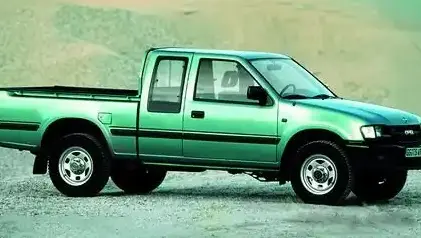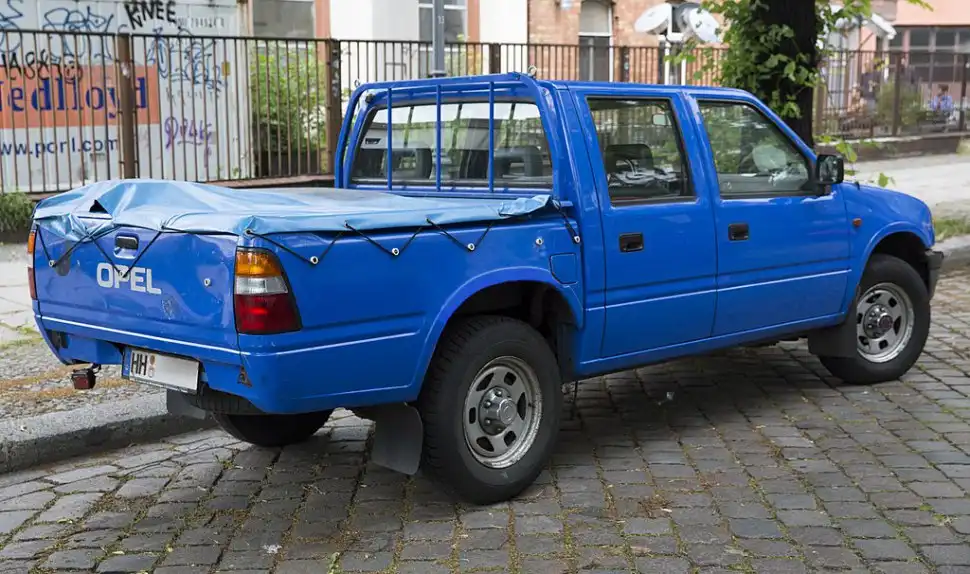
The Opel Campo Double Cab 2.3, produced between 1991 and 1995, represented a practical and affordable entry into the burgeoning European pickup truck market. Positioned as a workhorse vehicle, the Double Cab variant distinguished itself by offering seating for five passengers, a relatively uncommon feature in the pickup segment at the time. It was based on the Isuzu Faster platform, a result of collaboration between Opel and Isuzu, and aimed to provide a versatile vehicle for both commercial and personal use. The 2.3-liter engine, producing 94 horsepower, was the mainstay of the Campo lineup during its production run, offering a balance between fuel economy and capability. This particular configuration, while not the most powerful available, was popular due to its simplicity and relatively low maintenance costs.
Technical Specifications
| Brand | Opel |
| Model | Campo |
| Generation | Campo Double Cab |
| Type (Engine) | 2.3 (94 Hp) |
| Start of production | 1991 |
| End of production | 1995 |
| Powertrain Architecture | Internal Combustion engine |
| Body type | Pick-up |
| Seats | 5 |
| Doors | 4 |
| Fuel Type | Petrol (Gasoline) |
| Acceleration 0 – 100 km/h | 23.1 sec |
| Acceleration 0 – 62 mph | 23.1 sec |
| Acceleration 0 – 60 mph | 21.9 sec |
| Maximum speed | 135 km/h (83.89 mph) |
| Power | 94 Hp @ 5000 rpm |
| Power per litre | 41.7 Hp/l |
| Torque | 170 Nm @ 2600 rpm (125.39 lb.-ft. @ 2600 rpm) |
| Engine Model/Code | 4ZD1 |
| Engine displacement | 2255 cm3 (137.61 cu. in.) |
| Number of cylinders | 4 |
| Engine configuration | Inline |
| Cylinder Bore | 89.3 mm (3.52 in.) |
| Piston Stroke | 90 mm (3.54 in.) |
| Number of valves per cylinder | 2 |
| Engine aspiration | Naturally aspirated engine |
| Valvetrain | SOHC |
| Engine oil capacity | 3.5 l (3.7 US qt | 3.08 UK qt) |
| Coolant | 9 l (9.51 US qt | 7.92 UK qt) |
| Length | 4980 mm (196.06 in.) |
| Width | 1690 mm (66.54 in.) |
| Height | 1710 mm (67.32 in.) |
| Wheelbase | 3025 mm (119.09 in.) |
| Drivetrain Architecture | Rear wheel drive |
| Number of gears and type of gearbox | 5 gears, manual transmission |
| Front suspension | Independent coil spring |
| Rear suspension | dependent spring suspension |
| Front brakes | Ventilated discs |
| Rear brakes | Drum |
Powertrain & Engine Architecture
The Opel Campo Double Cab 2.3 was powered by the 4ZD1 engine, a 2.3-liter inline-four cylinder gasoline engine. This engine, sourced from Isuzu, was a relatively simple design featuring a single overhead camshaft (SOHC) valvetrain and two valves per cylinder. Fuel delivery was managed by a carburetor system, common for the era, rather than more advanced fuel injection. The 4ZD1 produced 94 horsepower at 5000 rpm and 170 Nm (125.39 lb-ft) of torque at 2600 rpm. The engine’s design prioritized durability and ease of maintenance over outright performance. The five-speed manual transmission was the only transmission option available with this engine, providing a reasonable spread of gears for both on-road and off-road driving. The transmission was directly connected to the rear wheels, making the Campo a rear-wheel-drive vehicle.
Driving Characteristics
The driving experience in the Campo 2.3 was characterized by its utilitarian nature. Acceleration was modest, with a 0-60 mph time of around 21.9 seconds. The engine delivered its peak torque at a relatively low 2600 rpm, providing adequate pulling power for hauling loads, but lacked the responsiveness of more modern engines. The five-speed manual transmission allowed drivers to keep the engine in its optimal power band, but frequent shifting was often required, especially when ascending hills or carrying a load. The rear-wheel-drive configuration provided a stable platform for carrying cargo, but could become challenging on slippery surfaces. Compared to potential higher-output engines (which weren’t offered in the Double Cab configuration), the 2.3-liter engine prioritized fuel economy and reliability over outright speed.
Equipment & Trim Levels
The Opel Campo Double Cab 2.3 was not a luxury vehicle, and its equipment levels reflected this. Standard features typically included basic instrumentation, vinyl or cloth upholstery, and a simple dashboard layout. Power steering was often an optional extra, as were features like a radio and upgraded interior trim. The Double Cab configuration itself was the primary distinguishing feature, offering seating for five passengers in a 2+3 arrangement. The rear seats were typically bench-style and offered limited legroom. The focus was on providing a functional and durable interior that could withstand the rigors of work and outdoor use. Optional extras were limited, reflecting the vehicle’s target market.
Chassis & Braking
The Campo Double Cab featured a robust chassis designed to handle the demands of pickup truck use. The front suspension utilized independent coil springs, providing a relatively comfortable ride on paved roads. The rear suspension employed a dependent leaf spring setup, which was more suited to carrying heavy loads. Braking duties were handled by ventilated discs at the front and drum brakes at the rear. The braking system was adequate for the vehicle’s weight and performance, but lacked the sophistication of more modern braking systems. Stabilizer bars were not typically included as standard equipment, contributing to a somewhat noticeable body roll during cornering.
Market Reception & Comparison
The Opel Campo Double Cab 2.3 was generally well-received in the European market as a practical and affordable pickup truck. Critics praised its versatility and the added benefit of five-passenger seating. However, the 2.3-liter engine was often criticized for its lack of power, particularly when compared to larger displacement engines offered in competing pickup trucks. Fuel economy was considered reasonable for the time, but not exceptional. Compared to other trims within the Campo lineup (which were primarily single-cab models), the Double Cab 2.3 offered a unique combination of practicality and passenger capacity. Its simplicity and relatively low maintenance costs made it an attractive option for budget-conscious buyers.
Legacy
The Opel Campo Double Cab 2.3, while not a groundbreaking vehicle, holds a place in automotive history as a representative of the early European pickup truck market. The 4ZD1 engine proved to be a durable and reliable powerplant, and many examples remain on the road today. In the used car market, the Campo Double Cab 2.3 is often sought after by enthusiasts and those looking for a simple, affordable, and practical work vehicle. Its relatively simple mechanical design makes it easier to maintain and repair than more modern vehicles. While not a collector’s item, it represents a functional and honest approach to vehicle design that is increasingly rare in today’s automotive landscape.