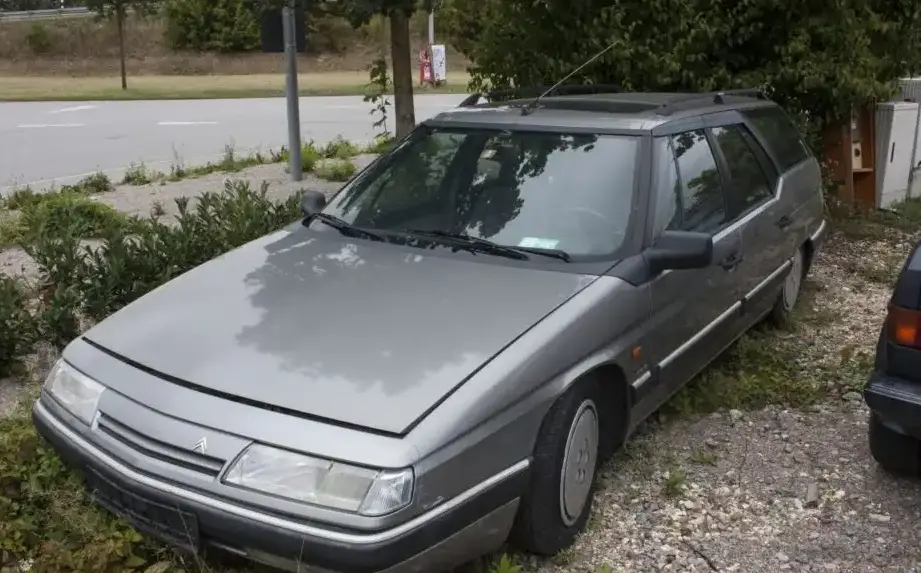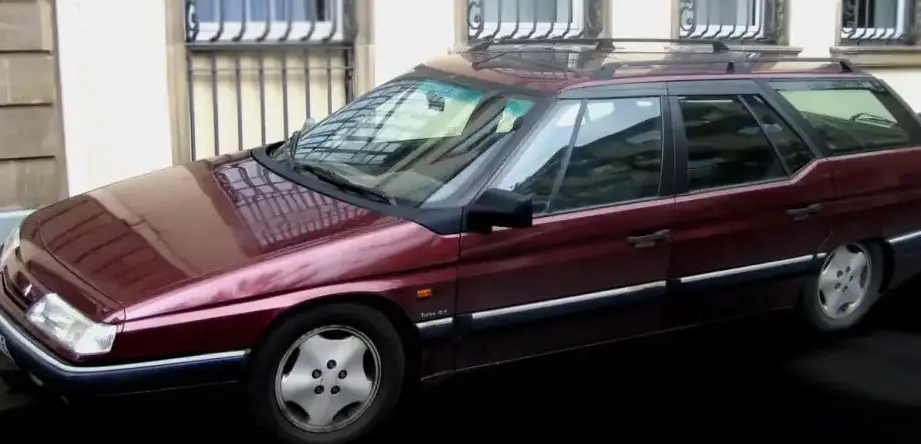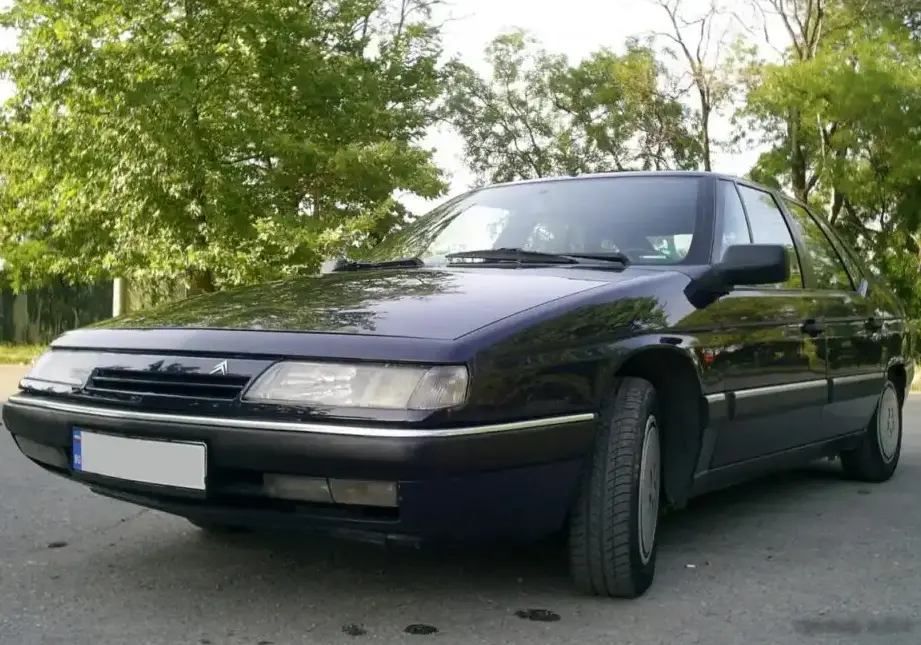
The Citroen XM (Y3) 2.1 Turbo D12, produced between 1989 and 1994, represented a distinctive offering within the large family car segment. Positioned as a more powerful diesel variant of the innovative XM series, it aimed to provide a blend of performance and economy for buyers seeking a comfortable and technologically advanced vehicle. The XM, as a whole, was Citroen’s flagship, replacing the CX and showcasing the company’s continued commitment to hydropneumatic suspension and avant-garde design. The 2.1 Turbo D12, with its 110 horsepower, occupied a middle ground in the XM diesel lineup, offering a step up from the naturally aspirated engines while remaining more accessible than the later, more potent turbo-diesel options.
Technical Specifications
| Brand | Citroen |
| Model | XM |
| Generation | XM (Y3) |
| Type (Engine) | 2.1 Turbo D12 (110 Hp) |
| Start of production | 1989 |
| End of production | 1994 |
| Powertrain Architecture | Internal Combustion engine |
| Body type | Hatchback |
| Seats | 5 |
| Doors | 5 |
| Fuel consumption (urban) | 8.5 l/100 km (27.7 US mpg, 33.2 UK mpg, 11.8 km/l) |
| Fuel consumption (extra urban) | 4.9 l/100 km (48 US mpg, 57.6 UK mpg, 20.4 km/l) |
| Fuel consumption (combined) | 6.7 l/100 km (35.1 US mpg, 42.2 UK mpg, 14.9 km/l) |
| Fuel Type | Diesel |
| Acceleration 0 – 100 km/h | 12.4 sec |
| Acceleration 0 – 62 mph | 12.4 sec |
| Acceleration 0 – 60 mph | 11.8 sec |
| Maximum speed | 192 km/h (119.3 mph) |
| Weight-to-power ratio | 12.6 kg/Hp, 79.1 Hp/tonne |
| Weight-to-torque ratio | 5.7 kg/Nm, 176.3 Nm/tonne |
| Power | 110 Hp @ 4300 rpm |
| Power per litre | 52.7 Hp/l |
| Torque | 245 Nm @ 2000 rpm (180.7 lb.-ft. @ 2000 rpm) |
| Maximum engine speed | 4300 rpm |
| Engine layout | Front, Transverse |
| Engine Model/Code | PHZ XUD11ATE |
| Engine displacement | 2088 cm3 (127.42 cu. in.) |
| Number of cylinders | 4 |
| Engine configuration | Inline |
| Cylinder Bore | 85 mm (3.35 in.) |
| Piston Stroke | 92 mm (3.62 in.) |
| Compression ratio | 21.5:1 |
| Number of valves per cylinder | 3 |
| Fuel injection system | Precombustion chamber injection |
| Engine aspiration | Turbocharger, Intercooler |
| Valvetrain | OHC |
| Engine oil capacity | 6 l (6.34 US qt | 5.28 UK qt) |
| Coolant | 10 l (10.57 US qt | 8.8 UK qt) |
| Kerb Weight | 1390 kg (3064.43 lbs.) |
| Max. weight | 1910 kg (4210.83 lbs.) |
| Max load | 520 kg (1146.4 lbs.) |
| Trunk (boot) space – minimum | 455 l (16.07 cu. ft.) |
| Trunk (boot) space – maximum | 1460 l (51.56 cu. ft.) |
| Fuel tank capacity | 80 l (21.13 US gal | 17.6 UK gal) |
| Max. roof load | 80 kg (176.37 lbs.) |
| Permitted trailer load with brakes (12%) | 1500 kg (3306.93 lbs.) |
| Permitted trailer load without brakes | 695 kg (1532.21 lbs.) |
| Permitted towbar download | 110 kg (242.51 lbs.) |
| Length | 4708 mm (185.35 in.) |
| Width | 1794 mm (70.63 in.) |
| Width including mirrors | 2000 mm (78.74 in.) |
| Height | 1385 mm (54.53 in.) |
| Wheelbase | 2850 mm (112.2 in.) |
| Front track | 1520 mm (59.84 in.) |
| Rear (Back) track | 1447 mm (56.97 in.) |
| Front overhang | 1068 mm (42.05 in.) |
| Rear overhang | 790 mm (31.1 in.) |
| Ride height (ground clearance) | 141 mm (5.55 in.) |
| Drag coefficient (Cd) | 0.29 |
| Minimum turning circle (turning diameter) | 12.5 m (41.01 ft.) |
| Drivetrain Architecture | The Internal combustion engine (ICE) drives the front wheels of the vehicle. |
| Drive wheel | Front wheel drive |
| Number of gears and type of gearbox | 5 gears, manual transmission |
| Front suspension | Independent type McPherson, Wishbone |
| Rear suspension | Hydro-pneumatic element, Trailing arm |
| Front brakes | Ventilated discs, 276×22 mm |
| Rear brakes | Drum, 224×9 mm |
| Assisting systems | ABS (Anti-lock braking system) |
| Steering type | Steering rack and pinion |
| Power steering | Hydraulic Steering |
| Tires size | 195/65 R15 |
Powertrain & Engine Architecture
The heart of the XM 2.1 Turbo D12 is the PHZ XUD11ATE engine, a 2.1-liter inline-four cylinder diesel. This engine utilizes precombustion chamber injection, a system common in European diesels of the era, known for quieter operation and improved combustion compared to direct injection. A turbocharger with an intercooler is employed to boost power output, increasing the engine’s efficiency and responsiveness. The XUD engine family is renowned for its durability, and the addition of a turbocharger and intercooler allowed Citroen to extract a respectable 110 horsepower at 4300 rpm and 245 Nm (180.7 lb-ft) of torque at 2000 rpm. The engine’s overhead camshaft (OHC) configuration contributes to its relatively compact size. The 5-speed manual transmission was the standard offering, providing a balance between fuel efficiency and drivability.
Driving Characteristics
The XM 2.1 Turbo D12 offered a noticeably more spirited driving experience than its naturally aspirated diesel counterparts. While not a sports car, the turbocharger provided a useful surge of power for overtaking and highway cruising. The 0-60 mph time of around 11.8 seconds and a top speed of 192 km/h (119.3 mph) were competitive for a large diesel-powered hatchback in the early 1990s. The hydropneumatic suspension, a Citroen hallmark, provided an exceptionally comfortable ride, absorbing bumps and imperfections in the road with ease. However, the suspension’s self-leveling feature and complex hydraulics could sometimes result in a slightly detached feel from the road. The manual transmission, while offering good control, had a somewhat long throw, typical of the era.
Equipment & Trim Levels
The XM 2.1 Turbo D12 typically came equipped with a reasonable level of standard features, reflecting its position as a mid-range offering. These included central locking, electric front windows, and power steering. Interior upholstery was generally cloth, with options for upgraded materials. The dashboard layout was functional and ergonomically designed, with a focus on ease of use. Optional extras included air conditioning, a sunroof, and upgraded audio systems. The XM was known for its advanced instrumentation, including a multi-function display providing information on various vehicle systems.
Chassis & Braking
The XM’s chassis featured independent McPherson strut front suspension and a hydro-pneumatic trailing arm rear suspension. This combination provided exceptional ride comfort and handling stability. The braking system consisted of ventilated discs on the front wheels and drum brakes on the rear. Anti-lock braking system (ABS) was standard, enhancing safety. The XM’s relatively heavy weight (1390 kg / 3064.43 lbs) necessitated a robust braking system to ensure adequate stopping power.
Market Reception & Comparison
The Citroen XM 2.1 Turbo D12 was generally well-received by automotive critics, who praised its comfortable ride, spacious interior, and advanced technology. However, some criticisms were leveled at its somewhat unconventional styling and the complexity of its hydropneumatic suspension system, which could be expensive to maintain. Compared to other diesel-powered cars in its class, the XM offered a compelling combination of performance, economy, and comfort. It was often seen as a more sophisticated alternative to mainstream offerings like the Ford Mondeo or Vauxhall/Opel Vectra.
Legacy
The XUD11ATE engine, found in the XM 2.1 Turbo D12, is known for its robustness and longevity. Properly maintained examples can still be found running reliably today. However, the complexity of the XM’s hydropneumatic suspension and electrical systems means that maintenance can be costly and requires specialized knowledge. In the used car market, the XM 2.1 Turbo D12 is appreciated by enthusiasts who value its unique character and advanced technology. It represents a high point in Citroen’s engineering history and remains a distinctive and comfortable classic car.