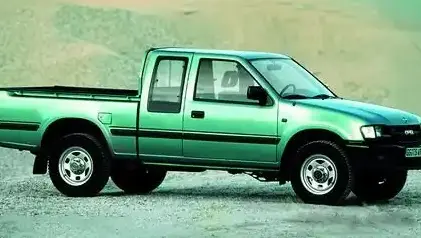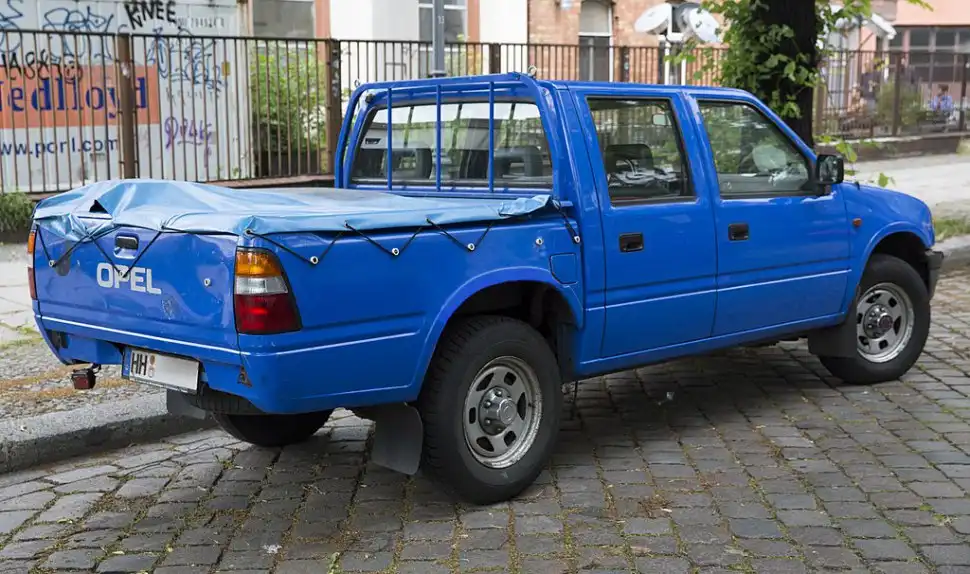
The Opel Campo Double Cab 2.3 (94 hp) 4×4, produced between 1991 and 1995, represents a utilitarian offering from Opel aimed at buyers needing a robust, four-wheel-drive pickup with passenger capacity. Positioned as a workhorse vehicle, the Double Cab variant distinguished itself from standard single-cab pickups by offering seating for five occupants, making it suitable for both commercial and family use. The Campo, while not a high-volume seller in many markets, filled a niche for those requiring a practical and affordable 4×4. It was based on the Isuzu Faster platform, a result of collaboration between Opel and Isuzu.
Technical Specifications
| Brand | Opel |
| Model | Campo |
| Generation | Campo Double Cab |
| Type (Engine) | 2.3 (94 Hp) 4×4 |
| Start of production | 1991 |
| End of production | 1995 |
| Powertrain Architecture | Internal Combustion engine |
| Body type | Pick-up |
| Seats | 5 |
| Doors | 4 |
| Fuel Type | Petrol (Gasoline) |
| Power | 94 Hp @ 5000 rpm |
| Power per litre | 41.7 Hp/l |
| Torque | 170 Nm @ 2600 rpm / 125.39 lb.-ft. @ 2600 rpm |
| Engine Model/Code | 4ZD1 |
| Engine displacement | 2255 cm3 / 137.61 cu. in. |
| Number of cylinders | 4 |
| Engine configuration | Inline |
| Cylinder Bore | 89.3 mm / 3.52 in. |
| Piston Stroke | 90 mm / 3.54 in. |
| Number of valves per cylinder | 2 |
| Engine aspiration | Naturally aspirated engine |
| Valvetrain | SOHC |
| Engine oil capacity | 3.5 l / 3.7 US qt | 3.08 UK qt |
| Coolant | 9 l / 9.51 US qt | 7.92 UK qt |
| Length | 4980 mm / 196.06 in. |
| Width | 1690 mm / 66.54 in. |
| Height | 1710 mm / 67.32 in. |
| Wheelbase | 3025 mm / 119.09 in. |
| Drive wheel | All wheel drive (4×4) |
| Number of gears and type of gearbox | 5 gears, manual transmission |
| Front suspension | Independent coil spring |
| Rear suspension | dependent spring suspension |
| Front brakes | Ventilated discs |
| Rear brakes | Drum |
Powertrain & Engine Architecture
The Opel Campo Double Cab 2.3 utilized the 4ZD1 engine, a 2.3-liter inline-four cylinder gasoline engine. This engine, sourced from Isuzu, was a relatively simple design featuring a single overhead camshaft (SOHC) valvetrain and two valves per cylinder. Fuel delivery was managed by a carburetor system, common for the era, rather than more advanced fuel injection. The 4ZD1 produced 94 horsepower at 5000 rpm and 170 Nm (125.39 lb-ft) of torque at 2600 rpm. The engine’s design prioritized durability and low-end torque over outright performance. The five-speed manual transmission was the only gearbox option available with this engine, providing a reasonable spread of gears for both on-road and off-road driving. The transmission was directly connected to the transfer case for 4×4 operation.
Driving Characteristics
The driving experience in the Campo 2.3 Double Cab was characterized by its utilitarian nature. The 94 hp engine, while adequate for general use, didn’t offer brisk acceleration. The focus was on providing sufficient power for hauling loads and navigating challenging terrain. The manual transmission allowed for driver control, but the gear ratios were geared towards maximizing torque at lower speeds. The 4×4 system, selectable between 2H (rear-wheel drive), 4H (four-wheel drive high range), and 4L (four-wheel drive low range), provided enhanced traction in off-road conditions. The suspension, while functional, was tuned for load-carrying capacity rather than ride comfort. The vehicle exhibited noticeable body roll in corners, and the steering lacked precision compared to more modern vehicles.
Equipment & Trim Levels
The Opel Campo Double Cab 2.3 4×4 was not offered with a wide range of trim levels. It was primarily a basic work vehicle. Standard equipment typically included a vinyl interior, basic instrumentation, and a robust steel bedliner. Optional extras were limited, but could include upgraded tires, a tow hitch, and potentially a basic audio system. The Double Cab configuration itself was the primary distinguishing feature, offering seating for five passengers in a 2+3 configuration. Interior appointments were spartan, reflecting the vehicle’s intended purpose. The dashboard layout was functional, with clearly labeled controls.
Chassis & Braking
The Campo Double Cab featured a body-on-frame construction, typical of pickup trucks of the era. The front suspension utilized independent coil springs, providing a degree of ride comfort and handling capability. The rear suspension employed a dependent leaf spring setup, designed for durability and load-carrying capacity. Braking duties were handled by ventilated discs at the front and drum brakes at the rear. The braking system was adequate for the vehicle’s weight and performance, but lacked the sophistication of more modern systems. The chassis was designed to withstand the stresses of off-road driving and heavy loads.
Market Reception & Comparison
The Opel Campo Double Cab 2.3 4×4 received mixed reviews. Critics generally acknowledged its practicality and affordability, but noted its lack of refinement and relatively low power output. Compared to other pickups available in Europe at the time, such as the Toyota Hilux or Nissan Datsun, the Campo offered a more budget-friendly option. However, it lacked the reputation for reliability and build quality of its Japanese competitors. Fuel economy was moderate, typical for a gasoline-powered 4×4 of its size and era. The Campo’s primary appeal lay with buyers who prioritized functionality and affordability over comfort and performance.
Legacy
The Opel Campo Double Cab 2.3 4×4, while not a landmark vehicle, holds a place in automotive history as a practical and affordable 4×4 pickup. Its simple design and robust construction contributed to its longevity, and many examples remain in use today, particularly in rural areas. The 4ZD1 engine, while not known for its high performance, proved to be relatively reliable with proper maintenance. In the used car market, the Campo Double Cab is valued for its utility and affordability, making it a popular choice for those needing a basic work vehicle or a project vehicle for off-road enthusiasts. Parts availability can be a challenge, but many components are shared with Isuzu Faster models, simplifying sourcing.