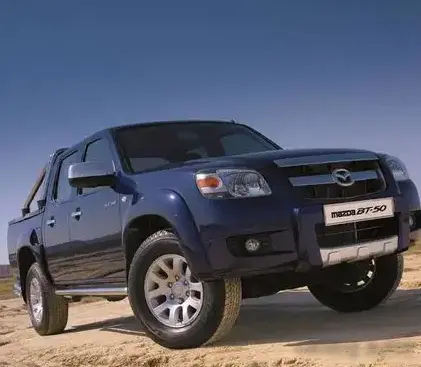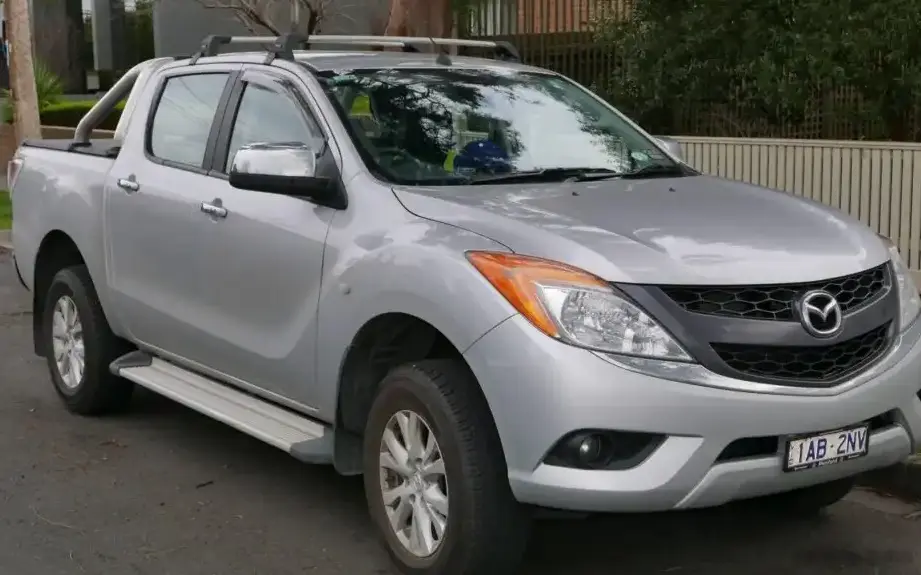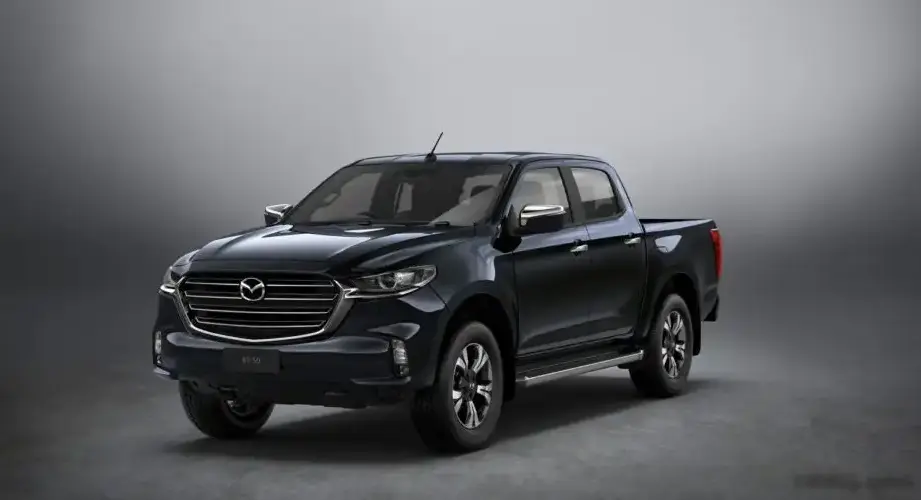
The Mazda BT-50 Dual Cab III 1.9d (150 hp) is a mid-size pickup truck produced by Mazda, beginning with the 2021 model year. This variant represents a significant shift for the BT-50, as it moved to a new platform and powertrain shared with the Isuzu D-Max. Positioned as an entry-level to mid-range offering within the BT-50 lineup, it aimed to provide a balance of capability, fuel efficiency, and affordability for both commercial and personal use, particularly in markets outside of North America where mid-size trucks remain highly popular. The “Dual Cab” designation indicates a four-door configuration with seating for five passengers, making it a versatile option for families and work crews.
Technical Specifications
| Brand | Mazda |
| Model | BT-50 |
| Generation | BT-50 Dual Cab III |
| Type (Engine) | 1.9d (150 Hp) |
| Start of production | January, 2021 |
| Powertrain Architecture | Internal Combustion engine |
| Body type | Pick-up |
| Seats | 5 |
| Doors | 4 |
| Fuel consumption (combined) | 6.6 l/100 km (35.6 US mpg, 42.8 UK mpg, 15.2 km/l) |
| CO2 emissions | 184 g/km |
| Fuel Type | Diesel |
| Emission standard | Euro 2 |
| Weight-to-power ratio | 11.9 kg/Hp, 84.3 Hp/tonne |
| Weight-to-torque ratio | 5.1 kg/Nm, 196.7 Nm/tonne |
| Power | 150 Hp @ 3600 rpm |
| Power per litre | 79 Hp/l |
| Torque | 350 Nm @ 1800-2600 rpm (258.15 lb.-ft. @ 1800-2600 rpm) |
| Engine layout | Front, Longitudinal |
| Engine Model/Code | RZ4E-TC GEN2 |
| Engine displacement | 1898 cm3 (115.82 cu. in.) |
| Number of cylinders | 4 |
| Engine configuration | Inline |
| Cylinder Bore | 80 mm (3.15 in.) |
| Piston Stroke | 94.4 mm (3.72 in.) |
| Compression ratio | 16.5:1 |
| Number of valves per cylinder | 4 |
| Fuel injection system | Diesel Commonrail |
| Engine aspiration | Turbocharger, Intercooler |
| Valvetrain | VGS |
| Engine oil capacity | 6.6 l (6.97 US qt | 5.81 UK qt) |
| Coolant capacity | 9.6 l (10.14 US qt | 8.45 UK qt) |
| Kerb Weight | 1779 kg (3922.02 lbs.) |
| Max. weight | 3000 kg (6613.87 lbs.) |
| Max load | 1221 kg (2691.84 lbs.) |
| Fuel tank capacity | 76 l (20.08 US gal | 16.72 UK gal) |
| Permitted trailer load with brakes (12%) | 2100 kg (4629.71 lbs.) |
| Permitted trailer load without brakes | 750 kg (1653.47 lbs.) |
| Length | 5280 mm (207.87 in.) |
| Width including mirrors | 2160 mm (85.04 in.) |
| Height | 1785 mm (70.28 in.) |
| Wheelbase | 3125 mm (123.03 in.) |
| Front track | 1570 mm (61.81 in.) |
| Rear (Back) track | 1570 mm (61.81 in.) |
| Front overhang | 905 mm (35.63 in.) |
| Rear overhang | 1250 mm (49.21 in.) |
| Ride height (ground clearance) | 235 mm (9.25 in.) |
| Minimum turning circle | 12.5 m (41.01 ft.) |
| Wading depth | 800 mm (31.5 in.) |
| Drivetrain Architecture | Rear wheel drive |
| Number of gears and type of gearbox | 6 gears, manual transmission |
| Front suspension | Independent type McPherson |
| Rear suspension | Leaf spring |
| Front brakes | Ventilated discs, 300 mm |
| Rear brakes | Drum, 295 mm |
| Assisting systems | ABS (Anti-lock braking system) |
| Steering type | Steering rack and pinion |
| Power steering | Hydraulic Steering |
| Tires size | 255/65 R17 |
| Wheel rims size | 7.0J x 17 |
Powertrain & Engine Architecture
The heart of the BT-50 1.9d is the RZ4E-TC GEN2, a 1.9-liter inline-four cylinder diesel engine. This engine, developed by Isuzu, utilizes a common-rail direct injection system and a variable geometry turbocharger (VGT) with an intercooler to optimize power and efficiency. The 16.5:1 compression ratio is typical for modern diesel engines, contributing to thermal efficiency. The engine produces 150 horsepower at 3600 rpm and 350 Nm (258 lb-ft) of torque between 1800 and 2600 rpm. The six-speed manual transmission was the standard offering for this variant, providing a balance between fuel economy and driver control. The engine is longitudinally mounted, a common configuration for rear-wheel-drive trucks, and drives the rear wheels.
Driving Characteristics
The 1.9-liter engine, paired with the six-speed manual transmission, delivers adequate performance for everyday driving and light-duty work tasks. While not as powerful as the higher-output engine options available in the BT-50 range, it provides sufficient torque for hauling moderate loads and navigating varied terrain. The gear ratios are tuned for a balance of acceleration and fuel economy. Compared to the more powerful 3.0-liter engine, the 1.9d offers a more economical driving experience, but at the expense of outright performance. The manual transmission allows for greater driver engagement and control, particularly when towing or driving off-road. The leaf spring rear suspension, while robust, can result in a firmer ride when unladen compared to coil-spring setups.
Equipment & Trim Levels
The BT-50 1.9d typically came equipped with standard features such as air conditioning, power windows, central locking, and a basic audio system. Safety features included ABS brakes, dual front airbags, and a rearview camera. Higher trim levels added features like alloy wheels, a touchscreen infotainment system with Bluetooth connectivity, and additional safety equipment such as side airbags and stability control. Interior upholstery was typically cloth, with options for leather available on higher-spec models. The dashboard layout was functional and straightforward, prioritizing usability over luxury.
Chassis & Braking
The BT-50 Dual Cab III utilizes a body-on-frame construction, providing a robust and durable platform for demanding applications. The front suspension features an independent McPherson strut setup, while the rear suspension employs a traditional leaf spring design. This configuration balances ride comfort with load-carrying capacity. Braking duties are handled by ventilated discs at the front and drum brakes at the rear. The hydraulic power steering provides responsive and precise control. The 255/65 R17 tires offer a good compromise between on-road comfort and off-road traction.
Market Reception & Comparison
The BT-50 1.9d was generally well-received as a practical and affordable pickup truck. Critics praised its fuel efficiency and durability, but some noted that its performance was not as refined as some of its competitors. Compared to other engines in the BT-50 lineup, the 1.9d offered the best fuel economy but the lowest power output. It competed directly with other mid-size pickups such as the Toyota Hilux, Nissan Navara, and Mitsubishi Triton, offering a compelling alternative in terms of value and practicality.
Legacy
The Mazda BT-50 Dual Cab III 1.9d represents a significant step in Mazda’s pickup truck strategy, leveraging a partnership with Isuzu to deliver a competitive product. The RZ4E-TC GEN2 engine has proven to be a reliable and durable powerplant, and the BT-50 continues to be a popular choice in the used car market. Its relatively simple mechanical design and readily available parts contribute to its long-term reliability and affordability. As a workhorse pickup, the BT-50 1.9d has earned a reputation for being a dependable and capable vehicle for both commercial and personal use.