
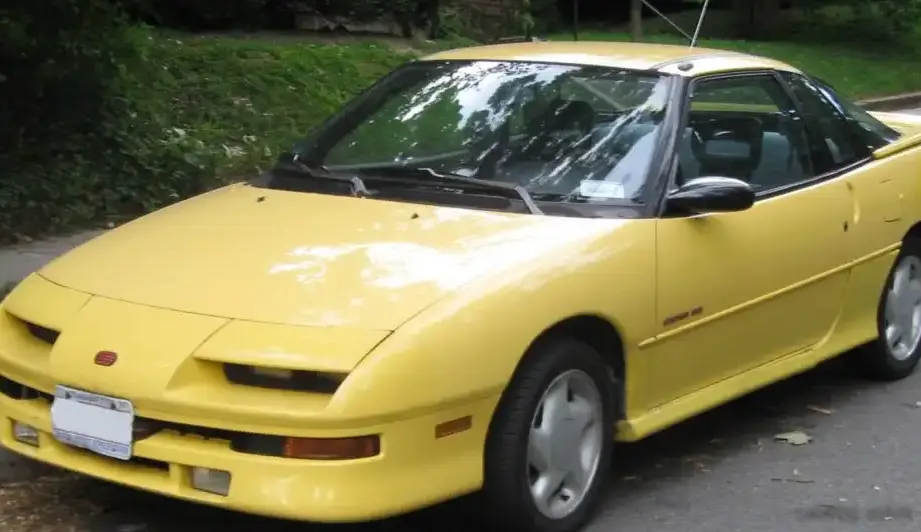
The Geo Storm 1.6i 12V, produced between 1990 and 1993, was a compact, two-door coupe marketed by Geo, a brand created by General Motors as part of its effort to compete with Japanese imports in the North American market. Based on the Isuzu Impulse, the Storm aimed to offer sporty styling and reasonable performance at an affordable price point. The 1.6i 12V variant represented the entry-level offering in the Storm lineup, positioned below the more powerful 1.6i Turbo model. It was a key component of Geo’s strategy to attract younger buyers seeking a distinctive and economical vehicle.
Technical Specifications
| Brand | Geo |
| Model | Storm |
| Generation | Storm |
| Type (Engine) | 1.6i 12V (95 Hp) |
| Start of production | 1990 |
| End of production | 1993 |
| Powertrain Architecture | Internal Combustion engine |
| Body type | Coupe |
| Seats | 2 |
| Doors | 2 |
| Fuel consumption (urban) | 11 l/100 km (21.4 US mpg) |
| Fuel consumption (extra urban) | 7 l/100 km (33.6 US mpg) |
| Fuel Type | Petrol (Gasoline) |
| Maximum speed | 200 km/h (124.27 mph) |
| Weight-to-power ratio | 10.9 kg/Hp |
| Weight-to-torque ratio | 7.9 kg/Nm |
| Power | 95 Hp @ 5800 rpm |
| Power per litre | 59.8 Hp/l |
| Torque | 131 Nm @ 4800 rpm (96.62 lb.-ft. @ 4800 rpm) |
| Engine layout | Front, Transverse |
| Engine Model/Code | 4XE1-V |
| Engine displacement | 1588 cm3 (96.91 cu. in.) |
| Number of cylinders | 4 |
| Engine configuration | Inline |
| Cylinder Bore | 80 mm (3.15 in.) |
| Piston Stroke | 79 mm (3.11 in.) |
| Compression ratio | 9.8:1 |
| Fuel injection system | Multi-port manifold injection |
| Engine aspiration | Naturally aspirated engine |
| Engine oil capacity | 3 l (3.17 US qt | 2.64 UK qt) |
| Coolant | 6.5 l (6.87 US qt | 5.72 UK qt) |
| Kerb Weight | 1035 kg (2281.78 lbs.) |
| Trunk (boot) space – minimum | 310 l (10.95 cu. ft.) |
| Trunk (boot) space – maximum | 620 l (21.9 cu. ft.) |
| Fuel tank capacity | 47 l (12.42 US gal | 10.34 UK gal) |
| Length | 4150 mm (163.39 in.) |
| Width | 1695 mm (66.73 in.) |
| Height | 1300 mm (51.18 in.) |
| Wheelbase | 2450 mm (96.46 in.) |
| Front track | 1430 mm (56.3 in.) |
| Rear (Back) track | 1400 mm (55.12 in.) |
| Minimum turning circle | 11.2 m (36.75 ft.) |
| Drivetrain Architecture | The Internal combustion engine (ICE) drives the front wheels of the vehicle. |
| Drive wheel | Front wheel drive |
| Number of gears and type of gearbox | 5 gears, manual transmission |
| Front suspension | Coil spring |
| Rear suspension | Coil spring |
| Front brakes | Ventilated discs |
| Rear brakes | Drum |
| Assisting systems | ABS (Anti-lock braking system) |
| Steering type | Steering rack and pinion |
| Tires size | 185/60 R14 |
| Wheel rims size | 14 |
Powertrain & Engine Architecture
The Geo Storm 1.6i 12V was powered by Isuzu’s 4XE1-V engine, a 1.6-liter inline-four cylinder gasoline engine. This engine featured a single overhead camshaft (SOHC) design operating 12 valves (three per cylinder). The engine utilized multi-port fuel injection, a relatively modern technology for the time, which improved fuel efficiency and reduced emissions compared to carbureted systems. The 4XE1-V engine produced 95 horsepower at 5800 rpm and 131 Nm (96.62 lb-ft) of torque at 4800 rpm. The engine’s relatively modest output was paired with a standard five-speed manual transmission. The engine block was constructed from cast iron, while the cylinder head was made of aluminum, contributing to a reasonable balance between durability and weight. The engine’s design prioritized reliability and fuel economy over outright performance.
Driving Characteristics
The 1.6i 12V Storm offered adequate, but not exhilarating, performance. Acceleration was best described as leisurely, with a 0-60 mph time estimated around 11-12 seconds. The five-speed manual transmission helped to keep the engine in its optimal power band, but the engine lacked the low-end torque of larger displacement engines. Compared to the 1.6i Turbo model, the 1.6i 12V felt noticeably slower, particularly during highway merging and overtaking maneuvers. The suspension provided a comfortable ride, but the car’s handling was not particularly sporty. Steering was light and precise, making it easy to maneuver in urban environments. The front-wheel-drive configuration provided predictable handling characteristics, but also exhibited some understeer when pushed hard.
Equipment & Trim Levels
The Geo Storm 1.6i 12V typically came with a fairly basic level of standard equipment. Interior features included cloth upholstery, a basic AM/FM radio, and manual windows and door locks. Air conditioning was often an optional extra. The dashboard layout was functional but lacked the sophistication of some competitors. Optional extras included a cassette player, upgraded sound system, and power windows. The exterior styling was characterized by its wedge-shaped profile and pop-up headlights, giving it a sporty appearance. The 1.6i 12V was generally offered in a limited range of exterior colors.
Chassis & Braking
The Geo Storm utilized a front-engine, front-wheel-drive layout. The suspension consisted of coil springs and independent struts at the front, and coil springs with a twist-beam rear axle. The braking system featured ventilated disc brakes at the front and drum brakes at the rear. Anti-lock brakes (ABS) were available as an option, enhancing safety by preventing wheel lockup during hard braking. The car’s relatively light weight (approximately 2282 lbs) helped to compensate for its modest engine output. The steering system employed a rack-and-pinion setup, providing responsive and accurate steering feel.
Market Reception & Comparison
The Geo Storm 1.6i 12V was generally well-received as an affordable and reliable entry-level coupe. Critics praised its distinctive styling and fuel efficiency, but noted its lack of performance compared to some competitors. Compared to the 1.6i Turbo model, the 1.6i 12V offered better fuel economy but significantly less power. The 1.6i 12V also competed with other compact coupes such as the Honda Civic and Toyota Corolla, which offered similar levels of practicality and reliability. The Storm’s unique styling and relatively low price point helped it to carve out a niche in the market.
Legacy
The Geo Storm 1.6i 12V, while not a high-performance vehicle, has developed a modest following among enthusiasts. The 4XE1-V engine is known for its durability and relative simplicity, making it relatively easy to maintain. However, finding replacement parts can be challenging as the car is now quite old. Today, well-maintained examples of the Storm 1.6i 12V are becoming increasingly collectible, particularly among those who appreciate its unique styling and nostalgic appeal. The car represents a unique chapter in automotive history, reflecting Geo’s attempt to challenge the established Japanese automakers in the North American market.
