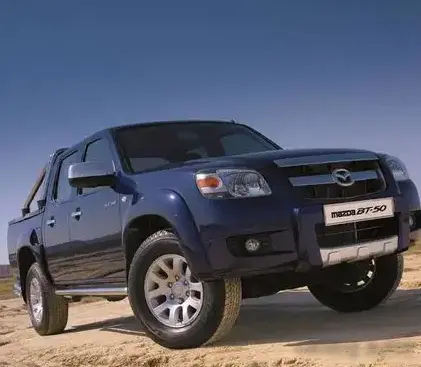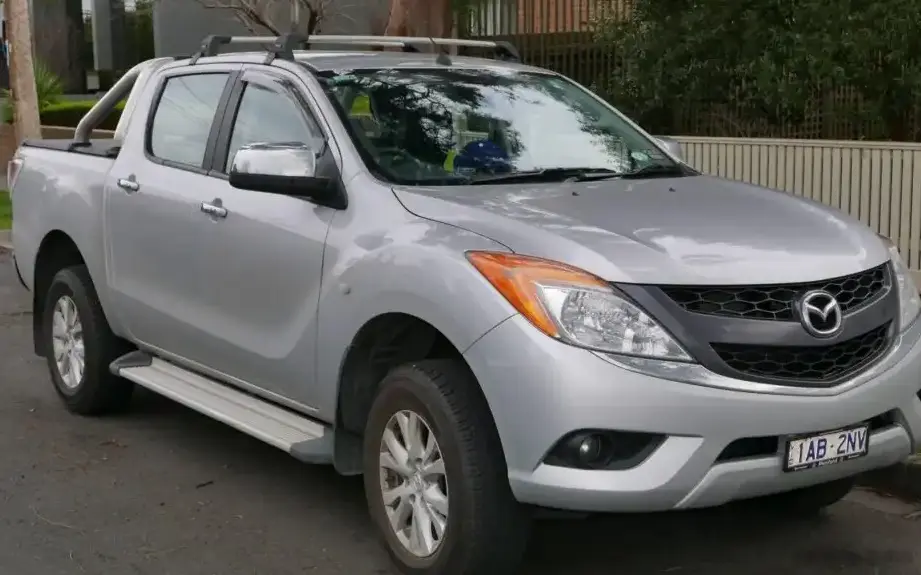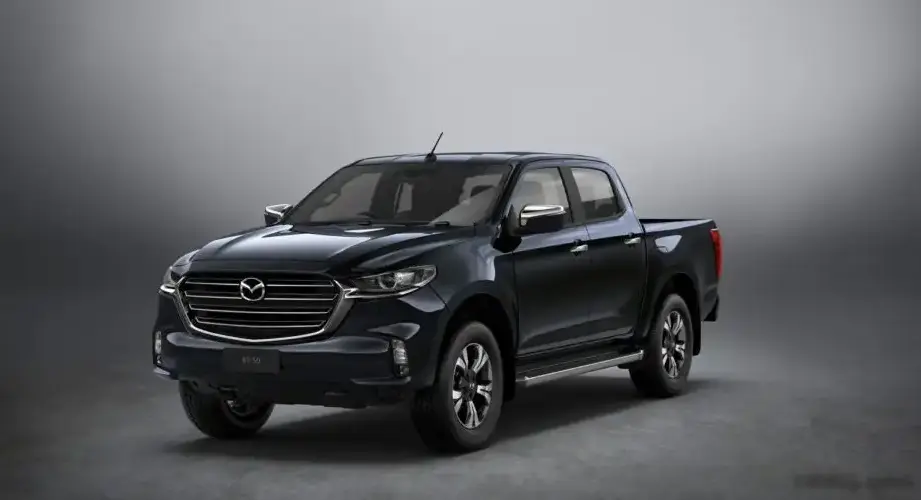
The Mazda BT-50 Dual Cab III 1.9d (150 hp) Automatic, launched in January 2021, represents Mazda’s entry into the mid-size pickup truck market, primarily targeted towards buyers in regions like Australia, South Africa, and Latin America. This variant, built upon the third generation of the BT-50 (UN platform, sharing architecture with the Isuzu D-Max), offers a balance between fuel efficiency, practicality, and affordability. It sits as the base engine option in many markets, positioned below the more powerful 3.0-liter turbodiesel variants. The BT-50 aimed to provide a more refined and comfortable experience compared to some of its more utilitarian competitors, while still maintaining the ruggedness expected of a pickup truck.
Technical Specifications
| Brand | Mazda |
| Model | BT-50 |
| Generation | BT-50 Dual Cab III |
| Type (Engine) | 1.9d (150 Hp) Automatic |
| Start of production | January, 2021 |
| Powertrain Architecture | Internal Combustion engine |
| Body type | Pick-up |
| Seats | 5 |
| Doors | 4 |
| Fuel consumption (combined) | 6.6 l/100 km (35.6 US mpg, 42.8 UK mpg, 15.2 km/l) |
| CO2 emissions | 187 g/km |
| Fuel Type | Diesel |
| Emission standard | Euro 2 |
| Weight-to-power ratio | 12.1 kg/Hp, 82.6 Hp/tonne |
| Weight-to-torque ratio | 5.2 kg/Nm, 192.8 Nm/tonne |
| Power | 150 Hp @ 3600 rpm |
| Power per litre | 79 Hp/l |
| Torque | 350 Nm @ 1800-2600 rpm (258.15 lb.-ft. @ 1800-2600 rpm) |
| Engine layout | Front, Longitudinal |
| Engine Model/Code | RZ4E-TC GEN2 |
| Engine displacement | 1898 cm3 (115.82 cu. in.) |
| Number of cylinders | 4 |
| Engine configuration | Inline |
| Cylinder Bore | 80 mm (3.15 in.) |
| Piston Stroke | 94.4 mm (3.72 in.) |
| Compression ratio | 16.5:1 |
| Number of valves per cylinder | 4 |
| Fuel injection system | Diesel Commonrail |
| Engine aspiration | Turbocharger, Intercooler |
| Valvetrain | VGS |
| Engine oil capacity | 6.6 l (6.97 US qt | 5.81 UK qt) |
| Coolant | 10 l (10.57 US qt | 8.8 UK qt) |
| Kerb Weight | 1815 kg (4001.39 lbs.) |
| Max. weight | 3000 kg (6613.87 lbs.) |
| Max load | 1185 kg (2612.48 lbs.) |
| Fuel tank capacity | 76 l (20.08 US gal | 16.72 UK gal) |
| Permitted trailer load with brakes (12%) | 2100 kg (4629.71 lbs.) |
| Permitted trailer load without brakes | 750 kg (1653.47 lbs.) |
| Length | 5280 mm (207.87 in.) |
| Width including mirrors | 2160 mm (85.04 in.) |
| Height | 1785 mm (70.28 in.) |
| Wheelbase | 3125 mm (123.03 in.) |
| Front track | 1570 mm (61.81 in.) |
| Rear (Back) track | 1570 mm (61.81 in.) |
| Front overhang | 905 mm (35.63 in.) |
| Rear overhang | 1250 mm (49.21 in.) |
| Ride height (ground clearance) | 235 mm (9.25 in.) |
| Minimum turning circle (turning diameter) | 12.5 m (41.01 ft.) |
| Wading depth | 800 mm (31.5 in.) |
| Drivetrain Architecture | Rear wheel drive |
| Number of gears and type of gearbox | 6 gears, automatic transmission |
| Front suspension | Independent type McPherson |
| Rear suspension | Leaf spring |
| Front brakes | Ventilated discs, 300 mm |
| Rear brakes | Drum, 295 mm |
| Assisting systems | ABS (Anti-lock braking system) |
| Steering type | Steering rack and pinion |
| Power steering | Hydraulic Steering |
| Tires size | 255/65 R17 |
| Wheel rims size | 7.0J x 17 |
INTRODUCTION
The Mazda BT-50 Dual Cab III 1.9d Automatic, introduced in 2021, marked a significant shift for Mazda’s pickup truck offering. This generation moved away from the previous Ford-based platform to a collaboration with Isuzu, sharing the D-Max’s underpinnings. The 1.9-liter turbodiesel engine, designated RZ4E-TC GEN2, was positioned as the entry-level powertrain option, appealing to buyers prioritizing fuel economy and everyday usability over outright performance. The Dual Cab configuration offered seating for five passengers, making it suitable for both work and family use. This variant was particularly popular in markets where diesel fuel is readily available and pickup trucks are a common sight.
Powertrain & Engine Architecture
The heart of the BT-50 1.9d is the RZ4E-TC GEN2, a 1.9-liter inline-four cylinder turbodiesel engine. This engine utilizes a common rail direct injection system, delivering fuel at extremely high pressure for improved combustion efficiency and reduced emissions. The engine features a variable geometry turbocharger (VGT) and an intercooler to enhance power output and torque across a wider RPM range. The engine’s 16.5:1 compression ratio contributes to its efficiency. Paired with this engine is a six-speed automatic transmission, designed to provide smooth and efficient gear changes. This transmission is calibrated for everyday driving, prioritizing comfort and fuel economy over sporty responsiveness. The engine’s architecture is longitudinally mounted within the chassis, driving the rear wheels.
Driving Characteristics
The 150 hp and 350 Nm (258 lb-ft) of torque produced by the 1.9d engine provide adequate performance for most everyday driving scenarios. However, it’s noticeably less powerful than the 3.0-liter diesel options available in the BT-50 lineup. Acceleration is moderate, and overtaking requires planning. The automatic transmission contributes to a relaxed driving experience, but can sometimes feel hesitant when downshifting for quicker acceleration. The gear ratios are optimized for fuel efficiency, meaning the engine operates at lower RPMs during highway cruising. Compared to the manual transmission versions of the 1.9d, the automatic offers greater convenience but slightly reduced fuel economy. When compared to the more powerful 3.0-liter variants, the 1.9d prioritizes fuel efficiency and affordability over outright towing and hauling capacity.
Equipment & Trim Levels
The BT-50 1.9d Automatic typically came equipped with a reasonable level of standard features. These generally included air conditioning, power windows, power door locks, a basic audio system with Bluetooth connectivity, and steel wheels. Higher trim levels, available as optional upgrades, added features such as alloy wheels, a touchscreen infotainment system, a reversing camera, and parking sensors. Interior upholstery was typically cloth, with vinyl or leather options available on higher trims. Safety features included ABS brakes, dual front airbags, and stability control. The specific equipment levels varied depending on the market and optional packages selected.
Chassis & Braking
The BT-50 Dual Cab III utilizes a body-on-frame construction, providing a robust and durable platform for hauling and towing. The front suspension consists of independent McPherson struts, while the rear suspension employs leaf springs. This configuration balances ride comfort with load-carrying capacity. The braking system features ventilated discs on the front wheels and drum brakes on the rear wheels. ABS (Anti-lock Braking System) is standard, enhancing braking performance and stability. The hydraulic power steering provides a reasonable level of assistance, making the truck easy to maneuver in various driving conditions.
Market Reception & Comparison
The Mazda BT-50 1.9d Automatic was generally well-received as a practical and fuel-efficient pickup truck. Critics praised its comfortable ride quality and refined interior compared to some of its competitors. However, some reviewers noted that the 1.9-liter engine felt underpowered when fully loaded or towing a trailer. In terms of fuel economy, the 1.9d typically outperformed the 3.0-liter diesel variants, making it an attractive option for buyers who prioritize running costs. Compared to rivals like the Toyota Hilux and Isuzu D-Max, the BT-50 offered a competitive package with a focus on comfort and refinement.
Legacy
The RZ4E-TC GEN2 engine, while not known for being a powerhouse, has proven to be a relatively reliable powertrain. Proper maintenance, including regular oil changes and filter replacements, is crucial for ensuring its longevity. In the used car market, the BT-50 1.9d Automatic represents a good value proposition for buyers seeking a practical and affordable pickup truck. Its fuel efficiency and comfortable ride make it well-suited for everyday use. While it may not be the most powerful option available, it offers a solid balance of performance, practicality, and reliability.