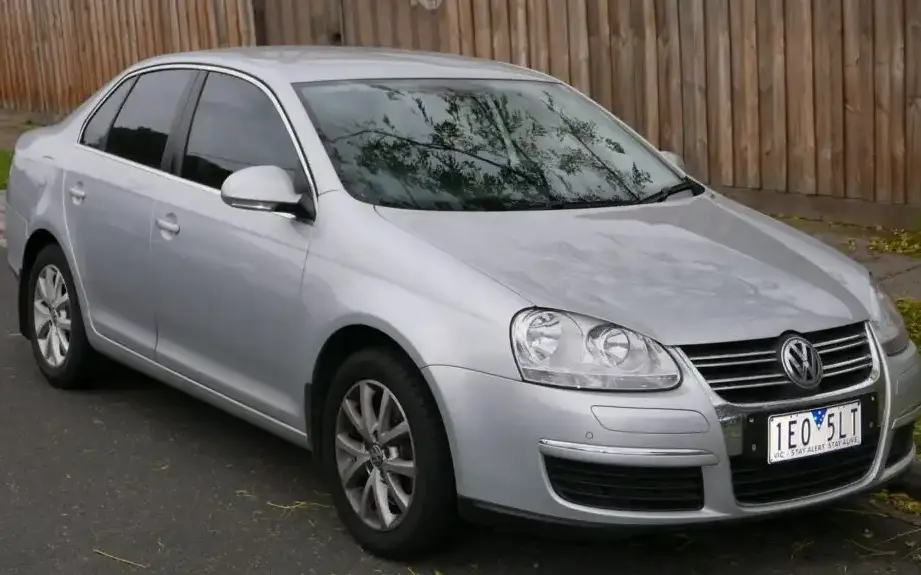
The Volkswagen Jetta V, produced between 2005 and 2010, marked a significant evolution for Volkswagen’s compact sedan. The 1.4 TSI (170 hp) variant, available from 2006-2008, occupied a middle ground in the Jetta V lineup, offering a balance of performance and fuel efficiency. Built on the A5 (1HX0) platform shared with the Golf Mk5, the Jetta V aimed to deliver a more mature and refined experience than its predecessor, broadening its appeal to a wider customer base. This specific engine and transmission combination targeted drivers desiring a more engaging drive than the base 2.0L engine, but without the premium price of the GLI or diesel options.
Technical Specifications
| Brand | Volkswagen |
| Model | Jetta |
| Generation | Jetta V |
| Type (Engine) | 1.4 TSI (170 Hp) |
| Start of production | 2005 year |
| End of production | 2008 year |
| Powertrain Architecture | Internal Combustion engine |
| Body type | Sedan |
| Seats | 5 |
| Doors | 4 |
| Fuel consumption (economy) – urban (NEDC) | 9.7 l/100 km (24.2 US mpg, 29.1 UK mpg, 10.3 km/l) |
| Fuel consumption (economy) – extra urban (NEDC) | 6 l/100 km (39.2 US mpg, 47.1 UK mpg, 16.7 km/l) |
| Fuel consumption (economy) – combined (NEDC) | 7.3 l/100 km (32.2 US mpg, 38.7 UK mpg, 13.7 km/l) |
| CO2 emissions (NEDC) | 174 g/km |
| Fuel Type | Petrol (Gasoline) |
| Acceleration 0 – 100 km/h | 8.3 sec |
| Acceleration 0 – 62 mph | 8.3 sec |
| Acceleration 0 – 60 mph | 7.9 sec |
| Maximum speed | 222 km/h (137.94 mph) |
| Emission standard | Euro 4 |
| Weight-to-power ratio | 7.9 kg/Hp, 126.1 Hp/tonne |
| Weight-to-torque ratio | 5.6 kg/Nm, 178 Nm/tonne |
| Power | 170 Hp @ 6000 rpm |
| Power per litre | 122.3 Hp/l |
| Torque | 240 Nm @ 1500-4750 rpm (177.01 lb.-ft. @ 1500-4750 rpm) |
| Engine layout | Front, Transverse |
| Engine Model/Code | BLG |
| Engine displacement | 1390 cm3 (84.82 cu. in.) |
| Number of cylinders | 4 |
| Engine configuration | Inline |
| Cylinder Bore | 76.5 mm (3.01 in.) |
| Piston Stroke | 75.6 mm (2.98 in.) |
| Compression ratio | 10:1 |
| Number of valves per cylinder | 4 |
| Fuel injection system | Direct injection |
| Engine aspiration | Turbocharging and Supercharger, Intercooler |
| Valvetrain | DOHC |
| Engine oil capacity | 3.6 l (3.8 US qt | 3.17 UK qt) |
| Coolant | 5.6 l (5.92 US qt | 4.93 UK qt) |
| Kerb Weight | 1348 kg (2971.83 lbs.) |
| Max. weight | 1920 kg (4232.88 lbs.) |
| Max load | 572 kg (1261.04 lbs.) |
| Trunk (boot) space – minimum | 527 l (18.61 cu. ft.) |
| Fuel tank capacity | 55 l (14.53 US gal | 12.1 UK gal) |
| Max. roof load | 75 kg (165.35 lbs.) |
| Permitted trailer load with brakes (12%) | 1400 kg (3086.47 lbs.) |
| Permitted trailer load without brakes | 690 kg (1521.19 lbs.) |
| Permitted towbar download | 75 kg (165.35 lbs.) |
| Length | 4554 mm (179.29 in.) |
| Width | 1781 mm (70.12 in.) |
| Width including mirrors | 2010 mm (79.13 in.) |
| Height | 1459 mm (57.44 in.) |
| Wheelbase | 2578 mm (101.5 in.) |
| Front track | 1534 mm (60.39 in.) |
| Rear (Back) track | 1512 mm (59.53 in.) |
| Minimum turning circle (turning diameter) | 10.9 m (35.76 ft.) |
| Front suspension | Coil spring, Wishbone, Transverse stabilizer |
| Rear suspension | Independent multi-link suspension, Transverse stabilizer |
| Front brakes | Ventilated discs |
| Rear brakes | Disc |
| Assisting systems | ABS (Anti-lock braking system) |
| Steering type | Steering rack and pinion |
| Power steering | Electric Steering |
| Tires size | 205/55 R16 |
| Wheel rims size | 6.5J x 16 |
Powertrain & Engine Architecture
The core of the Jetta V 1.4 TSI was the BLG engine code, a 1.4-liter inline-four cylinder engine. This engine’s defining feature was its innovative combination of a turbocharger *and* a supercharger – a configuration known as “twincharging.” The supercharger provided instant boost at low engine speeds, eliminating turbo lag, while the turbocharger took over at higher RPMs for sustained power. This design delivered a relatively flat torque curve, making the engine responsive across a broad range of driving conditions. Fuel was delivered via direct injection, further improving efficiency and performance. The engine featured a double overhead camshaft (DOHC) valvetrain with four valves per cylinder. The engine was transversely mounted, powering the front wheels. The transmission was a six-speed automatic, offering smooth shifts and contributing to the car’s overall refinement.
Driving Characteristics
The 170 hp 1.4 TSI automatic Jetta V offered a noticeable performance increase compared to the base 2.0-liter engine. While not a sports car, it provided sufficient acceleration for daily driving and highway merging. The twincharged engine’s torque was readily available, making overtaking relatively easy. The automatic transmission was well-tuned, providing smooth and predictable shifts. However, it wasn’t as engaging as the available manual transmission, and some drivers found it slightly hesitant during quick downshifts. Compared to the Jetta GLI with its 2.0-liter turbocharged engine, the 1.4 TSI offered less outright power, but it compensated with better fuel economy and a more refined driving experience. The automatic transmission’s gear ratios were optimized for fuel efficiency, which sometimes came at the expense of maximum acceleration.
Equipment & Trim Levels
The 1.4 TSI variant typically included a reasonable level of standard features. These included air conditioning, power windows and locks, a CD player with MP3 compatibility, and alloy wheels. Higher trim levels added features such as a sunroof, upgraded audio system, leather upholstery, and heated front seats. Interior upholstery was typically cloth, with optional leather available. The dashboard layout was functional and ergonomic. Optional extras included navigation systems and parking sensors.
Chassis & Braking
The Jetta V’s chassis featured a MacPherson strut front suspension and a multi-link independent rear suspension. This setup provided a comfortable ride while maintaining decent handling. The 1.4 TSI models typically came with ventilated front disc brakes and solid rear disc brakes. Anti-lock braking system (ABS) was standard. Stabilizer bars were fitted to both the front and rear axles to reduce body roll during cornering. The suspension tuning prioritized comfort over outright sportiness, making the Jetta V a pleasant daily driver.
Market Reception & Comparison
The Jetta V 1.4 TSI was generally well-received by automotive critics. It was praised for its innovative engine, comfortable ride, and refined interior. However, some reviewers noted that the automatic transmission could be slow to respond at times. Fuel economy was a strong point, with the 1.4 TSI achieving respectable numbers for its class. Compared to the 2.0-liter Jetta, the 1.4 TSI offered a significant performance upgrade with only a slight decrease in fuel economy. Compared to the diesel models, the 1.4 TSI offered a more responsive driving experience, but with lower fuel efficiency. Reliability was generally good, although some owners reported minor issues with the turbocharger and supercharger systems.
Legacy
The Jetta V 1.4 TSI represents an interesting chapter in Volkswagen’s history. The twincharged engine was a technological demonstration, showcasing Volkswagen’s commitment to innovation. While the engine itself proved relatively reliable, the complexity of the twincharging system meant that maintenance costs could be higher than those of simpler engines. Today, the Jetta V 1.4 TSI remains a popular choice in the used car market, particularly for buyers seeking a comfortable, fuel-efficient, and relatively sporty compact sedan. Finding well-maintained examples can be challenging, as some cars have accumulated high mileage and may require attention to the turbocharger or supercharger systems. However, for those willing to do their research, the Jetta V 1.4 TSI offers a compelling combination of value and driving enjoyment.