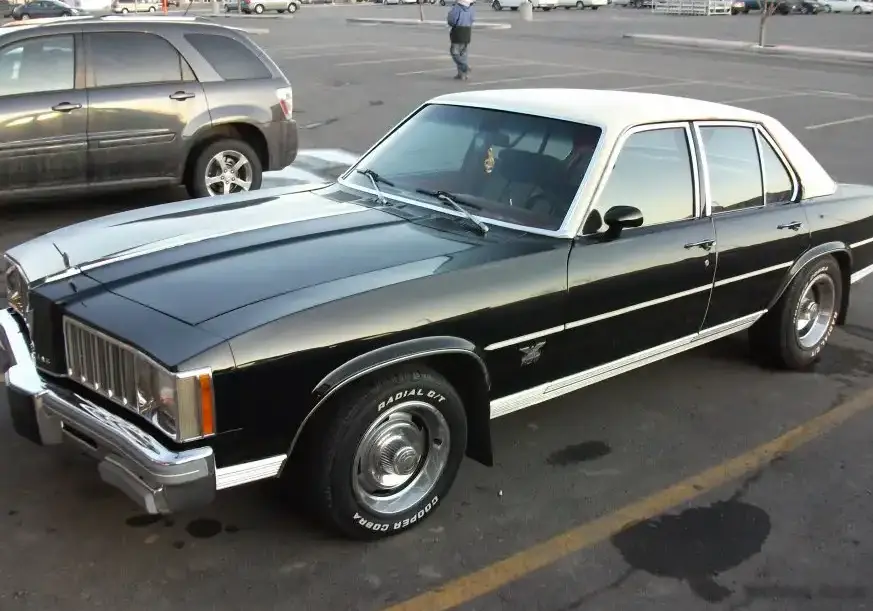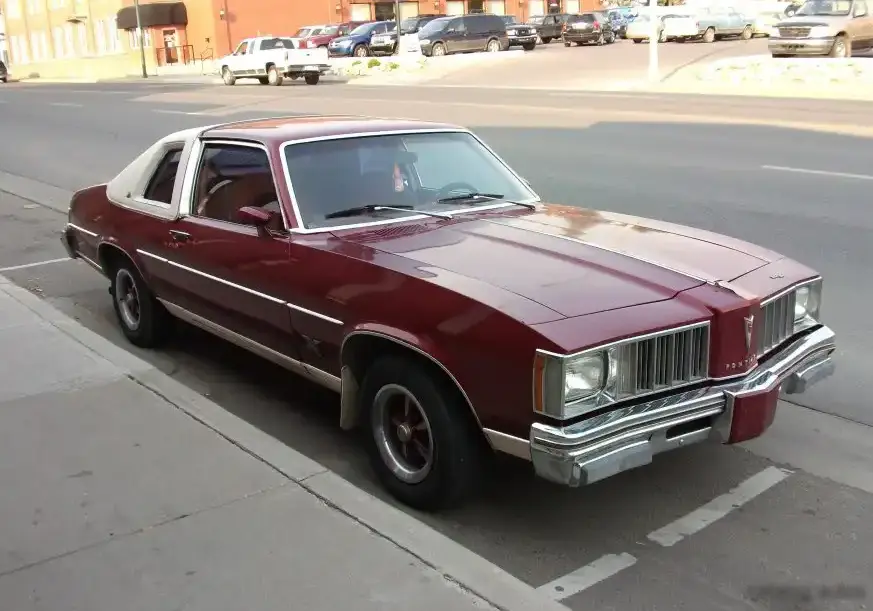
The Pontiac Phoenix Coupe with the 2.8-liter (117 horsepower) engine represents a significant entry in the compact car market of the late 1970s and early 1980s. Produced from 1979 to 1981, this variant of the Phoenix Coupe was positioned as a more affordable and fuel-conscious option within the Pontiac lineup, appealing to buyers seeking a comfortable and reliable daily driver. It was part of the second generation of the Phoenix, which itself was based on the GM X-body platform shared with the Buick Skylark, Oldsmobile Omega, and Chevrolet Citation. This generation marked Pontiac’s attempt to compete directly with increasingly popular imported compacts, offering a blend of American styling and engineering with a focus on efficiency.
Technical Specifications
| Brand | Pontiac |
| Model | Phoenix |
| Generation | Phoenix Coupe |
| Type (Engine) | 2.8 (117 Hp) |
| Start of production | 1979 |
| End of production | 1981 |
| Powertrain Architecture | Internal Combustion engine |
| Body type | Coupe |
| Fuel Type | Petrol (Gasoline) |
| Power | 117 Hp |
| Engine Model/Code | LE2 |
| Engine aspiration | Naturally aspirated engine |
| Engine oil capacity | 4.3 l / 4.54 US qt / 3.78 UK qt |
| Coolant capacity | 9.5 l / 10.04 US qt / 8.36 UK qt |
Powertrain & Engine Architecture
The heart of the 1979-1981 Pontiac Phoenix Coupe 2.8 was the LE2 variant of the 2.8-liter (173 cubic inch) V6 engine. This engine was a relatively new design for GM at the time, introduced in the early 1980s as a replacement for older inline-six configurations. The LE2 featured a 60-degree V-angle, which contributed to its relatively smooth operation. It utilized a two-barrel carburetor for fuel delivery, a common setup for the era, and a single overhead camshaft (SOHC) design. The engine produced 117 horsepower at 4800 rpm and 155 lb-ft of torque at 3200 rpm. The transmission paired with this engine was a three-speed automatic, a popular choice for buyers prioritizing ease of use over outright performance. This automatic transmission, the TH350, was a robust and reliable unit, known for its durability. The engine’s architecture was designed for relatively simple maintenance, making it accessible to the average owner.
Driving Characteristics
The 2.8-liter, automatic transmission combination in the Phoenix Coupe delivered a driving experience geared towards comfort and practicality rather than sporty performance. Acceleration was adequate for everyday driving, but not particularly brisk. The three-speed automatic transmission, while smooth, lacked the responsiveness of a manual gearbox or a more modern automatic with additional gears. The gear ratios were optimized for fuel economy and cruising, resulting in a relaxed driving experience on the highway. The Phoenix Coupe wasn’t designed for spirited cornering; its suspension was tuned for a comfortable ride, prioritizing absorbing bumps and imperfections in the road. Compared to potential manual transmission versions (though less common), the automatic reduced driver involvement and offered a more effortless driving experience. Compared to the later, more powerful V6 options available in other GM X-body cars, the 117 hp Phoenix offered a more economical, though less exciting, driving experience.
Equipment & Trim Levels
The Pontiac Phoenix Coupe 2.8 was generally offered with a fairly standard level of equipment, reflecting its position as an entry-level or mid-range model. Standard features typically included cloth upholstery, a basic AM radio, and manual windows and locks. Air conditioning was a popular optional extra, as were power steering and power brakes. Interior trim was relatively simple, with a focus on durability rather than luxury. The dashboard layout was functional, with clearly marked gauges and controls. Optional extras could include upgraded sound systems, cruise control, and different wheel covers. The Phoenix Coupe aimed to provide a comfortable and functional interior without excessive frills.
Chassis & Braking
The Phoenix Coupe utilized a traditional body-on-frame construction, common for American cars of the era. The front suspension consisted of independent coil springs, while the rear suspension employed a solid axle with leaf springs. This setup provided a comfortable ride but wasn’t particularly sophisticated in terms of handling. Braking was initially accomplished with front disc brakes and rear drum brakes. Later models saw the addition of rear disc brakes as standard equipment. Power steering was often an optional extra, making the car easier to maneuver at low speeds. The braking system was adequate for the car’s weight and performance, but lacked the stopping power of more modern braking systems. Stabilizer bars were included to reduce body roll during cornering, but the overall handling characteristics were geared towards comfort rather than sporty driving.
Market Reception & Comparison
The Pontiac Phoenix Coupe 2.8 received mixed reviews from automotive critics. While praised for its comfortable ride and relatively fuel-efficient engine, it was often criticized for its lack of performance and somewhat bland styling. Compared to its siblings within the GM X-body family, the Phoenix aimed for a slightly more upscale image than the Chevrolet Citation or Oldsmobile Omega, but it didn’t quite reach the level of refinement offered by the Buick Skylark. Fuel economy was a key selling point, averaging around 22 mpg in combined driving. Reliability was generally considered good, although the carburetor could require occasional adjustments. The 2.8-liter V6 proved to be a durable engine, and the automatic transmission was known for its longevity. However, the car’s overall build quality was sometimes questioned, with some reports of minor trim and electrical issues.
Legacy
The Pontiac Phoenix Coupe 2.8, while not a groundbreaking vehicle, played a role in Pontiac’s attempt to compete in the burgeoning compact car market of the late 1970s and early 1980s. The 2.8-liter V6 engine proved to be a reliable and durable powerplant, and many examples of these cars are still on the road today. In the used car market, the Phoenix Coupe 2.8 is often sought after by collectors and enthusiasts looking for a classic American car from the era. Its relatively simple mechanical design makes it relatively easy to maintain and repair. While not a high-performance vehicle, the Phoenix Coupe 2.8 offers a comfortable and affordable way to experience a piece of automotive history. The car represents a transitional period in American automotive design, moving away from larger, less efficient vehicles towards smaller, more fuel-conscious options.