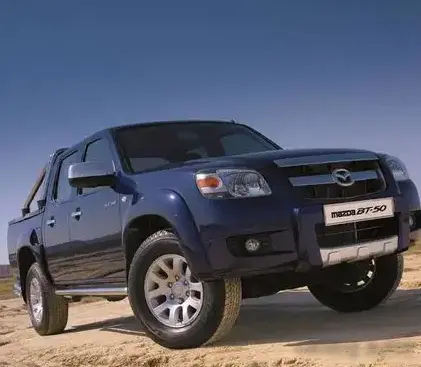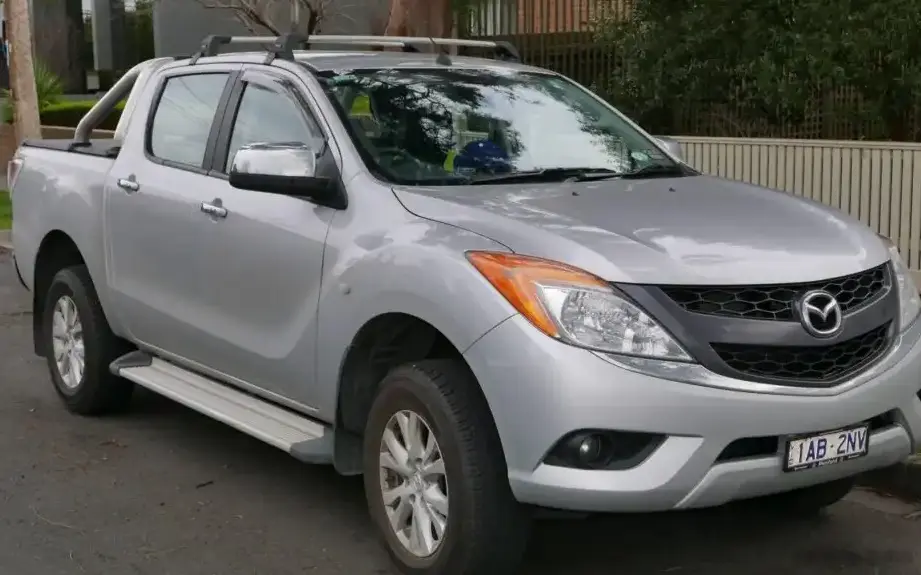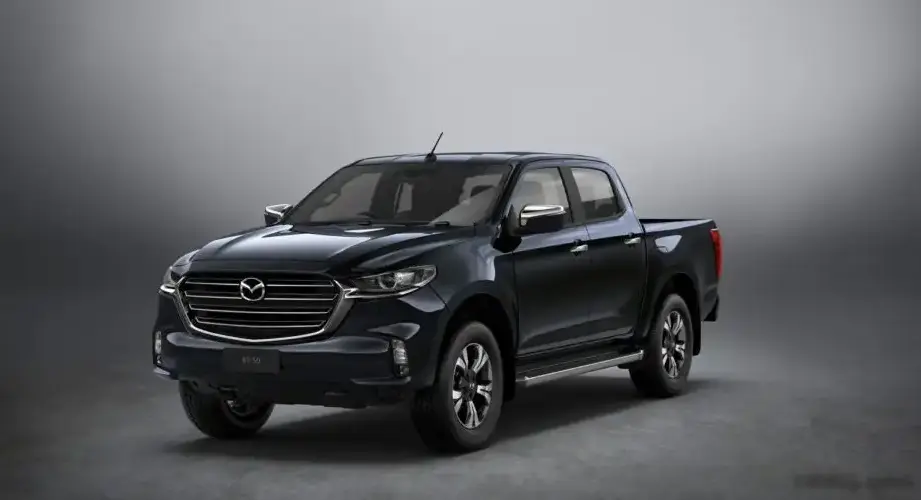
The Mazda BT-50 Dual Cab III 3.0d (190 Hp) 4×4 is a mid-size pickup truck produced by Mazda, beginning with the 2020 model year. This generation represents a significant collaboration with Isuzu, sharing a platform and powertrain with the Isuzu D-Max. Positioned as a robust and capable workhorse, the BT-50 aimed to compete with established players like the Toyota Hilux, Ford Ranger, and Nissan Navara, particularly in markets outside of North America where pickup trucks are frequently used for both commercial and personal purposes. The “Dual Cab” designation indicates a four-door configuration with seating for five passengers, making it a versatile option for families and crews. This specific 3.0d variant, producing 190 horsepower, served as a key offering in the BT-50 lineup, balancing performance with fuel efficiency.
Technical Specifications
| Brand | Mazda |
| Model | BT-50 |
| Generation | BT-50 Dual Cab III |
| Type (Engine) | 3.0d (190 Hp) 4×4 |
| Start of production | June, 2020 |
| Powertrain Architecture | Internal Combustion engine |
| Body type | Pick-up |
| Seats | 5 |
| Doors | 4 |
| Fuel consumption (urban) | 9.7 l/100 km (24.2 US mpg, 29.1 UK mpg, 10.3 km/l) |
| Fuel consumption (extra urban) | 6.6 l/100 km (35.6 US mpg, 42.8 UK mpg, 15.2 km/l) |
| Fuel consumption (combined) | 7.7 l/100 km (30.5 US mpg, 36.7 UK mpg, 13 km/l) |
| Fuel Type | Diesel |
| Emission standard | Euro 5 |
| Weight-to-power ratio | 10.6 kg/Hp, 94.8 Hp/tonne |
| Weight-to-torque ratio | 4.5 kg/Nm, 224.4 Nm/tonne |
| Power | 190 Hp @ 3600 rpm |
| Power per litre | 63.4 Hp/l |
| Torque | 450 Nm @ 1600-2600 rpm (331.9 lb.-ft. @ 1600-2600 rpm) |
| Engine layout | Front, Longitudinal |
| Engine Model/Code | 4JJ3 |
| Engine displacement | 2999 cm3 (183.01 cu. in.) |
| Number of cylinders | 4 |
| Engine configuration | Inline |
| Cylinder Bore | 95.4 mm (3.76 in.) |
| Piston Stroke | 104.9 mm (4.13 in.) |
| Compression ratio | 16.3:1 |
| Number of valves per cylinder | 4 |
| Fuel injection system | Diesel Commonrail |
| Engine aspiration | Turbocharger, Intercooler |
| Valvetrain | DOHC |
| Engine oil capacity | 7.5 l (7.93 US qt | 6.6 UK qt) |
| Coolant capacity | 10.1 l (10.67 US qt | 8.89 UK qt) |
| Kerb Weight | 2005-2025 kg (4420.27 – 4464.36 lbs.) |
| Max. weight | 3100 kg (6834.33 lbs.) |
| Max load | 1075-1095 kg (2369.97 – 2414.06 lbs.) |
| Fuel tank capacity | 76 l (20.08 US gal | 16.72 UK gal) |
| Permitted trailer load with brakes (12%) | 3500 kg (7716.18 lbs.) |
| Permitted trailer load without brakes | 750 kg (1653.47 lbs.) |
| Permitted towbar download | 350 kg (771.62 lbs.) |
| Length | 5280 mm (207.87 in.) |
| Width | 1870 mm (73.62 in.) |
| Height | 1785-1790 mm (70.28 – 70.47 in.) |
| Wheelbase | 3125 mm (123.03 in.) |
| Front track | 1570 mm (61.81 in.) |
| Rear track | 1570 mm (61.81 in.) |
| Front overhang | 905 mm (35.63 in.) |
| Rear overhang | 1250 mm (49.21 in.) |
| Ride height (ground clearance) | 235-240 mm (9.25 – 9.45 in.) |
| Minimum turning circle | 12.5 m (41.01 ft.) |
| Approach angle | 30.0-30.4° |
| Departure angle | 23.9-24.2° |
| Ramp-over angle | 23.3-23.8° |
| Wading depth | 800 mm (31.5 in.) |
| Drivetrain Architecture | All wheel drive (4×4). ICE drives rear wheels, front wheels engaged via clutch. |
| Drive wheel | All wheel drive (4×4) |
| Number of gears | 6 |
| Type of gearbox | Manual transmission |
| Front suspension | Double wishbone |
| Rear suspension | Leaf spring |
| Front brakes | Ventilated discs, 320 mm |
| Rear brakes | Drum, 295 mm |
| Assisting systems | ABS (Anti-lock braking system) |
| Steering type | Steering rack and pinion |
| Power steering | Electric |
| Tires size | 255/65 R17; 265/60 R18 |
| Wheel rims size | 7.0J x 17; 7.5J x 18 |
Powertrain & Engine Architecture
The heart of the BT-50 3.0d is the Isuzu-sourced 4JJ3-TC 3.0-liter inline-four diesel engine. This engine is a robust and well-regarded unit known for its durability and torque output. It utilizes a common-rail direct injection system, delivering fuel at extremely high pressure for efficient combustion. A variable geometry turbocharger (VGT) with an intercooler further enhances performance by increasing air intake and reducing intake temperatures. The engine features a double overhead camshaft (DOHC) valvetrain with four valves per cylinder, optimizing gas flow for improved power and efficiency. The 4JJ3 engine produces 190 horsepower at 3600 rpm and a substantial 450 Nm (331.9 lb-ft) of torque between 1600 and 2600 rpm. This broad torque curve is particularly beneficial for towing and hauling. The 6-speed manual transmission provides a good balance between fuel economy and usability, with gear ratios tailored for both on-road and off-road driving.
Driving Characteristics
The BT-50 3.0d with the manual transmission offers a practical and capable driving experience. While not a performance-oriented pickup, the engine’s torque provides ample power for everyday driving and hauling loads. The manual gearbox allows for greater driver control, particularly when navigating challenging terrain or towing. The gear ratios are well-spaced, providing sufficient power in each gear without feeling overly strained. Compared to potential higher-output variants (which were not widely available in all markets), this 190 hp version prioritizes fuel efficiency and longevity over outright speed. The suspension, tuned for both comfort and durability, handles rough roads and unpaved surfaces reasonably well, though it can feel somewhat firm when unloaded.
Equipment & Trim Levels
The BT-50 Dual Cab III 3.0d 4×4 typically came with a respectable level of standard equipment. Base models included air conditioning, power windows, central locking, and a basic audio system. Higher trim levels added features such as alloy wheels, a touchscreen infotainment system with Bluetooth connectivity, a reversing camera, and side steps. Interior upholstery was generally durable cloth, with leather options available on higher-spec models. Safety features included ABS brakes, airbags, and stability control. Optional extras could include a tow bar, bed liner, and upgraded audio systems.
Chassis & Braking
The BT-50’s chassis is a robust ladder-frame construction, providing a solid foundation for its work-oriented purpose. The front suspension utilizes a double wishbone setup, while the rear employs leaf springs. This combination offers a good balance of ride comfort and load-carrying capacity. Braking duties are handled by ventilated discs at the front and drum brakes at the rear. ABS (Anti-lock Braking System) is standard, enhancing safety during emergency braking situations. The steering is rack and pinion with electric power assistance, providing a reasonably responsive and comfortable steering experience.
Market Reception & Comparison
The BT-50 Dual Cab III 3.0d 4×4 was generally well-received by automotive critics as a competent and reliable pickup truck. Its fuel economy was considered competitive within its class, and the engine’s torque output was praised for its versatility. Compared to some rivals, the BT-50’s interior was sometimes criticized for being somewhat basic in design and materials. However, its robust build quality and proven powertrain were seen as significant strengths. Against other trims in the BT-50 lineup, the 3.0d 4×4 offered a sweet spot between performance and economy, appealing to buyers who needed a capable truck without the added cost of higher-output engines.
Legacy
The Mazda BT-50 Dual Cab III, particularly the 3.0d variants, has established a reputation for reliability and durability. The Isuzu 4JJ3 engine is known for its longevity, and with proper maintenance, these trucks can provide many years of service. On the used car market, these BT-50s represent a good value proposition for buyers seeking a capable and dependable pickup truck. While not as refined as some of its competitors, its robust construction and proven powertrain make it a practical and long-lasting choice.