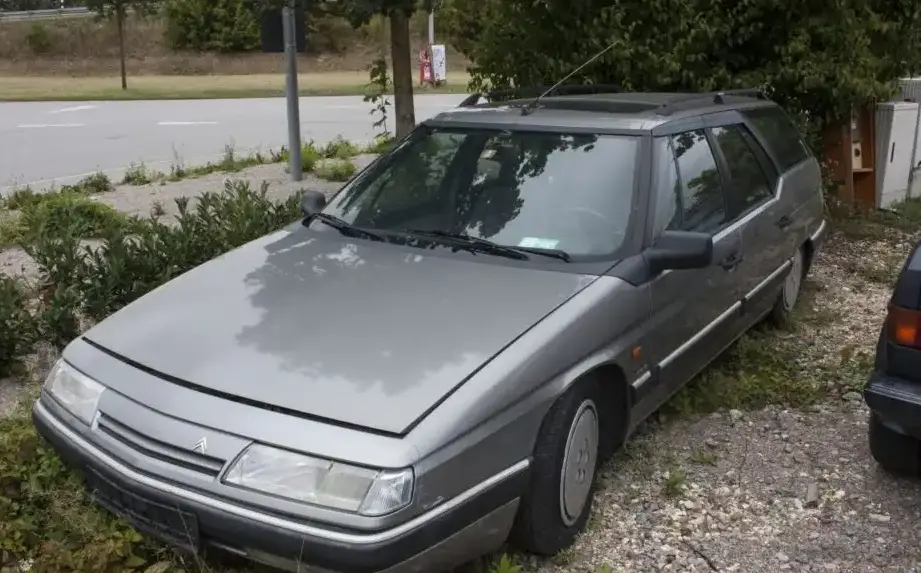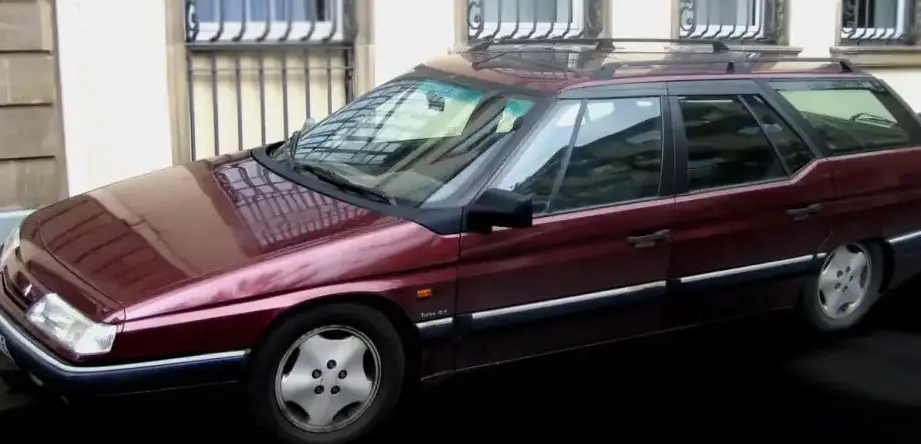
The Citroën XM (Y4) 2.0i 16V, produced from 1994 to 2000, represents a significant iteration of Citroën’s flagship executive car. Positioned within the second generation XM range (launched in 1994), this variant offered a balance between performance and fuel economy, appealing to buyers seeking a comfortable and technologically advanced vehicle. It sat in the mid-range of the XM lineup, offering more power than the base 2.0i 8V models but remaining more accessible than the range-topping 3.0 V6 variants. The XM, as a whole, was Citroën’s attempt to recapture the large, luxurious saloon market previously dominated by the DS and CX, and the Y4 series brought significant updates to styling and technology.
Technical Specifications
| Brand | Citroën |
| Model | XM |
| Generation | XM (Y4) |
| Type (Engine) | 2.0 i 16V (132 Hp) |
| Start of production | 1994 |
| End of production | June, 2000 |
| Powertrain Architecture | Internal Combustion engine |
| Body type | Hatchback |
| Seats | 5 |
| Doors | 5 |
| Fuel consumption (urban) | 13.5 l/100 km (17.4 US mpg, 20.9 UK mpg, 7.4 km/l) |
| Fuel consumption (extra urban) | 7.4 l/100 km (31.8 US mpg, 38.2 UK mpg, 13.5 km/l) |
| Fuel consumption (combined) | 9.6 l/100 km (24.5 US mpg, 29.4 UK mpg, 10.4 km/l) |
| CO2 emissions | 225 g/km |
| Fuel Type | Petrol (Gasoline) |
| Acceleration 0 – 100 km/h | 10.8 sec |
| Acceleration 0 – 62 mph | 10.8 sec |
| Acceleration 0 – 60 mph | 10.3 sec |
| Maximum speed | 205 km/h (127.38 mph) |
| Weight-to-power ratio | 11.3 kg/Hp, 88.7 Hp/tonne |
| Weight-to-torque ratio | 8.3 kg/Nm, 120.9 Nm/tonne |
| Power | 132 Hp @ 5500 rpm |
| Power per litre | 66.1 Hp/l |
| Torque | 180 Nm @ 4200 rpm (132.76 lb.-ft. @ 4200 rpm) |
| Engine layout | Front, Transverse |
| Engine Model/Code | RFV XU10J4R |
| Engine displacement | 1998 cm3 (121.93 cu. in.) |
| Number of cylinders | 4 |
| Engine configuration | Inline |
| Cylinder Bore | 86 mm (3.39 in.) |
| Piston Stroke | 86 mm (3.39 in.) |
| Compression ratio | 10.4:1 |
| Number of valves per cylinder | 4 |
| Fuel injection system | Multi-port manifold injection |
| Engine aspiration | Naturally aspirated engine |
| Valvetrain | DOHC |
| Engine oil capacity | 5.4 l (5.71 US qt | 4.75 UK qt) |
| Coolant | 7.5 l (7.93 US qt | 6.6 UK qt) |
| Kerb Weight | 1489 kg (3282.68 lbs.) |
| Max. weight | 2000 kg (4409.25 lbs.) |
| Max load | 511 kg (1126.56 lbs.) |
| Trunk (boot) space – minimum | 455 l (16.07 cu. ft.) |
| Trunk (boot) space – maximum | 1460 l (51.56 cu. ft.) |
| Fuel tank capacity | 80 l (21.13 US gal | 17.6 UK gal) |
| Max. roof load | 80 kg (176.37 lbs.) |
| Permitted trailer load with brakes (12%) | 1300 kg (2866.01 lbs.) |
| Permitted trailer load without brakes | 740 kg (1631.42 lbs.) |
| Permitted towbar download | 80 kg (176.37 lbs.) |
| Length | 4708 mm (185.35 in.) |
| Width | 1794 mm (70.63 in.) |
| Height | 1396 mm (54.96 in.) |
| Wheelbase | 2850 mm (112.2 in.) |
| Front track | 1520 mm (59.84 in.) |
| Rear (Back) track | 1447 mm (56.97 in.) |
| Front overhang | 1068 mm (42.05 in.) |
| Rear overhang | 790 mm (31.1 in.) |
| Ride height (ground clearance) | 141 mm (5.55 in.) |
| Drivetrain Architecture | The Internal combustion engine (ICE) drives the front wheels of the vehicle. |
| Drive wheel | Front wheel drive |
| Number of gears and type of gearbox | 5 gears, manual transmission |
| Front suspension | Independent type McPherson, Wishbone |
| Rear suspension | Hydro-pneumatic element, Trailing arm |
| Front brakes | Ventilated discs |
| Rear brakes | Disc |
| Assisting systems | ABS (Anti-lock braking system) |
| Steering type | Steering rack and pinion |
| Power steering | Hydraulic Steering |
| Tires size | 195/65 R15 |
| Wheel rims size | 15 |
Powertrain & Engine Architecture
The 2.0i 16V XM utilizes the PSA XU10J4R engine, a naturally aspirated, inline-four cylinder powerplant. This engine, a staple of Peugeot and Citroën vehicles of the era, features a cast iron block and aluminum cylinder head. The ‘16V’ designation indicates the presence of four valves per cylinder, enhancing breathing and contributing to increased power output. Fuel delivery is managed by a Bosch Motronic multi-port fuel injection system, optimizing air-fuel mixture for improved efficiency and performance. The engine’s double overhead camshaft (DOHC) valvetrain further aids in maximizing volumetric efficiency. The engine produces 132 horsepower at 5500 rpm and 180 Nm (132.76 lb-ft) of torque at 4200 rpm. This engine was paired with either a 5-speed manual transmission or a 4-speed automatic transmission. The automatic transmission, while offering convenience, was known to slightly diminish acceleration compared to the manual version.
Driving Characteristics
The 2.0i 16V automatic XM offered a comfortable and refined driving experience, prioritizing smoothness over outright performance. Acceleration from 0-60 mph took approximately 10.3 seconds, which was adequate for everyday driving but noticeably slower than the manual transmission variant or the more powerful V6 models. The automatic gearbox, while providing seamless shifts, had relatively long gear ratios, which could feel somewhat sluggish during overtaking maneuvers. The XM’s signature hydropneumatic suspension, however, provided an exceptionally smooth ride, absorbing bumps and imperfections in the road with ease. This suspension system also allowed for self-leveling, maintaining a consistent ride height regardless of load. Steering was light and precise, making the XM easy to maneuver in urban environments.
Equipment & Trim Levels
The 2.0i 16V XM typically came equipped with a respectable level of standard features. These included central locking, electric windows, power steering, and an RDS radio. Higher trim levels, often denoted by designations like ‘Exclusive’ or ‘VSX’, added features such as leather upholstery, climate control, a sunroof, and upgraded audio systems. Optional extras included a navigation system (a rarity for the time), heated front seats, and metallic paint finishes. Interior upholstery was generally cloth on base models, with leather being available as an upgrade. The dashboard layout was functional and ergonomically designed, with most controls within easy reach of the driver.
Chassis & Braking
The XM’s chassis was designed to prioritize ride comfort and handling stability. The front suspension utilized independent McPherson struts with a wishbone setup, while the rear employed Citroën’s innovative hydropneumatic suspension. This system, utilizing self-leveling spheres filled with nitrogen, provided a uniquely smooth and controlled ride. Braking duties were handled by ventilated discs at the front and solid discs at the rear. Anti-lock Braking System (ABS) was standard, enhancing safety and control during emergency braking situations. The XM’s relatively heavy curb weight (1489 kg / 3282.68 lbs) necessitated a robust braking system to ensure adequate stopping power.
Market Reception & Comparison
The Citroën XM 2.0i 16V automatic was generally well-received by automotive critics, who praised its comfortable ride, spacious interior, and advanced technology. However, some reviewers noted the engine’s lack of outright power and the automatic transmission’s somewhat sluggish performance. Compared to the 2.0i 8V models, the 16V version offered a noticeable improvement in performance, but at a higher price point. The V6 variants provided significantly more power but were considerably more expensive to purchase and maintain. Fuel economy was reasonable for a car of its size and class, averaging around 24.5 US mpg in combined driving conditions. Reliability was generally good, although the complex hydropneumatic suspension system could require occasional maintenance.
Legacy
The Citroën XM, while not a commercial blockbuster, remains a fondly remembered vehicle among enthusiasts. The 2.0i 16V automatic powertrain, while not the most powerful in the lineup, proved to be relatively reliable and offered a good balance of performance and fuel economy. Today, well-maintained examples are becoming increasingly sought after by collectors and classic car enthusiasts. The hydropneumatic suspension, while requiring specialized knowledge for maintenance, is a key part of the XM’s appeal, providing a unique and luxurious driving experience that is rarely found in modern vehicles. Parts availability can be a challenge, but a dedicated community of XM owners and specialists exists to support the preservation of these iconic Citroëns.