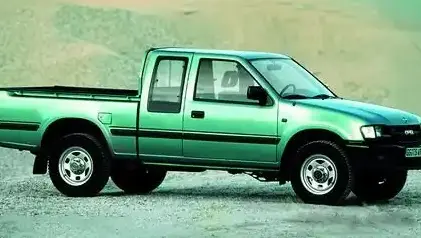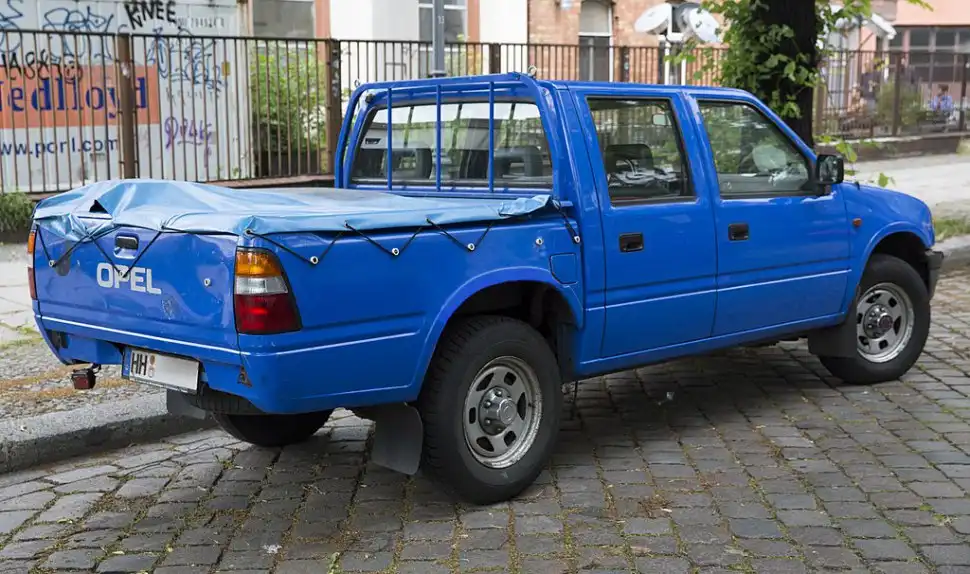
The Opel Campo Double Cab 2.5 TD 4×4, produced from 1991 to 2001, represents a utilitarian offering in the European pickup truck market. Positioned as a workhorse vehicle, the Campo Double Cab aimed to provide both commercial practicality and limited passenger capacity. It was based on the Isuzu D-Max platform, a result of collaboration between Opel (then part of General Motors) and Isuzu. The Double Cab configuration, offering seating for five, distinguished it from standard single-cab pickups and broadened its appeal to those needing both cargo space and people-carrying ability. This variant, equipped with the 2.5-liter turbodiesel engine producing 76 horsepower, served as a base-level option within the Campo lineup, prioritizing affordability and fuel efficiency over outright performance.
Technical Specifications
| Brand | Opel |
| Model | Campo |
| Generation | Campo Double Cab |
| Type (Engine) | 2.5 TD (76 Hp) 4×4 |
| Start of production | 1991 |
| End of production | June, 2001 |
| Powertrain Architecture | Internal Combustion engine |
| Body type | Pick-up |
| Seats | 5 |
| Doors | 4 |
| Fuel Type | Diesel |
| Power | 76 Hp @ 3800 rpm |
| Power per litre | 30.4 Hp/l |
| Torque | 160 Nm @ 2000 rpm / 118.01 lb.-ft. @ 2000 rpm |
| Engine Model/Code | 4JA1T |
| Engine displacement | 2499 cm3 / 152.5 cu. in. |
| Number of cylinders | 4 |
| Engine configuration | Inline |
| Cylinder Bore | 93 mm / 3.66 in. |
| Piston Stroke | 92 mm / 3.62 in. |
| Engine aspiration | Turbocharger |
| Engine oil capacity | 4.5 l / 4.76 US qt | 3.96 UK qt |
| Coolant | 9 l / 9.51 US qt | 7.92 UK qt |
| Length | 4980 mm / 196.06 in. |
| Width | 1690 mm / 66.54 in. |
| Height | 1710 mm / 67.32 in. |
| Wheelbase | 3025 mm / 119.09 in. |
| Drive wheel | All wheel drive (4×4) |
| Number of gears and type of gearbox | 5 gears, manual transmission |
| Front suspension | Independent coil spring |
| Rear suspension | dependent spring suspension |
| Front brakes | Ventilated discs |
| Rear brakes | Drum |
Powertrain & Engine Architecture
The heart of the Campo Double Cab 2.5 TD 4×4 is the Isuzu-sourced 4JA1T 2.5-liter inline-four cylinder diesel engine. This engine, a common sight in various Isuzu and GM vehicles of the era, is a naturally aspirated diesel boosted by a turbocharger. The 4JA1T utilizes indirect fuel injection, a system common in diesels of this period, employing a distributor-type pump. This system, while reliable, is less precise than modern common-rail direct injection systems, resulting in slightly higher emissions and a less refined engine note. The engine features a cast iron block and head, contributing to its durability, but also adding to its overall weight. The five-speed manual transmission, also sourced from Isuzu, is a robust unit designed to handle the engine’s torque output. The transmission’s gear ratios are geared towards maximizing fuel economy and providing sufficient pulling power for hauling and off-road use, rather than offering sporty acceleration.
Driving Characteristics
The 76 horsepower output of the 2.5 TD engine translates to modest performance. Acceleration is slow, particularly when laden with cargo or passengers. The engine’s peak torque of 160 Nm (118 lb-ft) is available at 2000 rpm, providing reasonable pulling power at lower engine speeds. However, the engine feels strained when pushed hard, and overtaking maneuvers require careful planning. The manual transmission’s gear ratios are well-suited to the engine’s characteristics, allowing the driver to keep the engine within its optimal operating range. The 4×4 system, typically part-time with selectable 2H, 4H, and 4L modes, provides enhanced traction on loose surfaces, making the Campo capable in off-road conditions. The ride quality is typical of a body-on-frame pickup truck – firm and somewhat bouncy, especially when unladen.
Equipment & Trim Levels
The Campo Double Cab 2.5 TD 4×4 was generally offered with a basic level of equipment, reflecting its utilitarian focus. Standard features typically included vinyl or cloth upholstery, a basic instrument cluster, and manual windows and door locks. Air conditioning was often an optional extra, as were power steering and central locking. The interior design is functional but spartan, prioritizing durability over aesthetics. The Double Cab configuration provides seating for five adults, although rear passenger space is somewhat limited. The rear seats typically fold down to create a larger cargo area. Trim levels were often limited, with the 2.5 TD 4×4 representing the entry-level offering.
Chassis & Braking
The Opel Campo utilizes a traditional body-on-frame construction, providing a robust and durable chassis. The front suspension consists of independent coil springs, offering a degree of ride comfort, while the rear suspension employs a dependent leaf spring setup, designed for load-carrying capacity. The braking system features ventilated discs on the front wheels and drum brakes on the rear. The braking performance is adequate for normal driving conditions, but lacks the stopping power of more modern vehicles. Steering is typically hydraulic power-assisted, providing reasonable maneuverability.
Market Reception & Comparison
The Opel Campo Double Cab 2.5 TD 4×4 was generally well-received in markets where pickup trucks were popular, particularly in Europe. Critics praised its practicality, durability, and affordability. However, the engine’s modest power output and relatively crude refinement were often cited as drawbacks. Compared to other pickups in its class, such as the Toyota Hilux or Nissan Navara, the Campo offered a more affordable entry point but lacked the refinement and performance of its competitors. The 2.5 TD engine offered reasonable fuel economy, but was less efficient than more modern diesel engines. Reliability was generally good, although the indirect injection system required regular maintenance.
Legacy
The Opel Campo Double Cab 2.5 TD 4×4 has established a reputation as a reliable and durable workhorse. In the used car market, these vehicles are often sought after by those needing a practical and affordable pickup truck. The 4JA1T engine, while not particularly powerful, is known for its longevity and relatively simple maintenance requirements. However, potential buyers should be aware of the age-related issues common to vehicles of this era, such as corrosion and wear and tear on suspension components. The Campo Double Cab represents a significant chapter in Opel’s history, demonstrating the brand’s ability to produce a capable and affordable pickup truck for the European market. While no longer in production, the Campo remains a popular choice for those seeking a rugged and dependable vehicle.