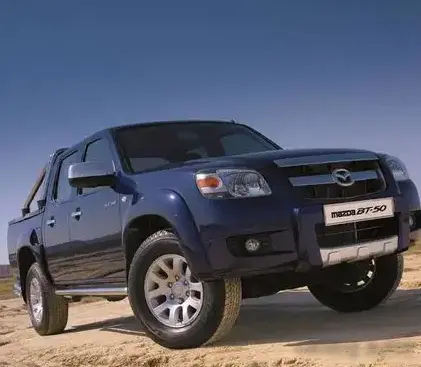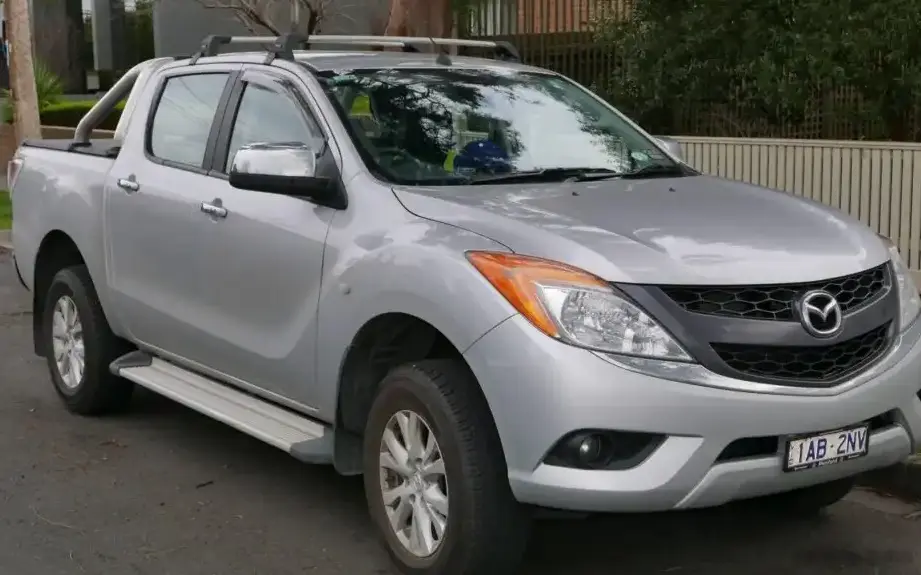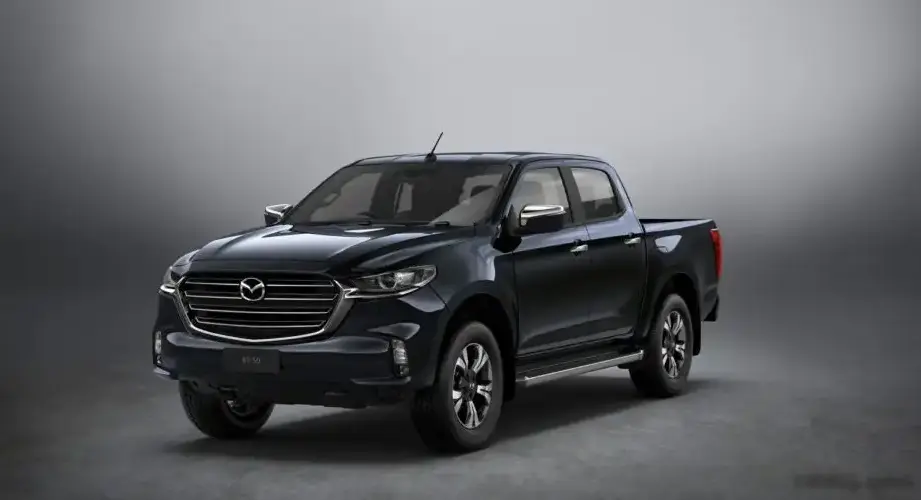
The Mazda BT-50 Dual Cab III 3.0d (190 Hp) Automatic, launched in June 2020, represents Mazda’s entry into the mid-size pickup truck market, primarily targeted towards buyers seeking a blend of workhorse capability and everyday usability. This generation BT-50 marked a significant shift for Mazda, as it was developed in collaboration with Isuzu, sharing a platform and powertrain with the Isuzu D-Max. The Dual Cab configuration, offering seating for five, became a popular choice for families and individuals needing both passenger and cargo space. This specific 3.0d variant, equipped with a six-speed automatic transmission, positioned itself as a versatile option within the BT-50 lineup, offering a balance between performance, fuel efficiency, and ease of driving.
Technical Specifications
| Brand | Mazda |
| Model | BT-50 |
| Generation | BT-50 Dual Cab III |
| Type (Engine) | 3.0d (190 Hp) Automatic |
| Start of production | June, 2020 |
| Powertrain Architecture | Internal Combustion engine |
| Body type | Pick-up |
| Seats | 5 |
| Doors | 4 |
| Fuel consumption (urban) | 9.5 l/100 km (24.8 US mpg, 29.7 UK mpg, 10.5 km/l) |
| Fuel consumption (extra urban) | 6.7 l/100 km (35.1 US mpg, 42.2 UK mpg, 14.9 km/l) |
| Fuel consumption (combined) | 7.7 l/100 km (30.5 US mpg, 36.7 UK mpg, 13 km/l) |
| Fuel Type | Diesel |
| Emission standard | Euro 5 |
| Weight-to-power ratio | 10.1 kg/Hp, 98.7 Hp/tonne |
| Weight-to-torque ratio | 4.3 kg/Nm, 233.8 Nm/tonne |
| Power | 190 Hp @ 3600 rpm |
| Power per litre | 63.4 Hp/l |
| Torque | 450 Nm @ 1600-2600 rpm (331.9 lb.-ft. @ 1600-2600 rpm) |
| Engine layout | Front, Longitudinal |
| Engine Model/Code | 4JJ3 |
| Engine displacement | 2999 cm3 (183.01 cu. in.) |
| Number of cylinders | 4 |
| Engine configuration | Inline |
| Cylinder Bore | 95.4 mm (3.76 in.) |
| Piston Stroke | 104.9 mm (4.13 in.) |
| Compression ratio | 16.3:1 |
| Number of valves per cylinder | 4 |
| Fuel injection system | Diesel Commonrail |
| Engine aspiration | Turbocharger, Intercooler |
| Valvetrain | DOHC |
| Engine oil capacity | 7.5 l (7.93 US qt | 6.6 UK qt) |
| Coolant | 10.5 l (11.1 US qt | 9.24 UK qt) |
| Kerb Weight | 1925-1945 kg (4243.9 – 4287.99 lbs.) |
| Max. weight | 3000 kg (6613.87 lbs.) |
| Max load | 1055-1075 kg (2325.88 – 2369.97 lbs.) |
| Fuel tank capacity | 76 l (20.08 US gal | 16.72 UK gal) |
| Permitted trailer load with brakes (12%) | 3500 kg (7716.18 lbs.) |
| Permitted trailer load without brakes | 750 kg (1653.47 lbs.) |
| Permitted towbar download | 350 kg (771.62 lbs.) |
| Length | 5280 mm (207.87 in.) |
| Width | 1870 mm (73.62 in.) |
| Height | 1785-1790 mm (70.28 – 70.47 in.) |
| Wheelbase | 3125 mm (123.03 in.) |
| Front track | 1570 mm (61.81 in.) |
| Rear track | 1570 mm (61.81 in.) |
| Front overhang | 905 mm (35.63 in.) |
| Rear overhang | 1250 mm (49.21 in.) |
| Ride height (ground clearance) | 235-240 mm (9.25 – 9.45 in.) |
| Minimum turning circle | 12.5 m (41.01 ft.) |
| Approach angle | 30.0-30.4° |
| Departure angle | 23.9-24.2° |
| Ramp-over angle | 23.3-23.8° |
| Wading depth | 800 mm (31.5 in.) |
| Drivetrain Architecture | Rear wheel drive |
| Number of gears | 6 |
| Gearbox type | Automatic transmission |
| Front suspension | Double wishbone |
| Rear suspension | Leaf spring |
| Front brakes | Ventilated discs, 320 mm |
| Rear brakes | Drum, 295 mm |
| Assisting systems | ABS (Anti-lock braking system) |
| Steering type | Steering rack and pinion |
| Power steering | Electric |
| Tires size | 255/65 R17; 265/60 R18 |
| Wheel rims size | 7.0J x 17; 7.5J x 18 |
Powertrain & Engine Architecture
At the heart of the BT-50 3.0d Automatic lies Isuzu’s 4JJ3-TC 3.0-liter inline-four diesel engine. This engine is a robust and well-regarded unit known for its durability and relatively simple design. The 4JJ3 utilizes a common-rail direct injection system, delivering fuel at extremely high pressures for optimized combustion. A variable geometry turbocharger (VGT) with an intercooler further enhances performance by increasing air intake and reducing intake temperatures. The engine produces 190 horsepower at 3600 rpm and a substantial 450 Nm (331.9 lb-ft) of torque between 1600 and 2600 rpm. The six-speed automatic transmission, sourced from Isuzu, is designed to handle the engine’s torque output and provide smooth shifting. It’s a conventional torque converter automatic, prioritizing reliability and ease of use over outright performance.
Driving Characteristics
The BT-50 3.0d Automatic offers a comfortable and capable driving experience. While not a performance-oriented pickup, the 450 Nm of torque provides ample pulling power for towing and hauling. The automatic transmission contributes to ease of driving, particularly in urban environments. However, compared to the six-speed manual version, the automatic does exhibit a slight reduction in fuel economy and a less direct connection to the engine. The gear ratios are tuned for practicality, prioritizing low-end torque for work applications. Acceleration is adequate, but not brisk, with a 0-60 mph time estimated around 10-11 seconds. The suspension, tuned for a balance between ride comfort and load-carrying capacity, can feel somewhat firm when unladen.
Equipment & Trim Levels
The BT-50 Dual Cab III 3.0d Automatic typically came equipped with a reasonable level of standard features. These included air conditioning, power windows and locks, a basic audio system with Bluetooth connectivity, and a multi-function steering wheel. Higher trim levels added features such as alloy wheels, a touchscreen infotainment system with navigation, a reversing camera, and parking sensors. Interior upholstery was generally cloth, with leather options available on higher-spec models. Safety features included ABS brakes, electronic stability control, and multiple airbags.
Chassis & Braking
The BT-50 utilizes a body-on-frame construction, providing a robust and durable chassis. The front suspension consists of double wishbones, while the rear employs leaf springs – a traditional setup for pickup trucks designed to handle heavy loads. Braking duties are handled by ventilated discs at the front and drum brakes at the rear. While adequate for most applications, the rear drum brakes are a cost-saving measure compared to the all-disc setups found on some competitors. The steering is rack and pinion with electric power assistance, offering a reasonable level of precision and ease of use.
Market Reception & Comparison
The Mazda BT-50 Dual Cab III 3.0d Automatic was generally well-received by automotive critics as a competent and reliable pickup truck. It was praised for its robust engine, comfortable ride, and practical features. However, some reviewers noted that the interior design was somewhat utilitarian compared to some rivals, and the automatic transmission wasn’t as responsive as some newer units. Compared to the higher-output 3.3-liter variants, the 3.0d offered a more fuel-efficient and affordable option, albeit with slightly less power. Against competitors like the Toyota Hilux and Ford Ranger, the BT-50 offered a compelling value proposition, particularly for buyers prioritizing durability and practicality.
Legacy
The Mazda BT-50 Dual Cab III 3.0d Automatic, powered by the Isuzu 4JJ3 engine, has proven to be a reliable and durable powertrain. The 4JJ3 engine is known for its longevity and relatively low maintenance costs. On the used car market, these BT-50s represent a good value for buyers seeking a capable and dependable pickup truck. Common issues are relatively minor, often related to wear and tear on suspension components or routine maintenance items. The combination of a robust engine, a practical automatic transmission, and a durable chassis ensures that these BT-50s continue to provide years of reliable service.