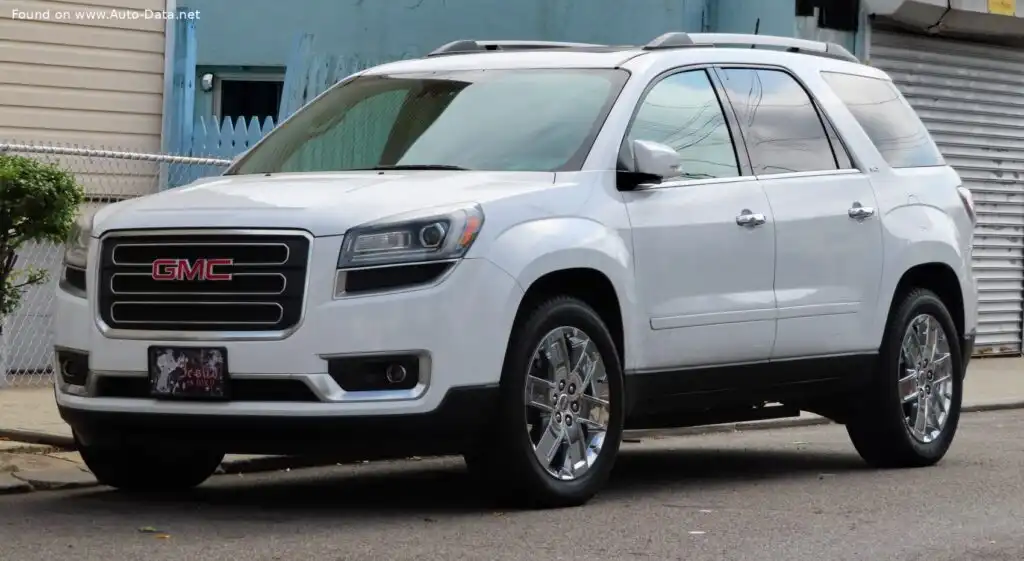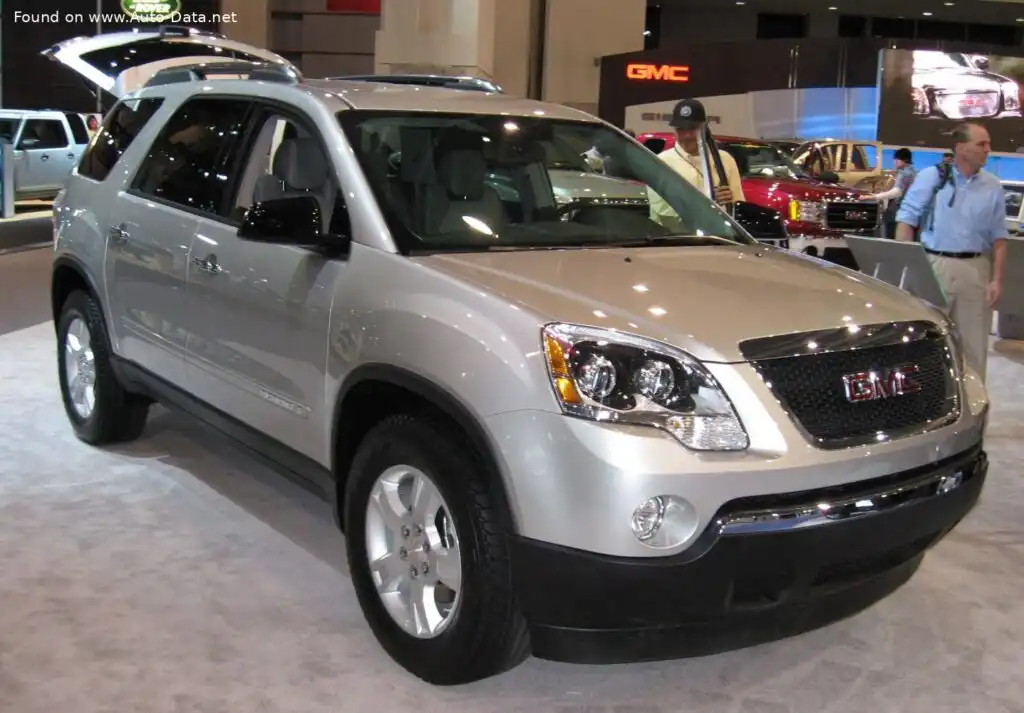
The GMC Acadia first arrived in the 2007 model year, representing GMC’s entry into the burgeoning mid-size crossover SUV segment. Built on the GM Theta platform (shared with the Saturn Outlook and Buick Enclave), the Acadia aimed to provide a more upscale and refined experience than traditional truck-based SUVs, while still offering three-row seating and substantial cargo capacity. The 3.6L V6 with an automatic transmission was a core configuration throughout the first generation (2007-2009), positioned as the standard engine offering, balancing affordability with acceptable performance for the majority of buyers. This variant was particularly popular in North America, where the demand for family-friendly SUVs was high.
Technical Specifications
| Brand | GMC |
| Model | Acadia |
| Generation | Acadia I |
| Type (Engine) | 3.6 V6 (275 Hp) Automatic |
| Start of production | 2007 |
| End of production | 2009 |
| Powertrain Architecture | Internal Combustion engine |
| Body type | SUV, Crossover |
| Seats | 7-8 |
| Doors | 5 |
| Fuel consumption (urban) | 14.7 l/100 km (16 US mpg, 19.2 UK mpg, 6.8 km/l) |
| Fuel consumption (combined) | 11.2 l/100 km (21 US mpg, 25.2 UK mpg, 8.9 km/l) |
| Fuel Type | Petrol (Gasoline) |
| Acceleration 0 – 100 km/h | 9.1 sec |
| Acceleration 0 – 62 mph | 9.1 sec |
| Acceleration 0 – 60 mph | 8.6 sec |
| Maximum speed | 172 km/h (106.88 mph) |
| Weight-to-power ratio | 7.7 kg/Hp, 130.2 Hp/tonne |
| Weight-to-torque ratio | 6.2 kg/Nm, 161 Nm/tonne |
| Power | 275 Hp @ 6600 rpm |
| Power per litre | 77.2 Hp/l |
| Torque | 340 Nm @ 3200 rpm (250.77 lb.-ft. @ 3200 rpm) |
| Engine Model/Code | LY7 |
| Engine displacement | 3564 cm3 (217.49 cu. in.) |
| Number of cylinders | 6 |
| Engine configuration | V-engine |
| Cylinder Bore | 94 mm (3.7 in.) |
| Piston Stroke | 85.6 mm (3.37 in.) |
| Compression ratio | 10.2:1 |
| Number of valves per cylinder | 4 |
| Fuel injection system | Multi-port manifold injection |
| Engine aspiration | Naturally aspirated engine |
| Valvetrain | DOHC, VVT |
| Engine oil capacity | 5.2 l (5.49 US qt | 4.58 UK qt) |
| Coolant | 11.6 l (12.26 US qt | 10.21 UK qt) |
| Kerb Weight | 2112 kg (4656.16 lbs.) |
| Max. weight | 2930 kg (6459.54 lbs.) |
| Max load | 818 kg (1803.38 lbs.) |
| Trunk (boot) space – minimum | 683 l (24.12 cu. ft.) |
| Trunk (boot) space – maximum | 3282 l (115.9 cu. ft.) |
| Fuel tank capacity | 83 l (21.93 US gal | 18.26 UK gal) |
| Permitted trailer load with brakes (12%) | 2041 kg (4499.63 lbs.) |
| Length | 5108 mm (201.1 in.) |
| Width | 2004 mm (78.9 in.) |
| Height | 1846 mm (72.68 in.) |
| Wheelbase | 3021 mm (118.94 in.) |
| Front track | 1709 mm (67.28 in.) |
| Rear (Back) track | 1709 mm (67.28 in.) |
| Ride height (ground clearance) | 189 mm (7.44 in.) |
| Drivetrain Architecture | Front wheel drive |
| Number of gears and type of gearbox | 6 gears, automatic transmission |
| Front suspension | Independent, type McPherson with coil spring and anti-roll bar |
| Rear suspension | Independent multi-link suspension |
| Front brakes | Ventilated discs |
| Rear brakes | Disc |
| Assisting systems | ABS (Anti-lock braking system) |
| Steering type | Steering rack and pinion |
| Power steering | Hydraulic Steering |
| Tires size | 255/65 R18; 255/60 R19 |
| Wheel rims size | 7.5J x 18; 8J x 19 |
INTRODUCTION
The 2007-2009 GMC Acadia, powered by the 3.6-liter V6 engine and a six-speed automatic transmission, was the entry point into the Acadia lineup. It represented a significant shift for GMC, moving away from traditional body-on-frame SUVs towards a more comfortable and fuel-efficient unibody construction. This first-generation Acadia was built on the GM Theta platform, also underpinning the Saturn Outlook and Buick Enclave. The Acadia aimed to appeal to families seeking a spacious, comfortable, and relatively affordable three-row SUV. The 3.6L V6/automatic combination was the volume seller, offering a balance between price and capability.
Powertrain & Engine Architecture
The heart of this Acadia variant is the GM LY7 3.6-liter V6 engine. This engine is a naturally aspirated, 60-degree V-engine featuring dual overhead camshafts (DOHC) and variable valve timing (VVT) on both intake and exhaust valves. The LY7 utilizes multi-port fuel injection, delivering fuel directly into the intake ports. The engine produces 275 horsepower at 6600 rpm and 250 lb-ft of torque at 3200 rpm. The six-speed automatic transmission (6T75) was specifically chosen for its smooth shifting and contribution to improved fuel economy compared to older four-speed automatics. This transmission features electronically controlled shifting and adaptive learning capabilities. The 6T75 was a common transmission across several GM platforms during this era.
Driving Characteristics
The 3.6L V6-powered Acadia offered adequate, but not exhilarating, performance. Acceleration from 0-60 mph took around 8.6 to 9.1 seconds, making it competitive with other mid-size crossovers of the time. The automatic transmission was generally smooth and responsive, although some drivers noted a slight hesitation during downshifts. The gear ratios were tuned for fuel efficiency and comfortable cruising rather than outright acceleration. Compared to the later addition of a more powerful 3.6L direct-injection engine, this version felt less responsive, particularly when fully loaded with passengers and cargo. The front-wheel-drive configuration contributed to decent fuel economy, but also limited traction in adverse weather conditions. All-wheel drive was available as an option.
Equipment & Trim Levels
The base Acadia typically included features such as tri-zone automatic climate control, a CD player with auxiliary input, power windows and locks, and keyless entry. Higher trim levels, such as the SLE and SLT, added features like leather upholstery, heated front seats, a power liftgate, and a premium sound system. The standard interior upholstery was cloth, with optional leather available on higher trims. The dashboard layout was relatively straightforward and functional, with easy-to-read gauges and controls. Optional extras included a navigation system, rear-seat entertainment system, and a sunroof.
Chassis & Braking
The Acadia’s chassis featured an independent front suspension with McPherson struts and a multi-link independent rear suspension. This setup provided a comfortable ride, absorbing bumps and irregularities in the road surface effectively. Front brakes were ventilated discs, while rear brakes were solid discs. Anti-lock brakes (ABS) were standard. The Acadia’s relatively high weight (around 4656 lbs) meant that the braking system needed to work diligently to bring the vehicle to a stop. Stabilizer bars were included at both the front and rear to reduce body roll during cornering.
Market Reception & Comparison
The Acadia was generally well-received by critics, who praised its spacious interior, comfortable ride, and relatively affordable price. However, some reviewers noted that the 3.6L V6 engine could feel underpowered when the vehicle was fully loaded. Compared to the Buick Enclave, the Acadia offered a slightly more rugged and sporty appearance. Compared to the Saturn Outlook, the Acadia benefited from GMC’s stronger brand image and perceived reliability. Fuel economy was average for the segment, falling in line with other mid-size crossovers. Reliability reports indicated that the LY7 engine and 6T75 transmission were generally reliable, although some owners reported minor issues with the transmission’s electronic control module.
Legacy
The first-generation GMC Acadia, particularly the 3.6L V6/automatic configuration, established GMC as a serious contender in the mid-size crossover SUV market. The LY7 engine proved to be a durable and relatively trouble-free powerplant, and the 6T75 transmission generally held up well over time. Today, these early Acadia models can be found on the used car market at attractive prices. While they may not offer the latest technology or fuel efficiency, they remain a practical and affordable option for families seeking a spacious and comfortable three-row SUV. Common maintenance items include regular oil changes, transmission fluid flushes, and inspection of the suspension components. The Acadia’s success paved the way for subsequent generations, which continued to refine the formula and address some of the criticisms leveled at the original model.