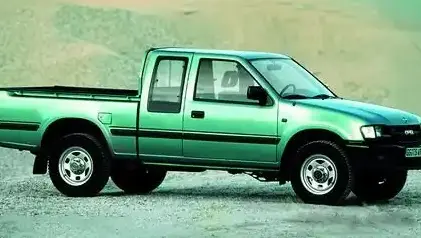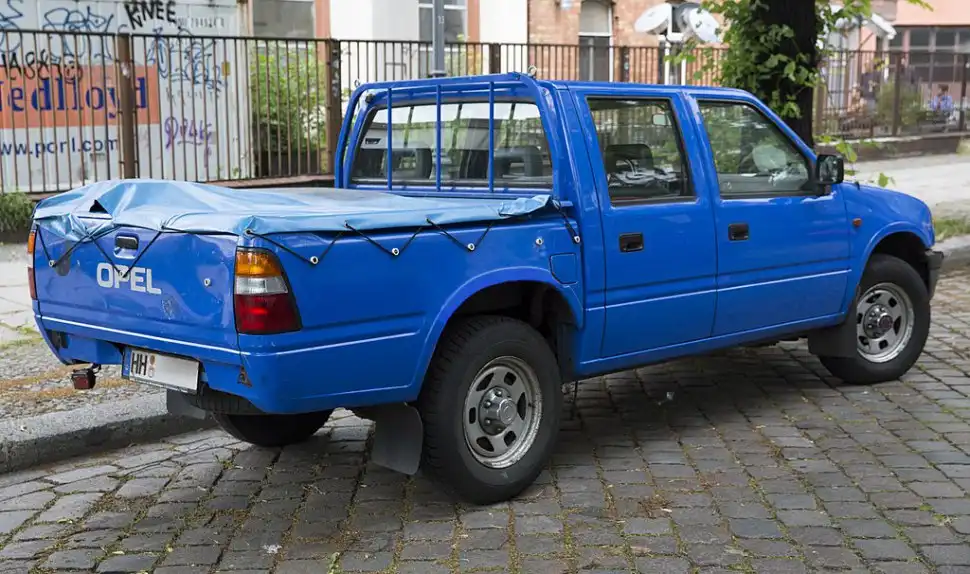
The Opel Campo Double Cab 3.1 TD (109 hp) 4×4, produced from 1992 to 2001, represents a significant offering in the European pickup truck market. Positioned as a robust, utilitarian vehicle, the Campo Double Cab aimed to provide both commercial practicality and limited passenger comfort. It was based on the Isuzu D-Max platform, a result of collaboration between Opel and Isuzu, and served as Opel’s entry into the growing double-cab pickup segment. This variant, equipped with the 3.1-liter turbodiesel engine and a five-speed manual transmission, occupied a middle ground in the Campo lineup, offering a balance between power, fuel economy, and affordability.
Technical Specifications
| Brand | Opel |
| Model | Campo |
| Generation | Campo Double Cab |
| Type (Engine) | 3.1 TD (109 Hp) 4×4 |
| Start of production | 1992 |
| End of production | June, 2001 |
| Powertrain Architecture | Internal Combustion engine |
| Body type | Pick-up |
| Seats | 5 |
| Doors | 4 |
| Fuel consumption (combined) | 10.8 l/100 km (21.8 US mpg, 26.2 UK mpg, 9.3 km/l) |
| Fuel Type | Diesel |
| Acceleration 0 – 100 km/h | 15.3 sec |
| Acceleration 0 – 62 mph | 15.3 sec |
| Acceleration 0 – 60 mph | 14.5 sec |
| Maximum speed | 153 km/h (95.07 mph) |
| Power | 109 Hp @ 3600 rpm |
| Power per litre | 35.6 Hp/l |
| Torque | 255 Nm @ 1900 rpm (188.08 lb.-ft. @ 1900 rpm) |
| Engine layout | Front, Longitudinal |
| Engine Model/Code | 4JG2T |
| Engine displacement | 3059 cm3 (186.67 cu. in.) |
| Number of cylinders | 4 |
| Engine configuration | Inline |
| Fuel injection system | Precombustion chamber injection |
| Engine aspiration | Turbocharger |
| Engine oil capacity | 6 l (6.34 US qt | 5.28 UK qt) |
| Coolant capacity | 9 l (9.51 US qt | 7.92 UK qt) |
| Fuel tank capacity | 75 l (19.81 US gal | 16.5 UK gal) |
| Length | 4980 mm (196.06 in.) |
| Width | 1690 mm (66.54 in.) |
| Height | 1710 mm (67.32 in.) |
| Wheelbase | 3025 mm (119.09 in.) |
| Drive wheel | All wheel drive (4×4) |
| Number of gears and type of gearbox | 5 gears, manual transmission |
| Front suspension | Independent torsion bar, double wishbone |
| Front brakes | Ventilated discs |
| Rear brakes | Drum |
| Power steering | Hydraulic Steering |
Powertrain & Engine Architecture
The heart of the Campo Double Cab 3.1 TD is the 4JG2T engine, a 3.1-liter inline-four cylinder diesel engine developed by Isuzu. This engine utilizes a precombustion chamber injection system, a common technology in diesel engines of the era, designed to improve combustion efficiency and reduce noise. The addition of a turbocharger significantly boosts power output to 109 horsepower at 3600 rpm and 255 Nm (188 lb-ft) of torque at a relatively low 1900 rpm. This torque curve made the Campo a capable workhorse, particularly useful for towing and hauling. The engine is longitudinally mounted in the chassis, contributing to a more balanced weight distribution. The five-speed manual transmission provides a reasonable spread of gears, although it isn’t known for particularly quick shifts. The transmission was chosen for its durability and cost-effectiveness, aligning with the overall utilitarian nature of the vehicle.
Driving Characteristics
The Campo 3.1 TD 4×4, with its 109 hp and manual transmission, delivers a driving experience focused on utility rather than performance. Acceleration is modest, taking around 15.3 seconds to reach 100 km/h (62 mph). The engine’s strength lies in its low-end torque, making it suitable for off-road driving and carrying heavy loads. The manual transmission allows for greater driver control, especially in challenging terrain. Compared to potential higher-output variants (which were not commonly available in Europe), this version prioritized fuel efficiency and durability over outright speed. The gear ratios are tuned for work, rather than spirited driving, and the engine can feel strained at higher speeds. The steering, while hydraulically assisted, lacks the precision found in more modern vehicles. Overall, the driving experience is best described as functional and robust, rather than refined or engaging.
Equipment & Trim Levels
The Campo Double Cab 3.1 TD 4×4 was generally equipped with basic, functional features. Standard equipment typically included power steering, a relatively simple dashboard layout, and vinyl or cloth upholstery. Air conditioning and power windows were often optional extras, depending on the specific market and trim level. The double-cab configuration offered seating for five passengers, although rear seat space was somewhat limited. The interior was designed for durability and ease of cleaning, reflecting the vehicle’s work-oriented purpose. Trim levels were often differentiated by the addition of features like upgraded upholstery, alloy wheels (rare), and a more comprehensive sound system. Higher trim levels might also include features like a limited-slip differential or upgraded suspension components, but these were not common.
Chassis & Braking
The Campo Double Cab features a robust chassis designed to withstand the stresses of off-road use and heavy loads. The front suspension utilizes an independent torsion bar and double wishbone setup, providing a reasonable level of ride comfort and handling. The rear suspension employs a more traditional leaf spring design, prioritizing load-carrying capacity. Braking is handled by ventilated discs at the front and drum brakes at the rear. While adequate for normal use, the braking system isn’t particularly powerful, and stopping distances can be longer when the vehicle is heavily loaded. The hydraulic power steering provides assistance at low speeds, making maneuvering easier. The chassis construction is body-on-frame, a common design for pickup trucks of this era, contributing to its durability and off-road capability.
Market Reception & Comparison
The Opel Campo Double Cab 3.1 TD 4×4 was generally well-received in the European market as a practical and affordable pickup truck. Critics praised its robust construction, capable engine, and four-wheel-drive system. However, it was often criticized for its basic interior, unrefined engine noise, and relatively slow acceleration. Compared to other pickups available at the time, such as the Toyota Hilux or Mitsubishi L200, the Campo offered a more budget-friendly option, but lacked some of the refinement and features of its competitors. Fuel economy was considered reasonable for a vehicle of its size and type, averaging around 10.8 liters per 100 kilometers (21.8 US mpg). The Campo appealed to buyers who prioritized functionality and affordability over comfort and style.
Legacy
The Opel Campo Double Cab 3.1 TD 4×4, while not a groundbreaking vehicle, established Opel as a player in the European pickup truck market. The 4JG2T engine proved to be relatively reliable, although maintenance costs can be higher due to its age and the availability of parts. Today, the Campo Double Cab is a relatively rare sight on the roads, but it has gained a following among enthusiasts who appreciate its rugged simplicity and utilitarian design. Well-maintained examples are sought after by collectors and those looking for a classic workhorse vehicle. The engine, while not particularly powerful by modern standards, is known for its longevity and ability to withstand heavy use, making it a viable option for those seeking a dependable and affordable pickup truck. Its simplicity also makes it relatively easy to repair for those with mechanical skills.