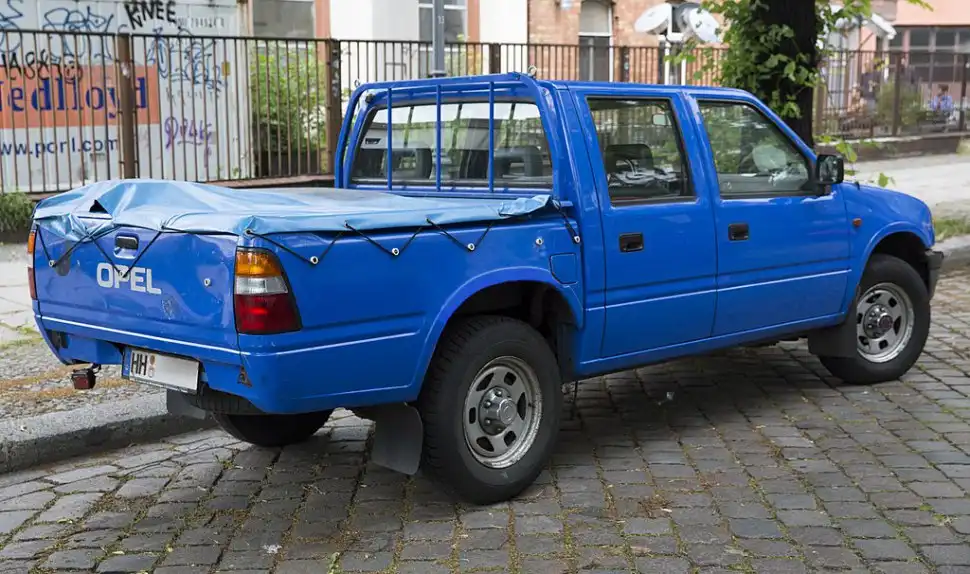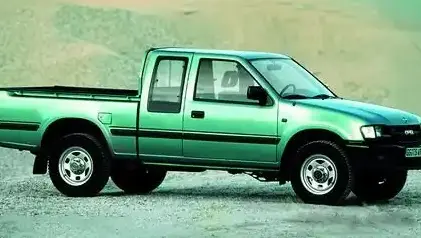
The Opel Campo Half Cab 2.3 (98 hp) 4×4, produced between 1994 and 1995, represents a niche offering within the broader Opel Campo pickup range. Positioned as a versatile, all-wheel-drive utility vehicle, it catered to buyers needing a robust, if somewhat basic, workhorse. The “Half Cab” designation refers to the vehicle’s configuration with a smaller, more enclosed passenger compartment compared to the full cab versions. This model occupied a space between more utilitarian, bare-bones pickups and the emerging trend of lifestyle-oriented trucks, primarily serving the European market where compact pickups were popular for agricultural and light commercial use.
Technical Specifications
| Brand | Opel |
| Model | Campo |
| Generation | Campo Half Cab |
| Type (Engine) | 2.3 (98 Hp) 4×4 |
| Start of production | 1994 |
| End of production | 1995 |
| Powertrain Architecture | Internal Combustion engine |
| Body type | Pick-up |
| Seats | 4 |
| Doors | 2 |
| Fuel Type | Petrol (Gasoline) |
| Power | 98 Hp @ 5000 rpm |
| Power per litre | 43.5 Hp/l |
| Engine Model/Code | 4ZD1 |
| Engine displacement | 2255 cm3 / 137.61 cu. in. |
| Number of cylinders | 4 |
| Engine configuration | Inline |
| Cylinder Bore | 89.3 mm / 3.52 in. |
| Piston Stroke | 90 mm / 3.54 in. |
| Number of valves per cylinder | 2 |
| Engine aspiration | Naturally aspirated engine |
| Valvetrain | SOHC |
| Engine oil capacity | 3.5 l / 3.7 US qt | 3.08 UK qt |
| Coolant | 9 l / 9.51 US qt | 7.92 UK qt |
| Length | 4980 mm / 196.06 in. |
| Width | 1690 mm / 66.54 in. |
| Height | 1710 mm / 67.32 in. |
| Wheelbase | 3025 mm / 119.09 in. |
| Drive wheel | All wheel drive (4×4) |
| Number of gears and type of gearbox | 5 gears, manual transmission |
| Front suspension | Independent coil spring |
| Front brakes | Ventilated discs |
Powertrain & Engine Architecture
The Campo Half Cab 2.3 4×4 was powered by the 4ZD1 engine, a 2.3-liter inline-four cylinder gasoline engine. This engine, while not particularly sophisticated, was known for its durability and relative simplicity. It featured a single overhead camshaft (SOHC) valvetrain operating two valves per cylinder. Fuel delivery was managed by a conventional throttle body injection system, a common setup for vehicles of this era. The 4ZD1 produced 98 horsepower at 5000 rpm and approximately 138 lb-ft of torque. The engine’s design prioritized low-end torque over peak power, making it suitable for hauling and off-road driving. The five-speed manual transmission was the only gearbox option available with this engine, providing a reasonable spread of gears for both on-road and off-road use. The transmission was directly connected to the transfer case, enabling the driver to switch between two-wheel drive and four-wheel drive modes.
Driving Characteristics
The driving experience in the Campo Half Cab 2.3 4×4 was decidedly utilitarian. The 98 hp engine, while adequate, didn’t offer brisk acceleration. Performance was best described as workmanlike, with a focus on providing sufficient power for carrying loads and navigating challenging terrain. The five-speed manual transmission allowed the driver to keep the engine in its optimal power band, but frequent shifting was often necessary, especially when loaded. The 4×4 system provided enhanced traction on loose surfaces, making it capable in off-road conditions. However, the vehicle’s relatively high center of gravity and basic suspension setup meant that handling on paved roads was not particularly refined. Compared to potential higher-output versions (which weren’t offered in this configuration), the 2.3-liter engine prioritized fuel economy and reliability over outright performance.
Equipment & Trim Levels
The Campo Half Cab 2.3 4×4 was generally sparsely equipped, reflecting its intended role as a work vehicle. Standard features typically included a basic dashboard with essential gauges, vinyl upholstery, and a robust heating system. Power steering was often included, but air conditioning and other comfort features were typically optional extras. The interior was functional and durable, designed to withstand the rigors of daily use. Trim levels were minimal; the focus was on providing a practical and affordable pickup truck. Optional extras might have included upgraded audio systems, exterior styling enhancements, and heavier-duty suspension components.
Chassis & Braking
The Campo Half Cab featured a body-on-frame construction, providing a robust and durable chassis. The front suspension utilized independent coil springs, offering a degree of ride comfort, while the rear suspension employed leaf springs, chosen for their load-carrying capacity. Braking was provided by ventilated disc brakes at the front and drum brakes at the rear. The braking system was adequate for the vehicle’s weight and intended use, but lacked the sophistication of more modern systems. The steering was typically a recirculating ball system, providing a direct but somewhat unrefined feel.
Market Reception & Comparison
The Opel Campo Half Cab 2.3 4×4 received generally positive reviews for its practicality, durability, and off-road capability. Critics noted its simple design and robust construction, but also pointed out its lack of refinement and limited comfort features. Compared to other pickups in its class, such as the Suzuki Samurai or the Daihatsu Rocky, the Campo offered a larger cargo bed and a more spacious cabin. However, it lacked the more sophisticated features found in some of its competitors. Fuel economy was reasonable for a vehicle of its type, but not exceptional. Reliability was generally good, with the 4ZD1 engine proving to be a durable and long-lasting unit.
Legacy
The Opel Campo Half Cab 2.3 4×4, while not a high-volume seller, has developed a following among enthusiasts and collectors. Its simplicity, durability, and off-road capability make it a desirable vehicle for those seeking a rugged and reliable pickup truck. The 4ZD1 engine is known for its longevity, and well-maintained examples can still be found in good working order today. In the used car market, these vehicles are often sought after by those looking for a classic pickup truck that can still be used for work or recreation. Parts availability can be a challenge, but a dedicated network of enthusiasts and suppliers helps to keep these vehicles on the road. The Campo represents a bygone era of simple, robust utility vehicles, and its legacy continues to endure.