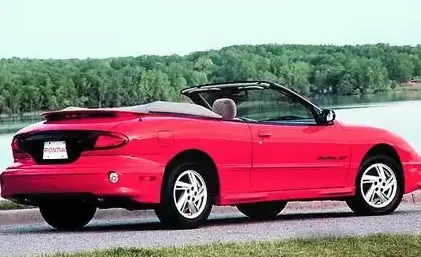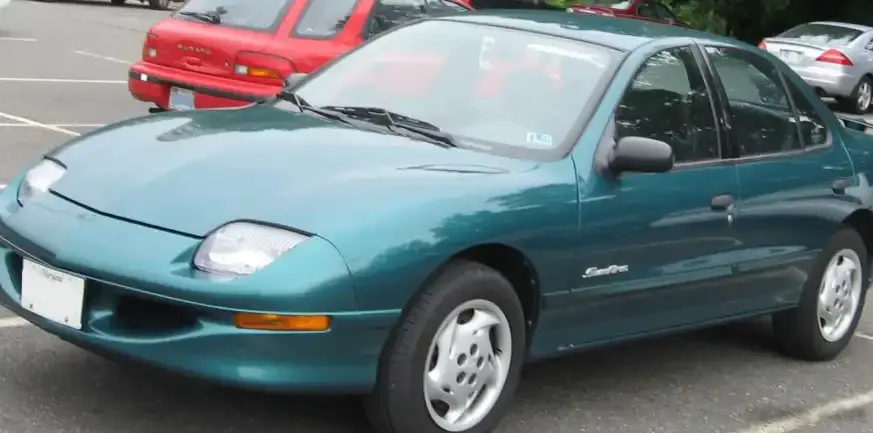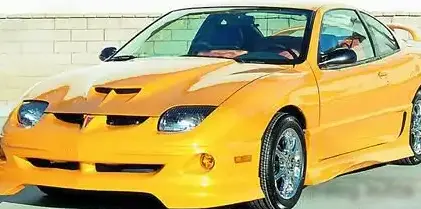
The Pontiac Sunfire Coupe 2.4i 16V, produced from 1996 to 2002, represented a key offering in Pontiac’s compact car lineup. Positioned as a sporty, affordable coupe, it was part of the second generation Sunfire (1995-2002), which shared the GM L-body platform with the Chevrolet Cavalier and Oldsmobile Sunfire. The 2.4-liter engine and automatic transmission combination aimed to provide a balance of performance and convenience for buyers seeking a step up from the base models. This variant occupied a mid-range position within the Sunfire lineup, offering more power than the base 2.2-liter engine but falling short of the performance potential of the later, turbocharged options.
Technical Specifications
| Brand | Pontiac |
| Model | Sunfire |
| Generation | Sunfire Coupe |
| Type (Engine) | 2.4 i 16V (152 Hp) |
| Start of production | 1996 |
| End of production | 2002 |
| Powertrain Architecture | Internal Combustion engine |
| Body type | Coupe |
| Seats | 5 |
| Doors | 2 |
| Fuel consumption (urban) | 10.7 l/100 km (22 US mpg) |
| Fuel consumption (extra urban) | 7.4 l/100 km (31.8 US mpg) |
| Fuel Type | Petrol (Gasoline) |
| Acceleration 0 – 100 km/h | 8.5 sec |
| Acceleration 0 – 62 mph | 8.5 sec |
| Acceleration 0 – 60 mph | 8.1 sec |
| Maximum speed | 175 km/h (108.74 mph) |
| Weight-to-power ratio | 8.1 kg/Hp |
| Weight-to-torque ratio | 5.9 kg/Nm |
| Power | 152 Hp @ 5600 rpm |
| Torque | 210 Nm @ 4400 rpm (154.89 lb.-ft. @ 4400 rpm) |
| Engine layout | Front, Transverse |
| Engine Model/Code | LD9 |
| Engine displacement | 2392 cm3 (145.97 cu. in.) |
| Number of cylinders | 4 |
| Engine configuration | Inline |
| Cylinder Bore | 90 mm (3.54 in.) |
| Piston Stroke | 94 mm (3.7 in.) |
| Compression ratio | 9.5:1 |
| Number of valves per cylinder | 4 |
| Fuel injection system | Multi-port manifold injection |
| Engine aspiration | Naturally aspirated |
| Engine oil capacity | 3.8 l (4.02 US qt | 3.34 UK qt) |
| Coolant capacity | 10.1 l (10.67 US qt | 8.89 UK qt) |
| Kerb Weight | 1230 kg (2711.69 lbs.) |
| Trunk (boot) space | 350 l (12.36 cu. ft.) |
| Fuel tank capacity | 57 l (15.06 US gal | 12.54 UK gal) |
| Length | 4620 mm (181.89 in.) |
| Width | 1710 mm (67.32 in.) |
| Height | 1350 mm (53.15 in.) |
| Wheelbase | 2645 mm (104.13 in.) |
| Front track | 1465 mm (57.68 in.) |
| Rear track | 1435 mm (56.5 in.) |
| Drivetrain | Front wheel drive |
| Number of gears | 4 |
| Gearbox type | Automatic transmission |
| Front suspension | Wishbone |
| Rear suspension | Trailing arm |
| Front brakes | Ventilated discs |
| Rear brakes | Drum |
| Assisting systems | ABS (Anti-lock braking system) |
| Steering type | Steering rack and pinion |
| Power steering | Hydraulic |
| Tires size | 195/65 R15 |
Powertrain & Engine Architecture
The heart of the Sunfire 2.4i was the LD9 engine, a 2.4-liter inline-four cylinder powerplant. This engine was a member of GM’s family of four-cylinder engines, known for its relatively simple design and durability. It featured a cast iron block and an aluminum cylinder head, incorporating a dual overhead camshaft (DOHC) valvetrain with four valves per cylinder. This configuration allowed for improved breathing and higher engine speeds compared to older pushrod designs. Fuel delivery was handled by a multi-port fuel injection system, providing precise fuel metering for optimal combustion. The LD9 produced 152 horsepower at 5600 rpm and 210 Nm (155 lb-ft) of torque at 4400 rpm. Paired with this engine was a four-speed automatic transmission, offering smooth shifts and ease of use. This transmission was a common GM unit, known for its reliability, though it wasn’t particularly sporty or fuel-efficient compared to more modern automatics.
Driving Characteristics
The 2.4-liter engine and automatic transmission combination in the Sunfire provided adequate, but not exhilarating, performance. Acceleration from 0 to 60 mph took around 8.1 seconds, making it competitive with other coupes in its class. The automatic transmission, while convenient, did detract from the overall driving experience. Gear ratios were tuned for comfort and fuel economy rather than aggressive acceleration. Compared to the five-speed manual transmission available on other Sunfire models, the automatic felt somewhat sluggish, particularly during overtaking maneuvers. The engine delivered a reasonably linear power curve, with usable torque available throughout the rev range. However, it lacked the high-end punch of the later, turbocharged engines offered in the Sunfire.
Equipment & Trim Levels
The Sunfire 2.4i Automatic typically came with a standard equipment list that included air conditioning, power windows and locks, an AM/FM stereo, and cloth upholstery. Optional extras included a CD player, upgraded sound system, cruise control, and power sunroof. Interior trim was generally basic, reflecting the Sunfire’s affordable positioning. The dashboard layout was functional but lacked the aesthetic appeal of some competitors. The seats provided adequate comfort for short to medium-length journeys, but lacked significant bolstering for spirited driving.
Chassis & Braking
The Sunfire Coupe utilized a front-wheel-drive layout with an independent front suspension featuring wishbone components and a trailing arm rear suspension. This setup provided a comfortable ride quality, but handling was not particularly sharp. The front brakes were ventilated discs, offering adequate stopping power, while the rear brakes were drums, a cost-saving measure. Anti-lock braking system (ABS) was standard, enhancing safety. The steering was rack-and-pinion with hydraulic power assist, providing light and easy steering feel.
Market Reception & Comparison
The Sunfire 2.4i Automatic was generally well-received as an affordable and practical coupe. Critics praised its comfortable ride and spacious interior for its size. However, the automatic transmission was often criticized for its lack of responsiveness. Compared to the 2.2-liter base model, the 2.4i offered a noticeable performance improvement. Compared to the higher-performance trims, such as those with the turbocharged engines, it lacked the same level of excitement. Fuel economy was average for its class, with EPA estimates around 22 mpg city and 32 mpg highway. Reliability was generally good, although some owners reported issues with the automatic transmission over the long term.
Legacy
The Pontiac Sunfire 2.4i Automatic, while not a standout performer, remains a relatively affordable and accessible option in the used car market. The LD9 engine is known for its durability, and with proper maintenance, can provide many years of reliable service. The automatic transmission, while not the most sophisticated, is generally dependable. Today, these Sunfires are often sought after by enthusiasts looking for a simple, inexpensive coupe for commuting or weekend driving. Parts availability is generally good, thanks to the Sunfire’s widespread popularity and shared components with other GM vehicles. However, finding well-maintained examples can be challenging, as many have suffered from neglect or accumulated high mileage.